Zenzai
ぜんざい
Also called Japanese sweet red bean soup, zenzai mochi
Azuki beans cooked sweet with sugar and served hot with mochi. What the name means depends on the region: in Kansai it is a soup with whole beans, in Kanto a thick bean paste over mochi.
Zenzai at a glance
- Taste
- Deeply sweet azuki beans with plain, toasty mochi; often served with something salty on the side
- Texture
- Hot and soupy with soft whole beans (Kansai style), or a thick paste (Kanto style), around soft, stretchy mochi
- Main ingredients
- Azuki beans, sugar and mochi (glutinous rice); sometimes shiratama dumplings, millet mochi or chestnuts instead of mochi
- When to eat it
- The cold months: a December sweet in Japan's calendar of wagashi; at the New Year, mochi from kagami-biraki (around January 11) often goes into shiruko
- Goes well with
- Traditionally served with salty pickled shiso seeds or a similar salty bite to refresh the palate
- Where to buy
- Kanmi teahouses (kanmi-dokoro) and wagashi shops, especially in the cold months; instant kaichū shiruko, which you dissolve in hot water, is also sold
- How long it keeps
- Eat it hot, as soon as it is served. Mochi does not like the fridge, so for leftovers the Japan Wagashi Association's general advice is to freeze rather than chill
- Egg, wheat and vegan
- Usually made from plant ingredients only (azuki, sugar, rice mochi), with no egg, dairy or wheat in the basic recipe, but toppings and instant mixes vary. Check the label or ask the shop
- How to say it
- ZEN-zah-ee
Fun facts about Zenzai
In Okinawa, "zenzai" means something completely different: a cold summer dessert. Okinawa's tourism bureau describes it as kintoki beans cooked sweet with brown sugar or sugar, piled under fluffy shaved ice and finished with shiratama or mochi. Many Okinawans picture kakigori when they hear the word.[7]
How to enjoy Zenzai
Know which zenzai you are ordering
In Tokyo, zenzai on a menu usually means mochi under a thick bean paste, and the soup is listed as shiruko (smooth) or inaka shiruko (with whole beans). In Osaka or Kyoto, zenzai is the soup with whole beans. In Okinawa, it is a bowl of shaved ice. If you want a hot soup in Tokyo, order shiruko.[2],[1],[7]
Use the salty side dish
Both zenzai and shiruko are traditionally served with something salty, such as salt-pickled shiso seeds. A bite between spoonfuls resets your palate so the sweetness of the beans stays fresh to the last mouthful.[2],[1]
Taste the New Year custom of kagami-biraki
Kagami mochi, the stacked rice cakes displayed for the New Year, are taken down mainly on January 11 in a custom called kagami-biraki. The mochi is broken by hand or with a mallet rather than cut with a knife, and the pieces are eaten in zōni soup or sweet shiruko. If you are in Japan in early January, it is a good time for a bowl.[5]
About this wagashi
Zenzai and oshiruko are close relatives: both are sweet azuki with mochi or shiratama dumplings, and the line between them changes from region to region. In Kanto (around Tokyo), shiruko is a thin, sippable soup, and zenzai is a thick bean paste with little liquid over mochi. In Kansai (around Osaka and Kyoto), zenzai is the soup made with whole beans, which Kanto calls inaka shiruko. The word zenzai is older, recorded from the mid-Muromachi period (15th century). It is a warming sweet for the cold months, served at kanmi teahouses and made at home in winter.
How it is made
Azuki beans are simmered until soft and sweetened with sugar, either kept whole (tsubu-an, for the Kansai-style soup) or strained smooth (koshi-an). Toasted or boiled mochi goes in the bowl; shiratama dumplings, millet mochi or chestnuts are also used. For Kanto-style zenzai, the paste is cooked down until thick and spooned over the mochi instead of being thinned into a soup.
Zenzai: history and origins
Zenzai is the older name. A temple diary entry from 1493 already mentions "zenzai mochi", and encyclopedias say zenzai was eaten in Kansai from around the mid-Muromachi period, while the word shiruko appears a little later, from the late Muromachi period. At first there seems to have been no real difference between the two; people only began to tell them apart in the late Edo period.[3],[2]
Where the name comes from is not settled, and dictionaries list several theories. One links it to New Year joy, since zenzai (善哉) is also a Buddhist word meaning "how good!". Another traces it to Izumo Shrine, where azuki simmered with mochi was offered to the gods as "jinzai mochi". A third says the Zen monk Ikkyū, the first to taste it, exclaimed "zenzai!". Shimane Prefecture's tourism site presents Izumo as the birthplace: it says the jinzai mochi eaten at the Kamiari Festival, held in the tenth month of the old calendar, became "zenzai", and that this is recorded in an Edo-period gazetteer, the Un'yōshi.[1],[3],[8]
By the end of the Edo period, shiruko sellers walked the streets of Edo, Kyoto and Osaka with portable stalls and paper lanterns. Many wrote 正月屋 (shōgatsuya, "New Year shop") on their lanterns, apparently because they also sold zōni, the New Year mochi soup, and the name became a nickname for shiruko sellers. From the early Meiji era, shops selling shiruko opened in the cities; after the Second World War tastes changed, and old-style shiruko shops became rare, with some carrying on as kanmi cafés.[2]
Questions about Zenzai
What is the difference between zenzai and oshiruko?
It depends on where you are. In Kanto (around Tokyo), shiruko is a thin soup (smooth gozen shiruko, or inaka shiruko with whole beans), and zenzai has less liquid: a thick paste over mochi. In Kansai (around Osaka and Kyoto), the soup with whole beans is zenzai, and the smooth soup is shiruko. Both are sweet azuki with mochi, and historically there was no clear line until the late Edo period. Neither usage is "wrong".[2],[1],[3]
Is zenzai served hot or cold?
Usually hot, as a winter sweet. But shiruko is also served chilled or with ice (hiyashi shiruko, kōri shiruko), and in Okinawa zenzai is a cold summer dessert of sweet kintoki beans under shaved ice.[2],[4],[7]
Why is it called zenzai?
No one knows for sure. Zenzai (善哉) is a Buddhist word of praise meaning "how good!", and theories link the sweet to New Year joy, to "jinzai mochi" offered to the gods at Izumo, or to the monk Ikkyū praising the soup. Izumo in Shimane Prefecture presents itself as the birthplace of zenzai.[1],[3],[8]
Is zenzai vegan or gluten-free?
The basic recipe is azuki beans, sugar and mochi made from glutinous rice, so it is usually plant-based with no egg, dairy or wheat. Wagashi in general use mostly plant ingredients. But shops add toppings and instant mixes have their own recipes, so check the label or ask the shop.[2],[4]
Sources
Most of the sources are written in Japanese.
More wagashi
Anmitsu
A bowl of mitsumame, cubes of kanten (agar jelly) with boiled red peas, fruit and gyuhi, topped with sweet red bean paste and eaten with a spoon under brown sugar syrup or a clear sugar syrup.
Kakigori
Ice shaved into soft, snow-like flakes and topped with syrup, from clear sugar syrup and fruit flavors to matcha with sweet azuki beans. A summer treat with roots in the Heian court.
 AI-generated imagery
Hanabira Mochi
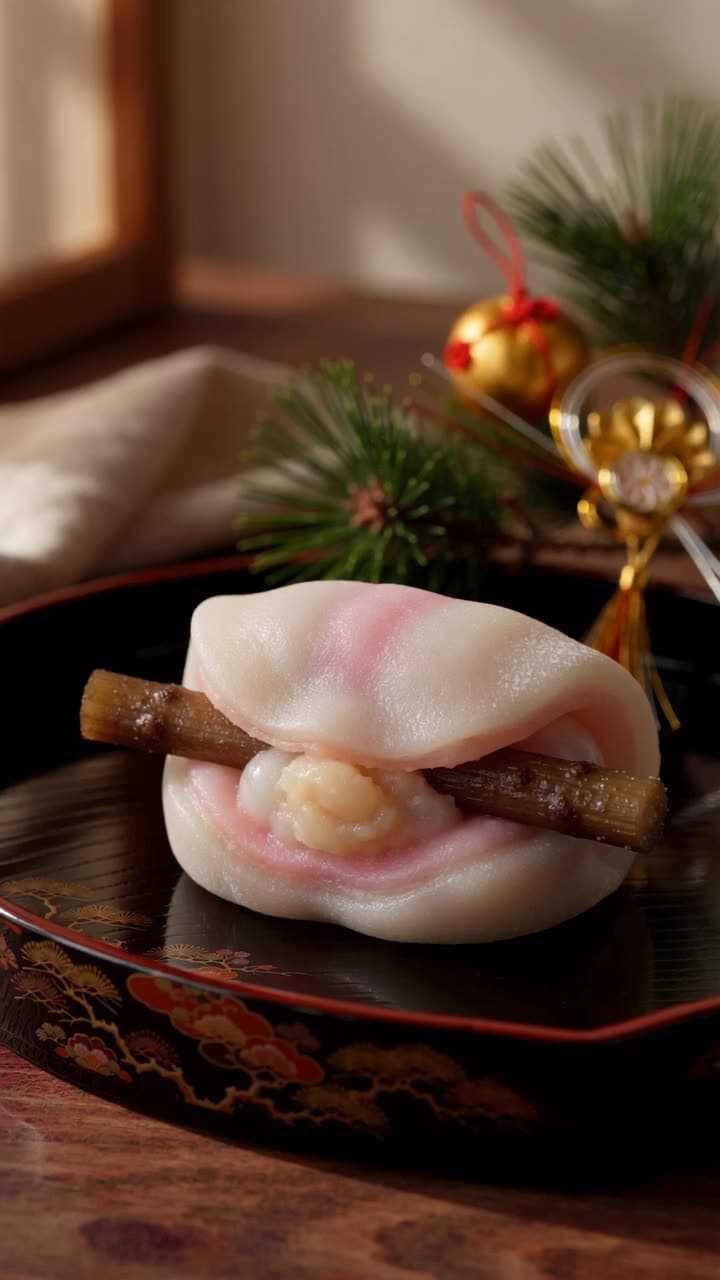
A New Year sweet of white mochi layered with a red diamond of mochi, folded over sweet miso bean paste and a stick of burdock.
 AI-generated imagery
Nerikiri
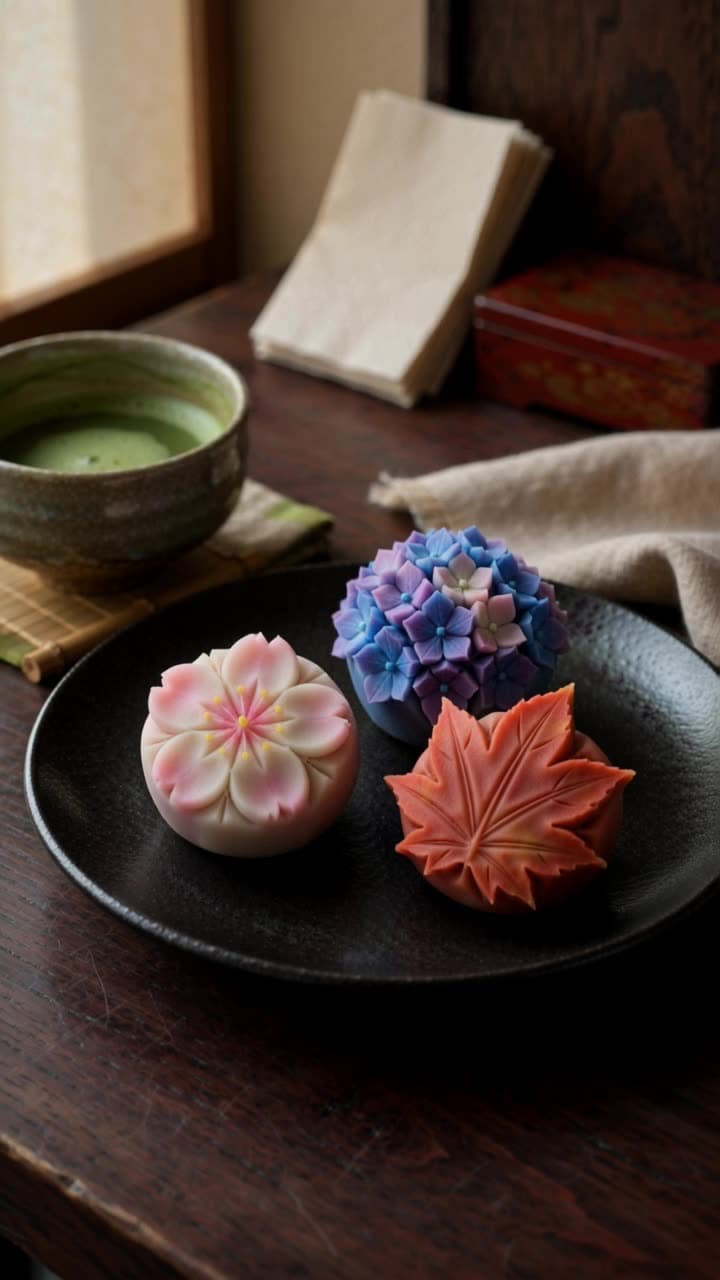
White bean paste shaped by hand into the flowers and scenes of each season, a classic namagashi (fresh sweet).