Hanami Dango
花見団子
Also called sanshoku dango, three-color dango, cherry blossom dango
A skewer of three rice-flour dumplings in pale pink, white and green, eaten while viewing the cherry blossoms in spring.
Hanami Dango at a glance
- Taste
- Mild and not too sweet, tasting of rice; in some, the pink ball carries a hint of cherry blossom and the green a hint of matcha
- Texture
- Soft, smooth and chewy; firms up as it sits
- Main ingredients
- Rice flour, sugar and water; colored with ingredients such as matcha or cherry blossom, or with food coloring
- When to eat it
- Spring, in cherry-blossom season; in Tokyo and Kyoto the blossoms usually peak in late March to early April
- Goes well with
- Green tea; at spring tea gatherings it can be served as the main sweet before matcha
- Where to buy
- Wagashi shops, department stores and food stalls at cherry-blossom spots in spring; supermarkets and convenience stores also sell wagashi
- How long it keeps
- Best the same day, as it hardens quickly; shop-made ones are often dated for about two days. Do not refrigerate
- Egg, wheat and vegan
- Often made without egg or milk, but some contain soy, a little liquor, or colorings such as cochineal (made from insects), so check the label or ask the shop
- How to say it
- hah-NAH-mee DAHN-goh
Fun facts about Hanami Dango
Why is there no color for autumn? One explanation reads the colors as seasons: pink for spring blossoms, white for winter snow and green for summer leaves. With no autumn (aki), the skewer is 'aki ga nai', which sounds like akinai, 'you never tire of it', a play on words that dango sellers are said to have liked. It is a pun, not a recorded origin.[9],[10]
Japan's proverb hana yori dango, 'dumplings over flowers', fits hanami season perfectly. It means preferring something practical to something merely beautiful, like paying more attention to the snacks than to the cherry blossoms.[11]
How to enjoy Hanami Dango
Take it to a hanami spot
Hanami dango is made to be eaten outdoors under the cherry trees. In central Tokyo and Kyoto the blossoms usually peak in early April. Some parks have food stands in season: Kyoto's Maruyama Park, the city's most popular spot for cherry-blossom parties, has many stalls and temporary restaurants under the trees.[4],[5]
Eat it the same day
Like other dango, hanami dango is best fresh and hardens as it sits; shop-made ones are often labeled to be eaten within about two days. Keep it out of the fridge: the Japan Wagashi Association notes that starch-based wagashi do not like being chilled, though freezing is fine.[6],[3],[8]
About this wagashi
Hanami dango are the dango eaten at hanami, the Japanese custom of picnicking under the cherry blossoms. The best-known kind is a skewer of three balls in pale pink, white and green. Japan's agriculture ministry lists hanami dango as a sweet of April, and the Urasenke school of tea names it among the seasonal fresh sweets served at tea gatherings.
How it is made
A dough of rice flour, sugar and water is divided into three and tinted: one part pink, one left white and one green. Shops color it in different ways, for example with matcha, a cherry-blossom ingredient or food coloring. The balls are rolled, cooked and skewered, usually pink, white, then green. Some shops use suama, a sweet, soft dough of non-glutinous rice flour.
Hanami Dango: history and origins
Dango, small balls of kneaded rice or grain flour, appear in Japanese writing from the Heian period (794–1185) and became a popular snack in the towns of the Edo period (1603–1868). Many are tied to the calendar: higan dango at the equinoxes, tsukimi dango for the autumn moon, and hanami dango for cherry-blossom viewing in spring.[11]
A Japanese food dictionary defines hanami dango as dango eaten at cherry-blossom viewing, above all the three-colored kind in pale pink, white and green. Japan's agriculture ministry lists it as a seasonal sweet of April, and the Urasenke school of tea names it among the fresh sweets used at tea gatherings in its season.[12],[13],[7]
A story often told in Japan says hanami dango began at the Daigo flower-viewing party that Toyotomi Hideyoshi held at Daigo-ji temple in Kyoto in the spring of 1598. The party itself is history: Daigo-ji says Hideyoshi had 700 cherry trees planted and held a grand banquet. But the accounts of the party by the temple and in Japanese encyclopedias do not mention dango, so the link to hanami dango is best treated as a popular legend.[14],[15],[9]
Questions about Hanami Dango
What do the three colors of hanami dango mean?
There is no single official meaning; several explanations are told. The most common reads them as seasons: pink for spring cherry blossoms, white for winter snow and green for summer greenery. Others see them all as spring (blossoms, white sake and mugwort), or as the lucky pair of red and white plus green to keep evil away. A dictionary also mentions a pink, green and brown version standing for the blossom, leaves and tree. The usual order on the skewer is pink, white, green.[9],[10],[12],[1]
What does hanami dango taste like?
Mild and only lightly sweet, with the soft, chewy bite of rice-flour dough. It has no sauce or bean-paste topping in its classic form. The colors often taste much the same, though some shops flavor the pink ball with cherry blossom and the green with matcha.[1],[3],[2]
Hanami dango vs mitarashi dango vs tsukimi dango: what's the difference?
All three are rice-flour dango, but they belong to different moments. Hanami dango are colored pink, white and green and eaten in spring under the cherry blossoms. Mitarashi dango are grilled and glazed with a sweet soy-sauce sauce, and are sold all year. Tsukimi dango are plain white, round dango offered to the harvest moon in autumn.[12],[11],[16],[17]
When is hanami dango sold?
Mainly in spring, around cherry-blossom season. Japan's agriculture ministry lists it as a sweet of April, and one confectioner, for example, sells it from late March to early May. Blossom dates change every year, so check the forecast; in central Tokyo and Kyoto the peak is usually in early April.[13],[3],[4],[5]
Sources
Most of the sources are written in Japanese.
- [1]JNTO Sakura-flavoured sweets for spring
- [2]夢菓房たから 花見だんご
- [3]お菓子のセキト 花見だんご
- [4]japan-guide.com Tokyo Hanami Spots
- [5]japan-guide.com Kyoto Hanami Spots
- [6]japan-guide.com Wagashi
- [7]裏千家 お菓子について
- [8]全国和菓子協会 和菓子の保存
- [9]日本菓子専門学校 三色団子の由来
- [10]鈴懸 お花見 三色団子
- [11]コトバンク 団子(デジタル大辞泉)
- [12]コトバンク 花見団子
- [13]農林水産省 にっぽん伝統食図鑑 菓子類
- [14]醍醐寺 豊太閤花見行列
- [15]コトバンク 醍醐の花見
- [16]下鴨神社 御手洗社
- [17]農林水産省 十五夜とお月見団子
More wagashi
 AI-generated imagery
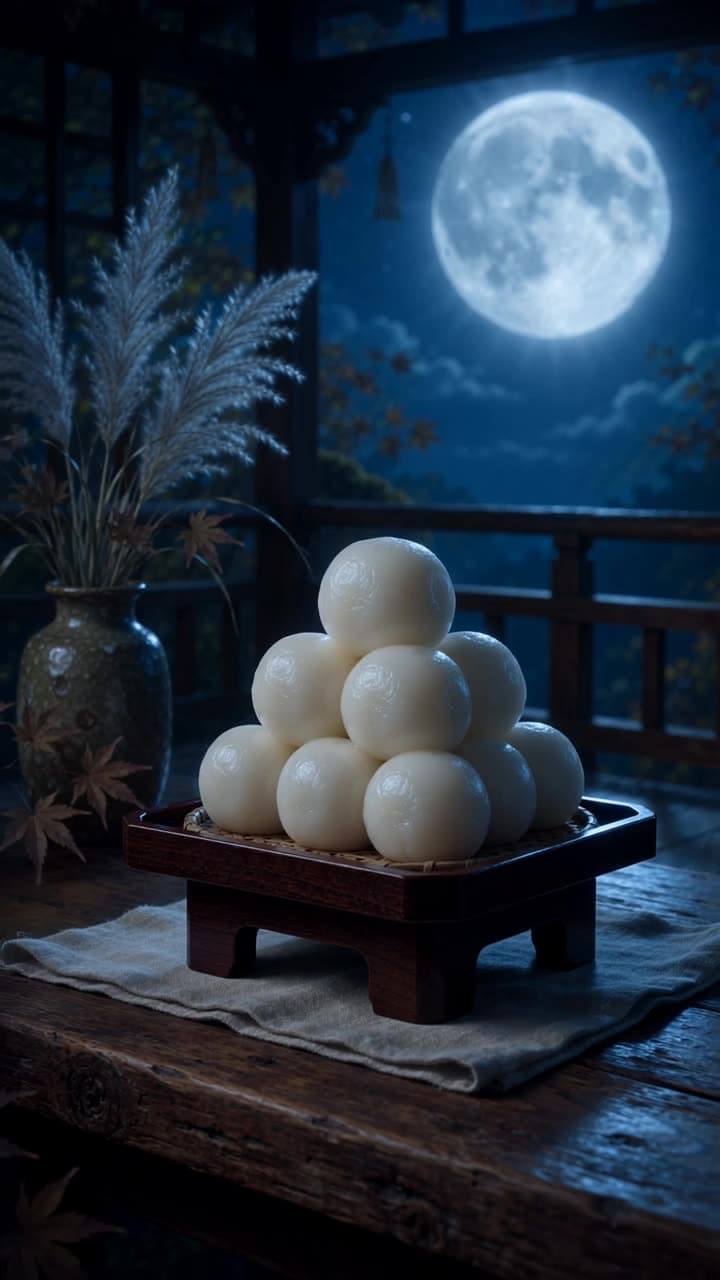
Tsukimi Dango
Round white rice dumplings offered to the harvest moon on an autumn night, in thanks for the harvest.
Mitarashi Dango
Small rice-flour dumplings on a bamboo skewer, lightly grilled and coated in a glossy sweet soy sauce glaze, said to have begun at Shimogamo Shrine in Kyoto.
 AI-generated imagery
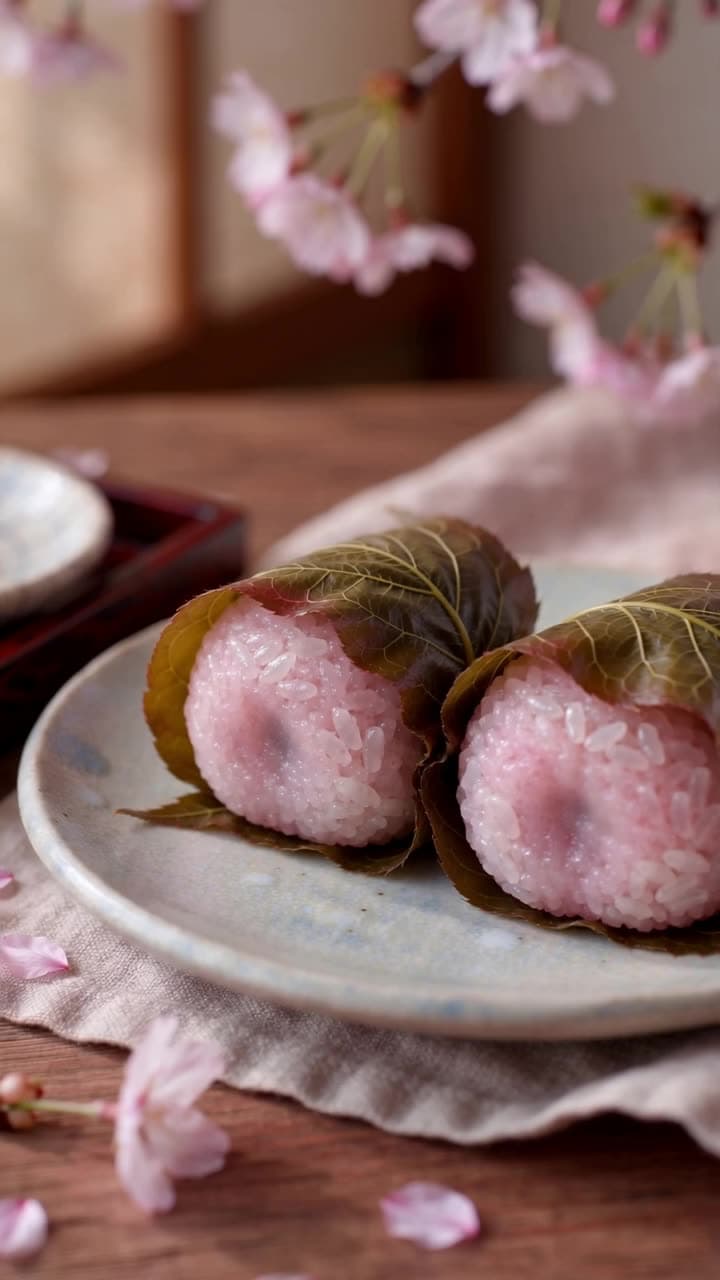
Sakura Mochi
The classic sweet of cherry-blossom season: mochi with sweet bean paste, wrapped in a salted cherry leaf.
 AI-generated imagery
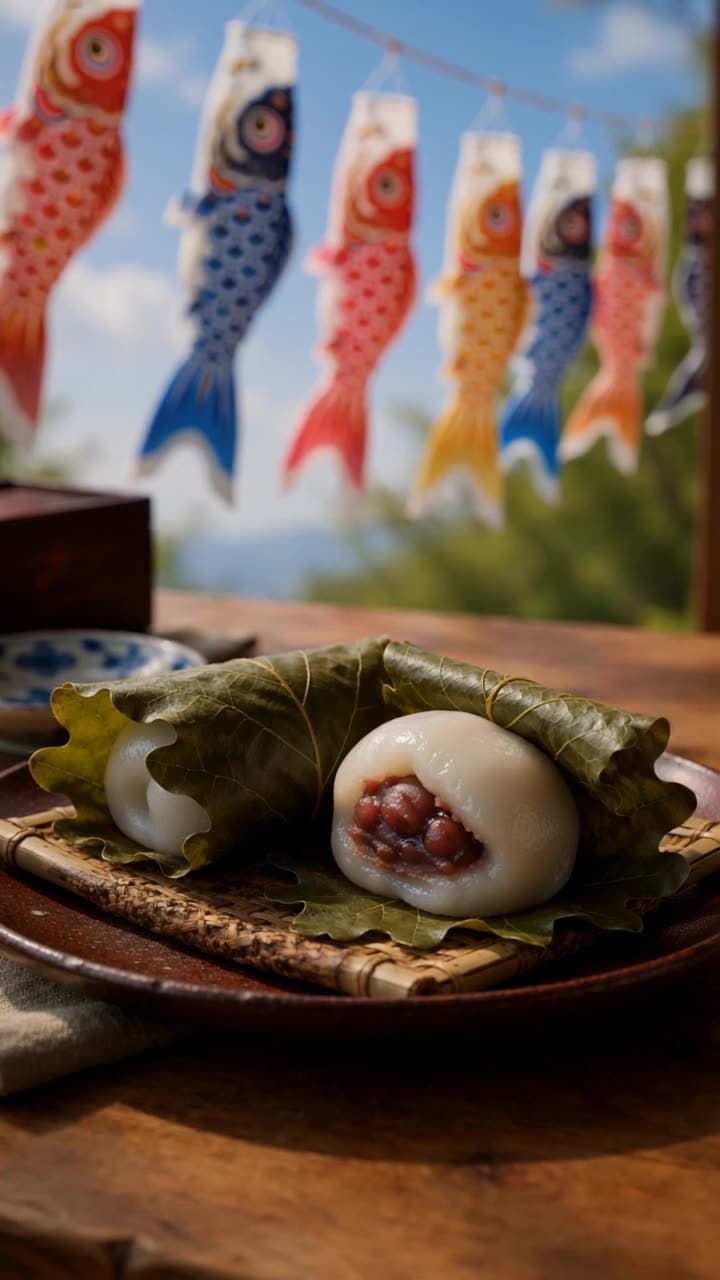
Kashiwa Mochi
Soft rice-flour mochi folded around sweet bean paste and wrapped in an oak leaf, made for Children's Day in May.