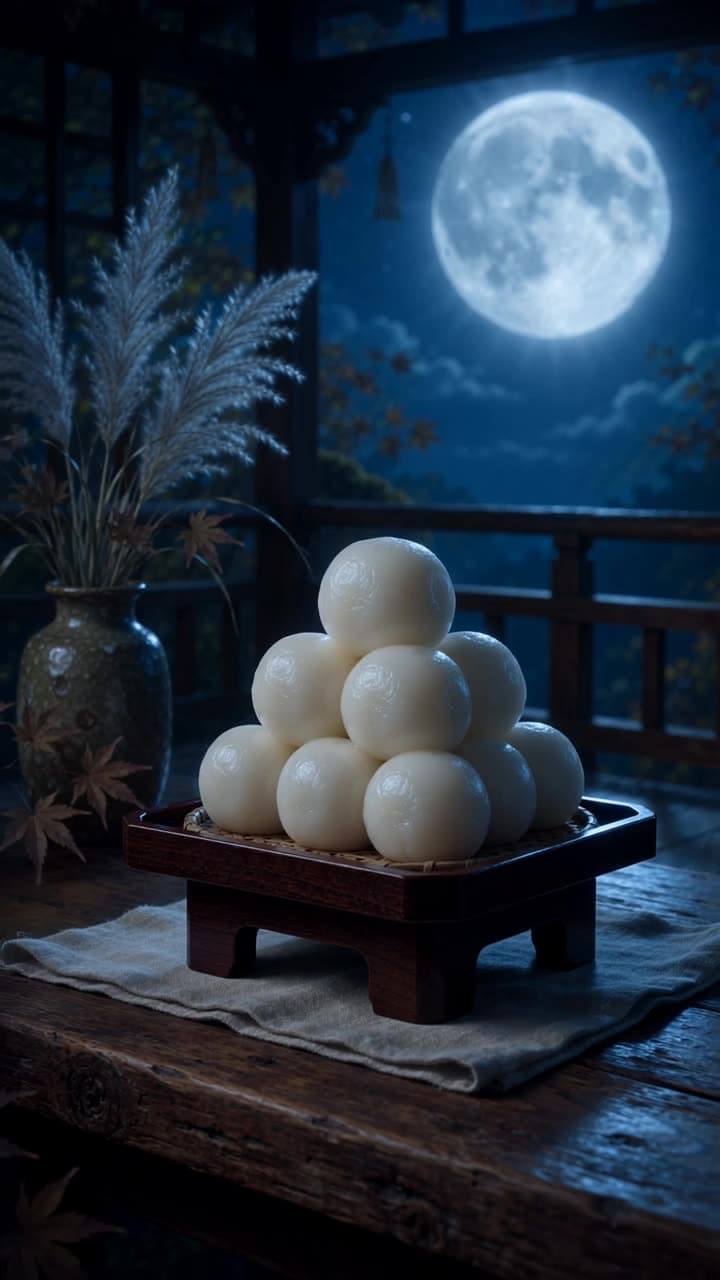
What is dango?
Dango are made by kneading the flour of a grain, such as rice, wheat, buckwheat or millet, rolling it into balls and steaming or boiling them. They are eaten grilled with soy sauce, or with kinako, bean paste, or a sesame or walnut sauce.
Source (in Japanese): コトバンク 団子
Skewered dango (kushi dango) are made from joshinko, a non-glutinous rice flour: the dough is kneaded, steamed, pounded, rolled into balls and skewered, then topped with bean paste or a sauce. Mitarashi dango, glazed with a sweet soy sauce, are also called "soy sauce dango". Soy sauce is brewed from soybeans, wheat and salt, so the glaze usually contains wheat.
Source (in Japanese): 文部科学省 食品成分表 菓子類 / 農林水産省 しょうゆの造り方
Where dango came from
Dango are said to have begun with nuts that were crushed into flour, soaked in water to remove their bitterness, rolled into balls and heated. The word dango probably first appears in a Heian-period text, the Shin Sarugakuki.
Source (in Japanese): 全国和菓子協会 和菓子の歴史 / 農林水産省 aff 和菓子の歴史 / コトバンク 団子
Where the name comes from is uncertain. Theories include a Tang-dynasty sweet called danki, the idea of flour "gathered" together, and simply the round shape. The word 団子 also appears in a Song-dynasty Chinese book, so it may have come from China.
Source (in Japanese): コトバンク 団子
Until the Middle Ages, dango were a snack for nobles and monks; in the Edo period they became a popular bite to eat for ordinary people in the cities. Famous local dango go back a long way: the 十団子 (ten dango) of Utsunoya Pass on the Tokaido road were already called "famous since long ago" in a diary from 1524, and Kyoto has its mitarashi dango.
Source (in Japanese): コトバンク 団子
Dango for festivals and the moon
Dango follow the Japanese calendar: hatsuka dango in January, higan dango at the spring and autumn equinoxes, hanami dango for cherry-blossom viewing, tsukimi dango for the autumn moon, and makura dango offered to the dead. Tsukimi and makura dango are plain white, without bean paste or kinako. It is often said that mochi is for celebrations and dango for Buddhist rites, but there is no clear rule, and the custom is not nationwide.
Source (in Japanese): コトバンク 団子
Tsukimi dango are offered to the harvest moon in mid-autumn, a custom that came from China in the Heian period. In the Kanto region they are usually round, while in Kansai many are taro-shaped and wrapped in bean paste.
Source (in Japanese): 農林水産省 aff 季節と餅
Other well-known dango
Kusa dango (mugwort dango) · Kibi dango (today usually made from gyuhi) · Kototoi dango · Sasa dango · Utsunoya's 十団子 (ten dango) · Shiratama dango