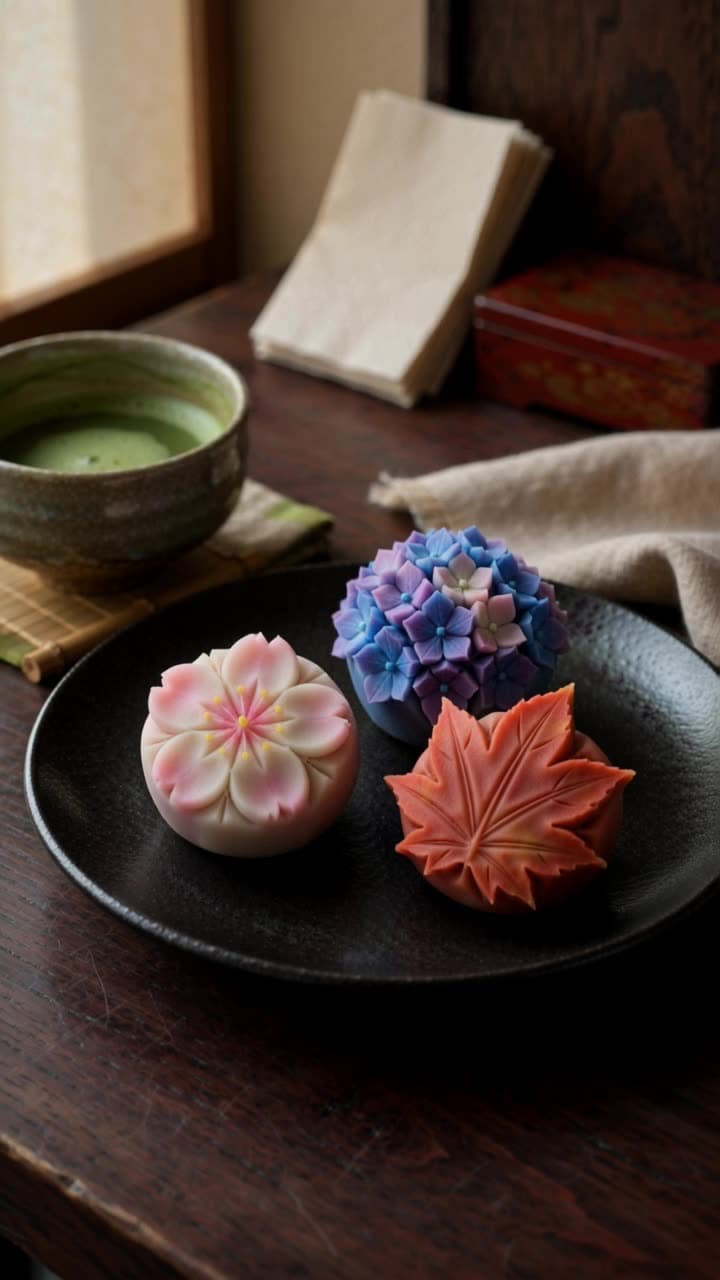
What is namagashi?
Namagashi ("fresh sweets") is the opposite of higashi (dry sweets): moist sweets, mostly made with bean paste, that don't keep long. Strictly speaking the word also covers daifuku, sakura mochi and other everyday sweets eaten the day they are made. On this page we mean the finest kind, jo-namagashi.
Jo-namagashi, with nerikiri as the classic example, capture the seasons through handwork, and most stay good for 2–3 days. Their roots are traced to the Genroku era (1688–1704), when sweets made with costly white sugar, shaped after seasonal scenes and given poetic names (kamei), spread from Kyoto.
Source (in Japanese): 全国和菓子協会 和菓子の種類 / 虎屋 和菓子とは / 文化庁 菓銘をもつ生菓子
In 2022, "namagashi with poetic names (nerikiri and konashi)" was registered as a Registered Intangible Cultural Property of Japan. In the tea ceremony, sweets like these are served as omogashi, the main sweet before thick tea.
Source (in Japanese): 文化庁 国指定文化財等データベース / 全国和菓子協会 登録無形文化財のお知らせ / 表千家 茶の菓子 / コトバンク 主菓子
Nerikiri vs konashi vs kinton
Nerikiri is white bean paste mixed with gyuhi or with steamed, sieved yam, sweetened and kneaded over heat into a smooth dough that can be colored and shaped. The binder differs from shop to shop: some use gyuhi, others yam or fine rice flour.
Source (in Japanese): コトバンク 練切り / 文化庁 菓銘をもつ生菓子 / 文部科学省 食品成分表 菓子類
Konashi is bean paste mixed with wheat flour (or rice flour), steamed and then kneaded. Toraya calls it "yokan-sei" because the method is close to steamed yokan. The Omotesenke school of tea notes that in Kyoto such sweets are also called konashi.
Source (in Japanese): コトバンク 練切り / 文化庁 菓銘をもつ生菓子 / 虎屋 とらやの菓子づくり / 表千家 茶の菓子
Kinton is colored nerikiri paste pressed through a sieve into fluffy strands and attached with chopsticks around a ball of bean paste. Its name is the oldest of the three, found in a confectionery book from 1761. The flavor stays the same all year; only the colors change, such as white and leaf-green for New Year or brown dusted with white for the first frost in November.
Source (in Japanese): コトバンク 練切り / 虎屋 とらやの菓子づくり / 全国和菓子協会 季節と和菓子
One name, three "kinton"
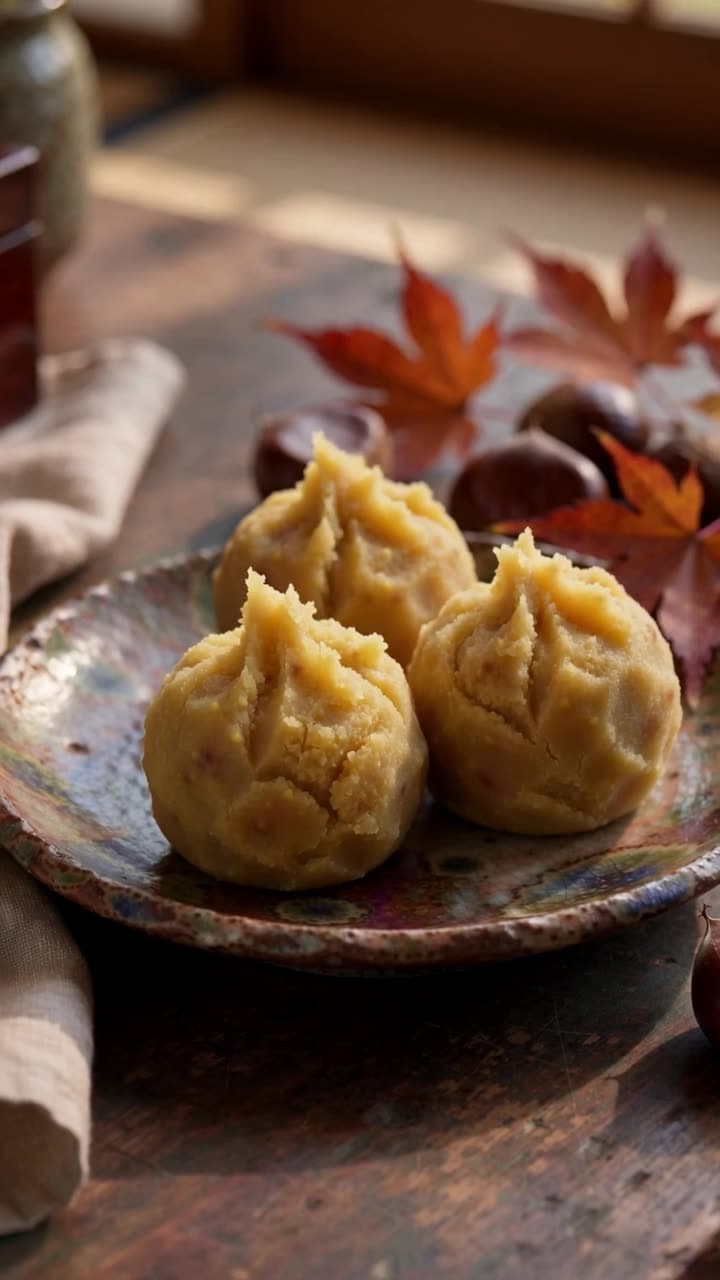
Our kuri kinton is not the fluffy kinton above. It is an autumn sweet from Nakatsugawa in Gifu, made only from chestnuts and sugar and twisted in a cloth into a chestnut shape. A third kinton appears in New Year osechi dishes: sweet-potato paste mixed with candied chestnuts, eaten as a dish rather than a wagashi.
Source (in Japanese): 農林水産省 うちの郷土料理(岐阜県) / コトバンク 金団(世界大百科事典) / コトバンク 練切り
Other well-known namagashi
Joyo manju (yam bun) · Kimi shigure · Kanoko · Kingyoku (agar jelly) · Seppei · Minazuki