Griddle sweets and oven sweets
Japanese confectioners sort baked sweets by the tool used. Griddle sweets (hiranabe-mono) are cooked on a flat copper plate: dorayaki, kintsuba and Kanto-style sakura mochi. Oven sweets include kuri manju, castella manju, momoyama and castella.
Source (in Japanese): 全国和菓子協会 和菓子の種類 / 農林水産省 にっぽん伝統食図鑑 菓子類
Baking in an oven came relatively late. Many oven sweets, such as kuri manju and castella manju, were born after the Meiji era (1868–), and machines brought in from then on mainly increased the variety of baked sweets. The oven-style baking of castella and boro, nanban sweets brought by European traders, had already opened a new field for wagashi.
Source (in Japanese): 全国和菓子協会 和菓子の歴史 / 農林水産省 にっぽん伝統食図鑑 菓子類 / コトバンク 和菓子
Unlike fresh sweets, some baked sweets get better with time. Confectioners say kuri manju and castella manju taste best the day after baking, once the skin and the filling have settled together.
Source (in Japanese): 全国和菓子協会 和菓子の種類
Dorayaki, taiyaki, kuri manju and monaka
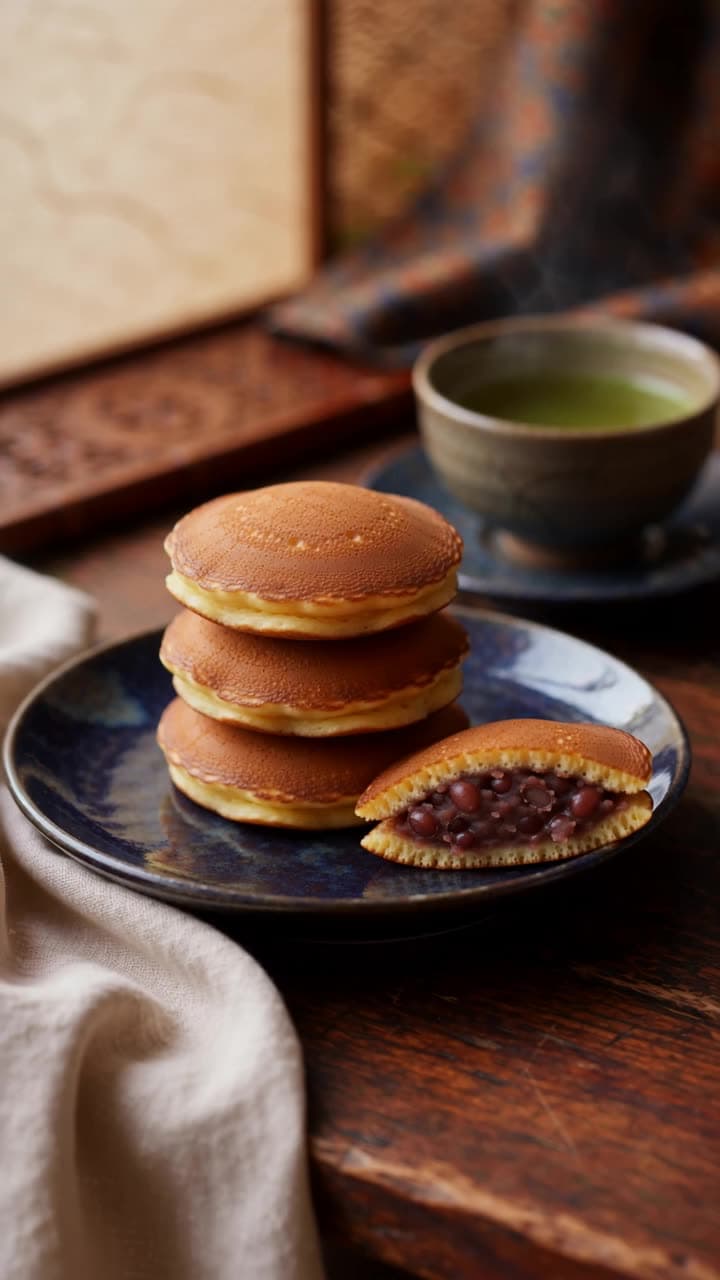
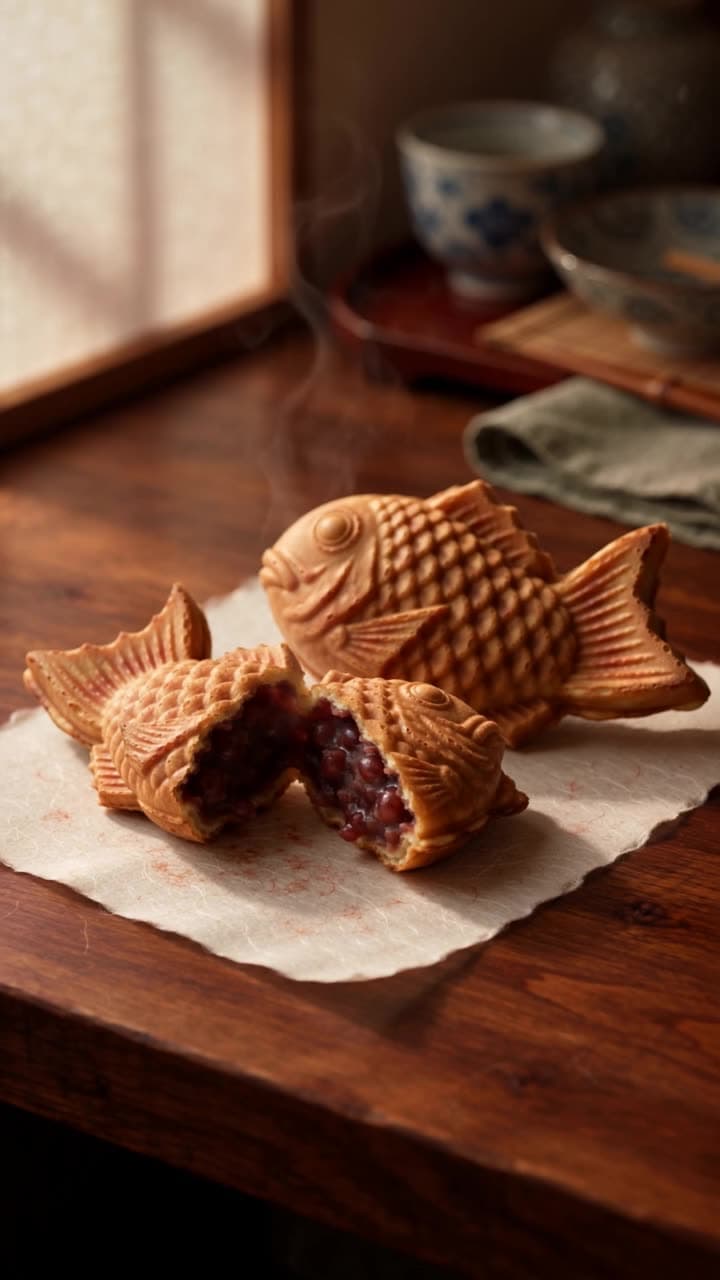
Dorayaki is two round griddle-baked pancakes sandwiching bean paste, usually tsubuan (chunky bean paste). Today's dorayaki is said to be named for its gong-like shape; the Edo-period version, a folded square closer to kintsuba, is said to have been baked on a gong. Its puffy shape is also likened to Mount Mikasa in Nara, so it is sometimes called mikasayama. Taiyaki is batter poured into a fish-shaped mold and baked with azuki paste inside; Japan's food composition tables treat it as the same family as imagawayaki.
Source (in Japanese): 文部科学省 食品成分表 菓子類 / コトバンク どら焼き / コトバンク 鯛焼き
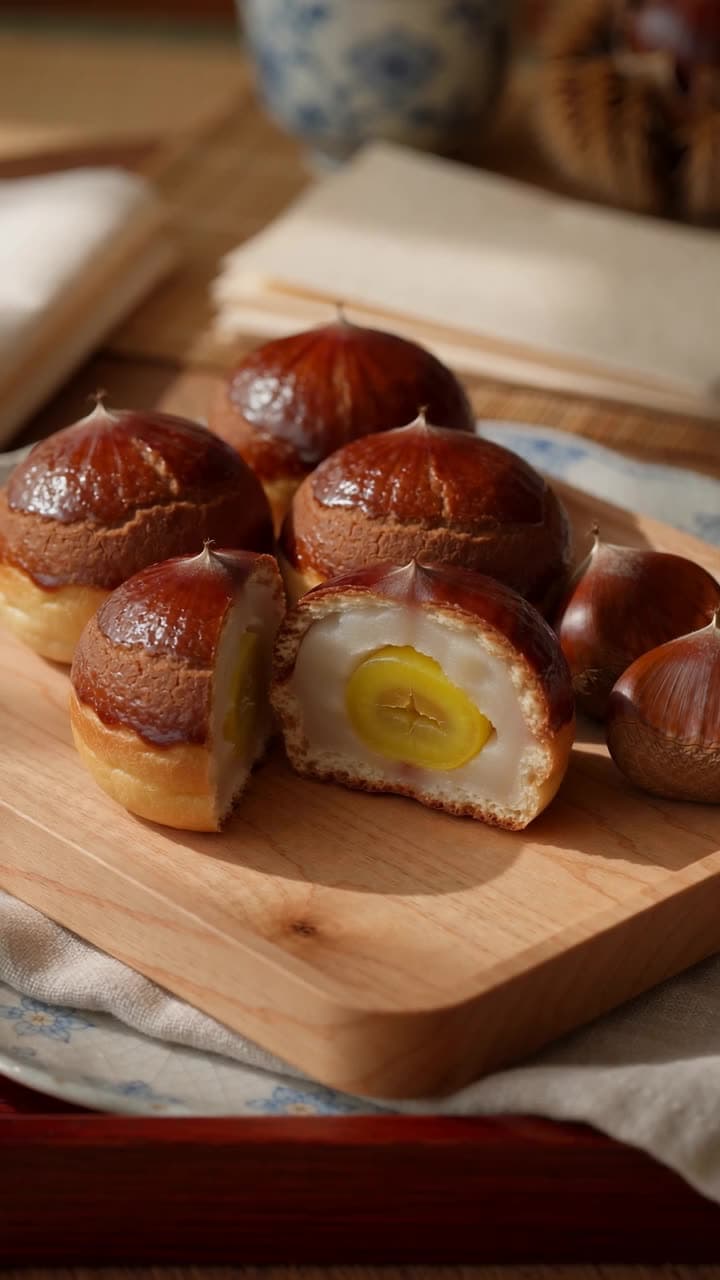
Kuri manju wraps bean paste (smooth red or white) mixed with candied chestnut in a dough of wheat flour, egg and sugar, then bakes it with a glossy glaze. Some contain no chestnut at all, just baked to a chestnut color. Monaka is sweet bean paste sandwiched between two thin, crisp wafers baked from glutinous-rice flour.
Source (in Japanese): 文部科学省 食品成分表 菓子類 / コトバンク 最中
An honest note on grouping: official classifications don't always agree with ours. Monaka's shell is baked, but the confectioners' association and the Ministry of Agriculture file it under "okamono", sweets assembled from separately made parts. Kuri manju is a fresh sweet in the association's table but semi-dry in one major encyclopedia. We list both here because of their baked skins.
Source (in Japanese): 全国和菓子協会 和菓子の種類 / 農林水産省 にっぽん伝統食図鑑 菓子類 / コトバンク 最中 / コトバンク 生菓子
Steamed and baked manju
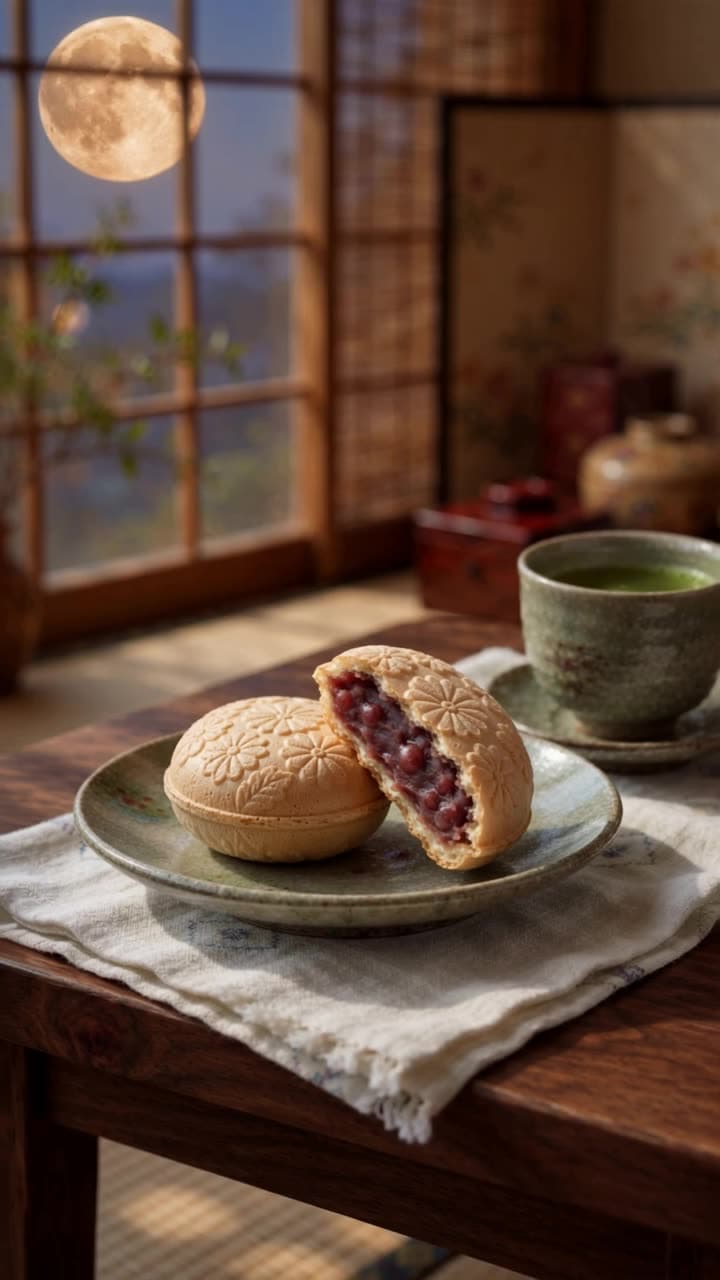
Manju are buns of wheat, rice or buckwheat flour wrapped around bean paste, and they come in two big groups: steamed and baked. Most are actually steamed, with dozens of kinds such as joyo manju (with grated yam), soba manju, kuzu manju and sake manju leavened with rice koji. Baked ones include oven-baked kuri manju and castella manju, and tō manju. Only the baked ones are on this page.
Source (in Japanese): 全国和菓子協会 和菓子の種類 / コトバンク 饅頭 / 文部科学省 食品成分表 菓子類
Manju came from China, but accounts differ on how. It is often said that Lin Jōin, who came from China in the mid-14th century, began making them in Nara, though sources give different years. Another account says the monk Enni brought the method back from Song China in 1241. Chinese mantou usually have no filling, and some say Japan's first manju had none either.
Source (in Japanese): コトバンク 饅頭 / 農林水産省 にっぽん伝統食図鑑 菓子類
Other well-known baked wagashi
Imagawayaki · Kintsuba · Castella · Momoyama · Chatsu · Tō manju · Chofu / Wakaayu