Monaka
最中
Also called monaka wafer
Sweet bean paste between two crisp wafers of mochi rice, named after the full moon of mid-autumn.
Monaka at a glance
- Taste
- Quite sweet bean paste against a lightly toasty rice wafer; the paste is usually made with more sugar than ordinary bean paste
- Texture
- A crisp, airy wafer that gives way to a thick, dense paste; the shell softens as it absorbs moisture
- Main ingredients
- Wafer shells of glutinous rice; bean paste, red or white, sometimes with chestnut or gyuhi
- When to eat it
- All year; a favorite gift and local souvenir
- Goes well with
- Green tea; the Japan Wagashi Association also says toasty monaka go well with coffee and black tea
- Where to buy
- Wagashi shops, including their outlets in shopping centers and airports; ice cream monaka at convenience stores and supermarkets
- How long it keeps
- Longer than most wagashi: Toraya's keep 24 days from production, another shop's at least 10 days after delivery. Follow the label; monaka can be frozen
- Egg, wheat and vegan
- The shell is rice, so traditional monaka usually contain no wheat, egg or dairy, but fillings vary and ice cream monaka contain dairy. Check the shop or label
- How to say it
- moh-NAH-kah
Fun facts about Monaka
Takemura Ise's "monaka no tsuki" was so popular that people wrote a comic verse about it: "In Yoshiwara, the moon rises out of the bamboo." The bamboo (take) stood for Takemura, and the moon for its monaka.[8]
Because the shell can be molded into any shape and paired with any filling, towns all over Japan have their own local monaka. The Japan Wagashi Association suggests looking for them as one of the pleasures of travel.[6]
Kuya in Ginza, founded in Ueno in 1884, makes gourd-shaped monaka. The shop is named after Kuya, a Heian-period monk who spread the nembutsu, a chanted prayer to the Amida Buddha, and its "Kuya mochi" appears in Natsume Soseki's novel I Am a Cat.[9]
"Mimuro monaka" from Miwa in Nara, made by a shop founded in 1844, is named after Mount Mimuro, the sacred mountain worshipped at Omiwa Shrine. Production stopped during the war because of a sugar shortage and resumed afterward.[10]
How to enjoy Monaka
Eat it while the shell is crisp
The thin rice wafer slowly draws moisture from the paste, so a monaka is crispest soon after it is filled. That is why some shops sell the shells and the paste separately, for you to put together just before eating. If you see such a kit, it makes a fun souvenir.[11]
About this wagashi
Monaka is two thin, crisp wafer shells made from glutinous rice, with sweet bean paste in between. Besides chunky or smooth red bean paste, fillings include white bean paste, yuzu, sesame and chestnut. Monaka are sold all year, and many towns in Japan have their own local monaka as a souvenir.
How it is made
Glutinous rice flour is steamed, rolled thin and baked in molds to make the wafer shells, which are often made by specialist shell makers. Two shells are then filled with bean paste and pressed together.
Monaka: history and origins
The name is said to come from a Heian-period poem by Minamoto no Shitago: counting the moon's reflections on the water, he wrote that "tonight is the very middle (monaka) of autumn". A round sweet that looked like the full moon was called "monaka no tsuki", another name for the mid-autumn moon, and in time it was shortened to monaka.[6],[13]
A record from 1769 by the writer Hiraga Gennai shows that a confectioner called Takemura Ise in Edo's Shin-Yoshiwara district was making "monaka no tsuki". The first monaka were dry sweets made of the wafer alone, and bean paste was added later. One dictionary says monaka began in 1805, when a Takemura craftsman put leftover paste into spare wafers, but this does not match the 1769 record, so it is safest to say it took shape in the mid-to-late Edo period.[14],[6],[7]
Questions about Monaka
What is monaka made of? Can you eat the wafer?
Yes, you eat the wafer and the filling together. The shell is made from glutinous rice: the dough is steamed or pounded like mochi, rolled thin and baked in molds into a light, crisp wafer. The filling is usually a firm, extra-sweet bean paste, which keeps the shell from going soggy too fast.[1],[11]
What is ice cream monaka?
Ice cream monaka is ice cream sandwiched in the same kind of crisp rice wafer instead of bean paste. It is one of Japan's familiar frozen treats: Morinaga's Choco Monaka Jumbo, with ice cream and a chocolate layer, has been sold since 1972 and is found in convenience stores. Unlike traditional monaka, it contains dairy.[5],[11]
How long does monaka keep?
Usually a few weeks, much longer than fresh wagashi, but follow the label. Toraya gives 24 days from production for its monaka, and another long-established shop guarantees at least 10 days after delivery. The Japan Wagashi Association lists monaka among the sweets that can be frozen; thaw at room temperature and do not refreeze.[2],[15],[16]
Is monaka (最中) read "saichu"?
As the name of the sweet, it is always read monaka. The same kanji are also read saichū, an everyday word meaning "in the middle of" something, and Japanese dictionaries also give monaka and sanaka as readings of that word. The sweet took the reading monaka from "monaka no tsuki", an old name for the mid-autumn moon.[7],[6]
Sources
Most of the sources are written in Japanese.
- [1]文部科学省 日本食品標準成分表 菓子類の解説
- [2]とらや 最中 御代の春 紅
- [3]湖月堂 商品のアレルギー情報
- [4]全国和菓子協会 味わい方いろいろ
- [5]Wikipedia Monaka
- [6]全国和菓子協会 和菓子の由来
- [7]コトバンク 最中
- [8]東都のれん会 中秋の名月と最中の月
- [9]東京新聞 空也
- [10]農林水産省 みむろ最中
- [11]Wikipedia 最中
- [12]とらや 店舗一覧
- [13]とらや 最中
- [14]世界大百科事典 竹村伊勢(コトバンク)
- [15]湖月堂オンラインショップ 湖月最中
- [16]全国和菓子協会 和菓子の保存

More wagashi
 AI-generated imagery
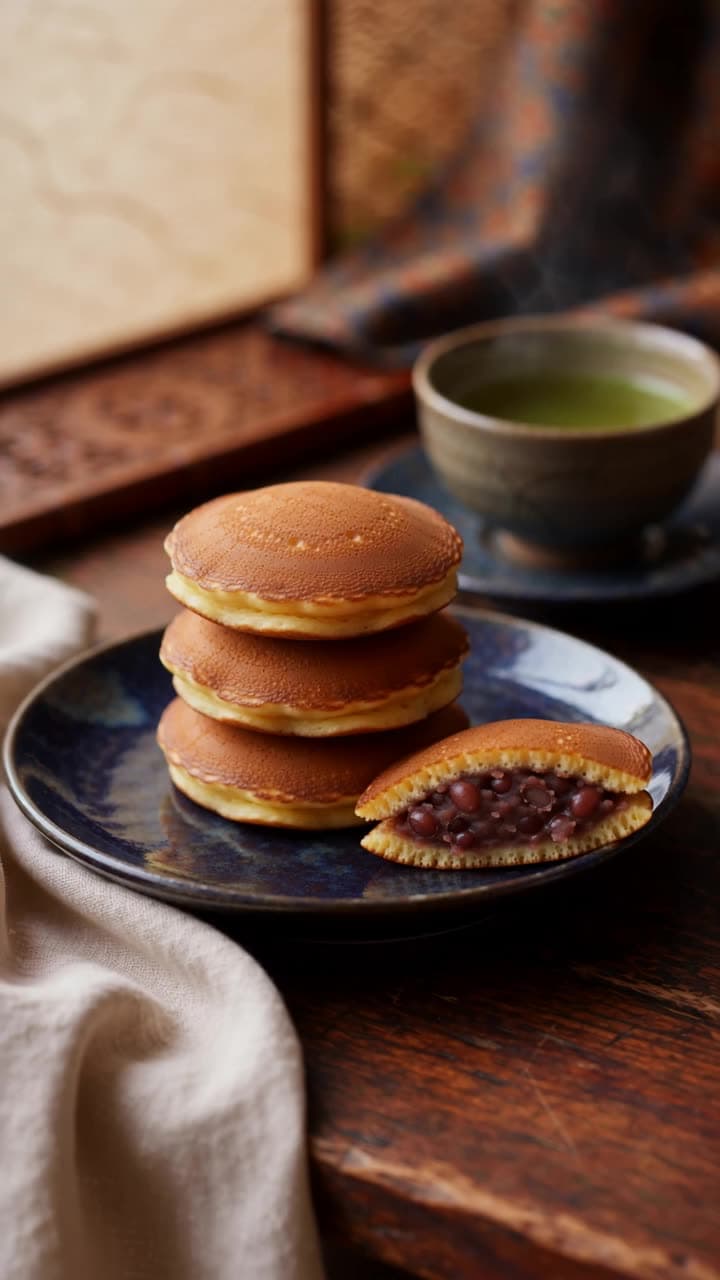
Dorayaki
Two soft, golden-brown pancakes with sweet bean paste in between, named after the gong it resembles.
 AI-generated imagery
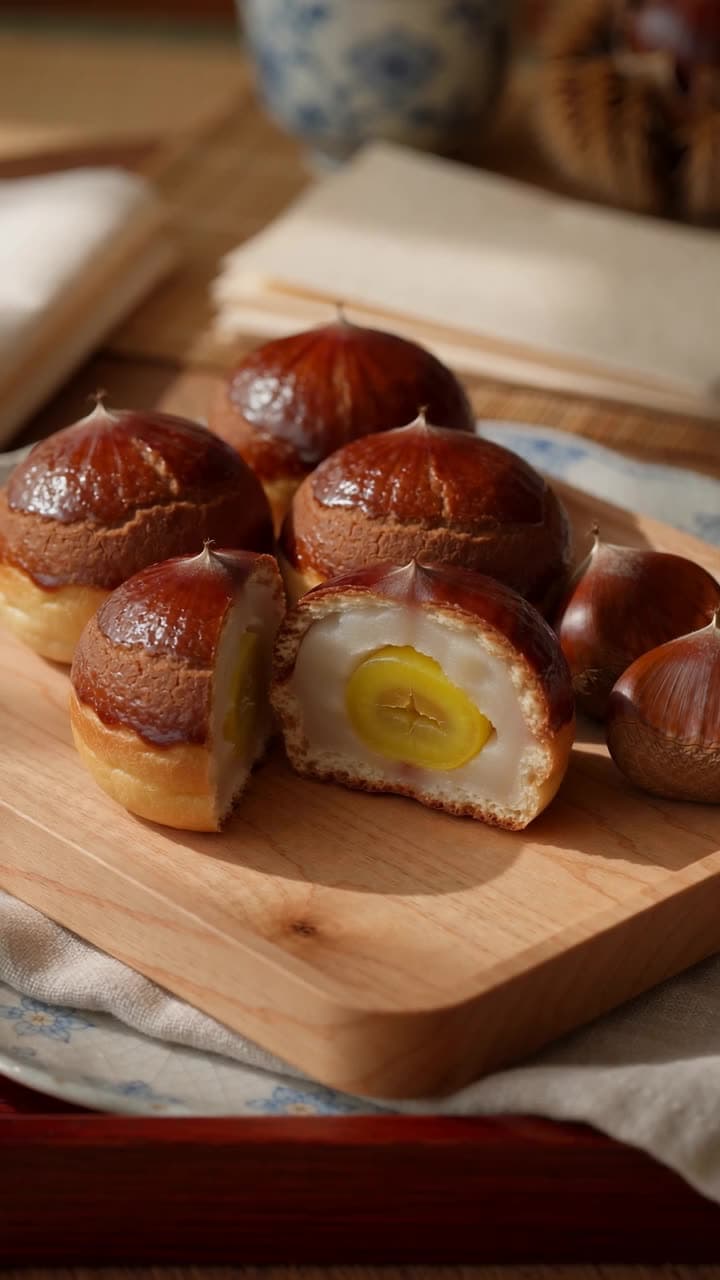
Kuri Manju
A baked bun of white bean paste and chestnut, brushed with egg yolk so it shines like a chestnut.
 AI-generated imagery
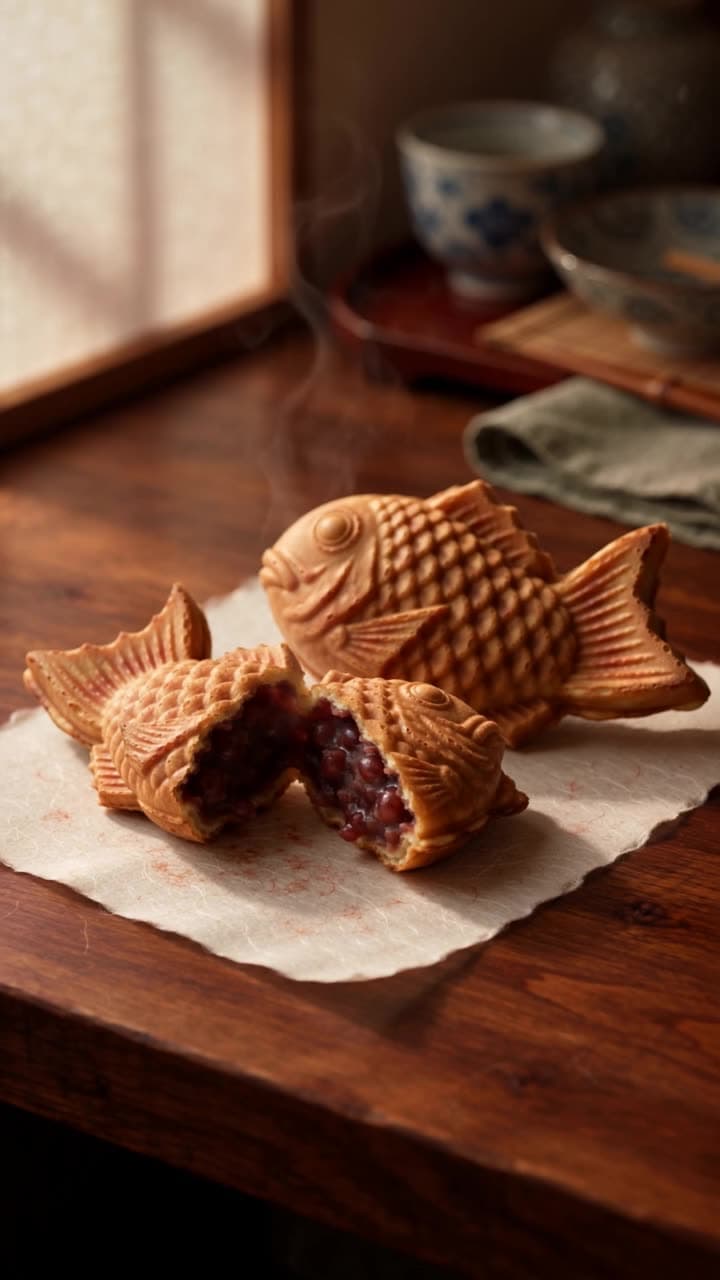
Taiyaki
A crisp cake filled with sweet bean paste, baked in the shape of a sea bream (tai), a fish of good fortune in Japan.
Yatsuhashi
Kyoto's signature sweet of rice flour, sugar and cinnamon: a crisp, curved baked cracker, or the soft, unbaked nama yatsuhashi, often folded around bean paste.