Kuri Manju
栗まんじゅう
Also called chestnut manju, kurimanju
A baked bun of white bean paste and chestnut, brushed with egg yolk so it shines like a chestnut.
Kuri Manju at a glance
- Taste
- Sweet bean paste with bits of candied chestnut, under a toasty, egg-glazed crust
- Texture
- A thin, lightly firm baked crust around a dense, moist filling
- Main ingredients
- Wheat flour, egg and sugar for the crust; bean paste (white or red) with chopped candied chestnut; egg-yolk glaze
- When to eat it
- Sold all year; chestnuts give it an autumn feel
- Goes well with
- Green tea; the Japan Wagashi Association also names baked manju as a good match for coffee and black tea
- Where to buy
- Wagashi shops across Japan, often in boxes as a souvenir; Kokura (Kitakyushu) and Nagasaki have old shops known for it
- How long it keeps
- Longer than fresh sweets: boxed ones from one Kokura shop keep at least 10 days after delivery. Follow the label
- Egg, wheat and vegan
- Contains wheat and egg (in the crust and the glaze), so it is not vegan; dairy is usually not used. Check the shop or label
- How to say it
- koo-ree MAHN-joo
Fun facts about Kuri Manju
Kogetsudo in Kokura links its name to kachiguri, dried chestnuts eaten for luck. "Kachi" sounds like the Japanese word for "win", so they are used at New Year celebrations.[5]
In Nagasaki, Tanaka Kyokueido says its kuri manju was created by a castella baker. Castella, a sponge cake that came to Japan through the Portuguese, links this sweet to Nagasaki's history of foreign trade.[8]
Baked manju often taste even better the day after they are made, once the crust and the bean paste have settled together.[9]
Although it is sold all year, kuri manju counts as a word for autumn in haiku, the short Japanese poems that include a seasonal word.[10]
How to enjoy Kuri Manju
Kokura style or Nagasaki style
If you travel in Kyushu, compare two hometowns of kuri manju. Kogetsudo in Kokura makes an oval bun with candied chestnut kneaded into the paste, while Tanaka Kyokueido in Nagasaki shapes its buns like chestnuts and sells some with a whole chestnut inside.[5],[8]
A sturdy souvenir
As a baked sweet with a firm crust, kuri manju travels better than soft fresh sweets and keeps longer: one Kokura shop guarantees at least 10 days after delivery for its boxes. Still, check the date on the box and keep it away from heat and humidity.[3]
Try it with coffee
Green tea is the natural partner, but the Japan Wagashi Association specifically mentions baked manju as a sweet that goes well with coffee and black tea. The toasty, egg-glazed crust makes it a good fit for an afternoon coffee.[4]
About this wagashi
Kuri manju is a baked bun with a thin wheat-flour crust around white bean paste mixed with sweet chestnut, or a chestnut paste. Before baking, the top is brushed with egg yolk, which gives it a glossy, chestnut-brown finish. Many are oval, while some shops shape them like a chestnut. It is sold all year round.
How it is made
A wheat-flour dough is wrapped around white bean paste mixed with candied chestnut. The tops are brushed with egg yolk, and the buns are baked in an oven until shiny and brown.
Kuri Manju: history and origins
The name simply means a manju (bun) made with chestnut (kuri). It is also explained as describing the look: the glossy brown top, brushed with egg yolk, resembles a chestnut. The word is used in both senses.[10],[11]
Baked wagashi like kuri manju became common after ovens arrived in Japan in the Meiji era (1868–1912). The word "kuri manju" already appears in a novel by Iwaya Sazanami published in 1892.[12],[10]
Several old shops tell their own stories of creating kuri manju. Kogetsudo in Kokura, Kitakyushu, says it named and launched its version when it opened in 1895, using lucky dried chestnuts. Tanaka Kyokueido in Nagasaki, founded in 1898, says its first owner, a castella baker, applied castella techniques and baked an egg-rich bun with chestnut in a brick oven. Because the word is older than both shops, no single shop can be named as the origin.[5],[8],[10]
Questions about Kuri Manju
Is there a whole chestnut inside kuri manju?
Usually not: most kuri manju have finely chopped candied chestnut mixed into the bean paste. Some shops put in a whole chestnut, while some versions contain no chestnut at all and are named only for their glossy, chestnut-brown look. If you want a whole chestnut, check the product name or description.[1],[8]
What is the difference between kuri manju and regular manju?
Kuri manju is baked and glazed, while most manju are steamed. Steamed manju have a soft, pale skin, whereas kuri manju has a wheat-and-egg crust brushed with egg yolk and baked in an oven until shiny and brown, with chestnut in the paste. Note that Japanese manju are sweet; they are different from Chinese mantou or meat buns.[1]
Is kuri manju the same as Kurimanju from Chiikawa?
No, this page is about the real sweet. Kurimanju is a character in the popular manga and anime Chiikawa whose head looks like a kuri manju; he is known for enjoying drinks and snacks. The sweet itself is a baked chestnut bun sold at wagashi shops all over Japan.[13]
Sources
Most of the sources are written in Japanese.

More wagashi
 AI-generated imagery
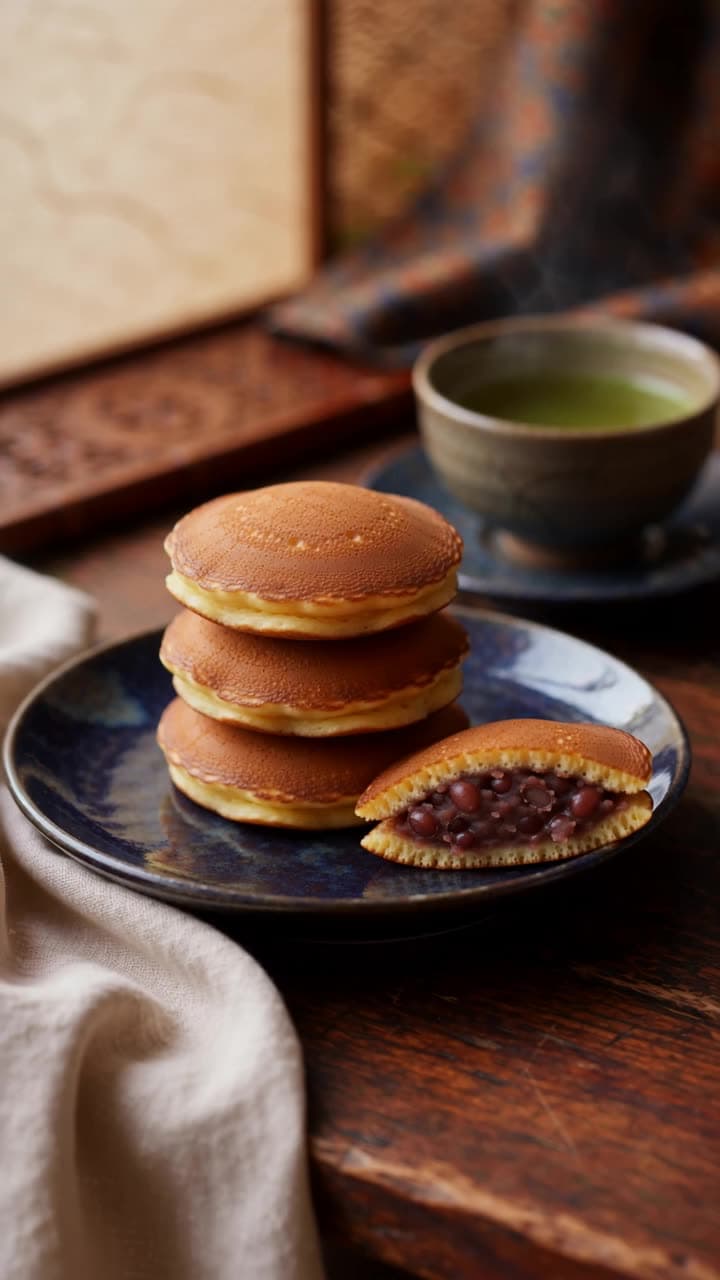
Dorayaki
Two soft, golden-brown pancakes with sweet bean paste in between, named after the gong it resembles.
 AI-generated imagery
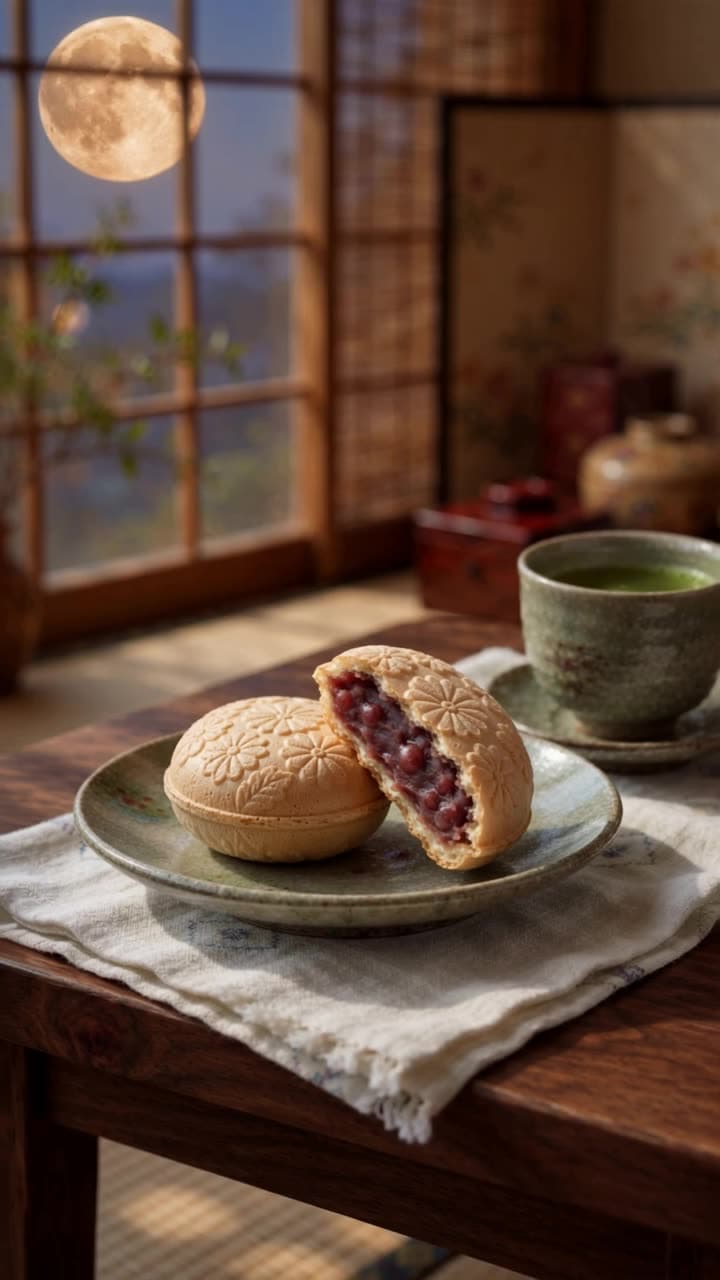
Monaka
Sweet bean paste between two crisp wafers of mochi rice, named after the full moon of mid-autumn.
 AI-generated imagery
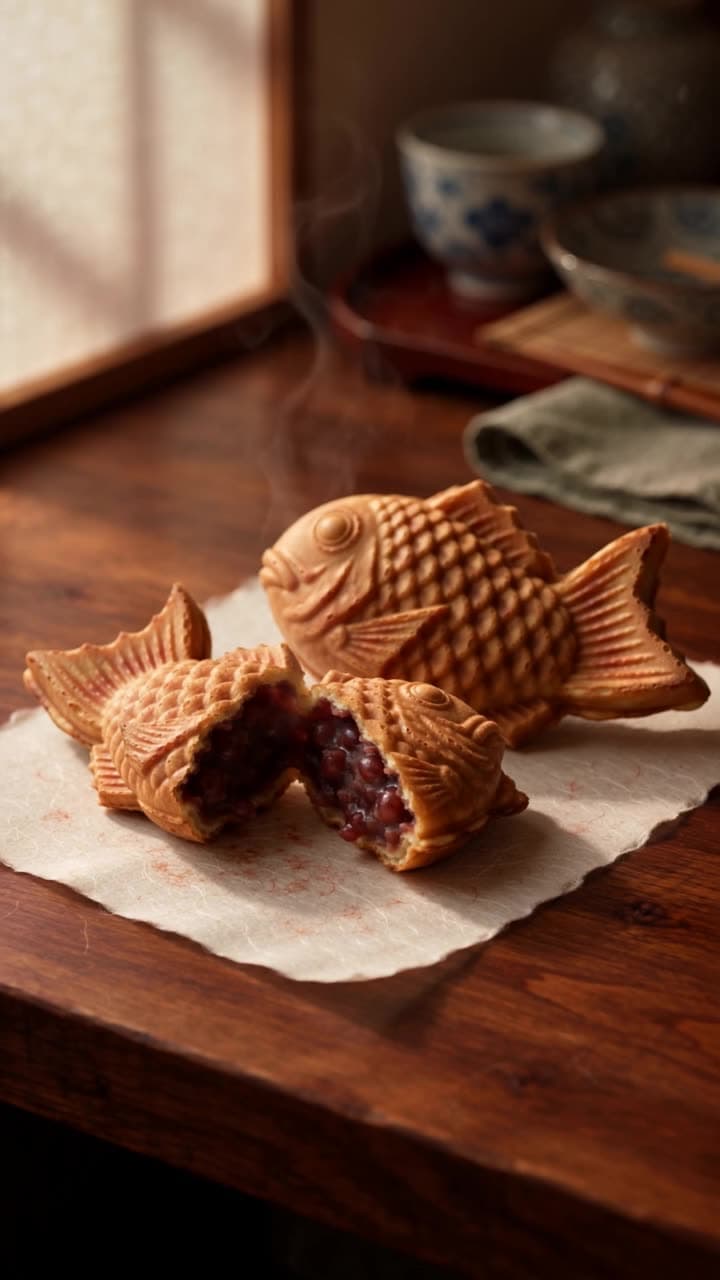
Taiyaki
A crisp cake filled with sweet bean paste, baked in the shape of a sea bream (tai), a fish of good fortune in Japan.
Yatsuhashi
Kyoto's signature sweet of rice flour, sugar and cinnamon: a crisp, curved baked cracker, or the soft, unbaked nama yatsuhashi, often folded around bean paste.