Taiyaki
たい焼き
Also called fish-shaped cake
A crisp cake filled with sweet bean paste, baked in the shape of a sea bream (tai), a fish of good fortune in Japan.
Taiyaki at a glance
- Taste
- Sweet red bean paste inside a lightly sweet, toasty batter cake; custard and seasonal fillings are common too
- Texture
- Crisp on the surface when fresh off the iron, soft inside; thin-crust ones baked one at a time are especially crisp
- Main ingredients
- A batter of wheat flour, sugar, egg (some shops use milk instead) and raising agent; red bean paste
- When to eat it
- An everyday snack, all year; best eaten hot
- Goes well with
- Usually eaten on the spot; at home, green tea, or coffee, which also suits red bean sweets
- Where to buy
- Street stalls, small specialist shops and taiyaki chains with branches across Japan
- How long it keeps
- Best warm, right after baking; plan to eat it the same day
- Egg, wheat and vegan
- Contains wheat; most batters have egg and some have milk, and custard or chocolate fillings add egg and dairy. Check the shop or its allergen chart
- How to say it
- tie-YAH-kee
Fun facts about Taiyaki
"Wild" taiyaki are rare: a 2022 survey by a taiyaki shop counted only 138 shops in all of Japan that bake them one at a time, and none at all on the island of Shikoku.[6]
Japan's best-selling single is a song about taiyaki. "Oyoge! Taiyaki-kun" (1975), about a taiyaki who gets tired of being baked on the griddle every day and escapes to the sea, sold about 4.53 million copies and is recognized by Guinness.[8]
Should there be bean paste all the way to the tail? Wakaba in Yotsuya keeps as its motto the words of critic Ando Tsuruo: "May there always be bean paste in the tail of a taiyaki."[9]
Wakaba's baking molds were made when the shop opened, based on a drawing given by the Western-style painter Kimura Shohachi, and they are still in use.[9]
How to enjoy Taiyaki
Eat it hot, on the spot
Taiyaki is at its best straight from the iron mold, when the surface is crisp and fragrant. Look for a shop that bakes in front of you and eat it while it is still warm; shops that bake one fish at a time over an open flame say the quick, direct heat gives a crisp, aromatic skin.[2]
Pick your filling
Red bean paste is the classic, but many shops also offer custard cream and seasonal fillings such as cherry-blossom bean paste, chestnut or matcha cream. If you have allergies, note that the filling can change what is in it: custard, for example, adds egg and milk.[3],[1]
Watch the bakers at work
Many taiyaki shops bake behind an open counter, so you can watch while you wait. At shops that bake one fish at a time, the baker fills heavy iron molds weighing about 2 kg each and shifts them across the fire, which is a show in itself.[2]
About this wagashi
Taiyaki is a griddle cake baked in an iron mold shaped like a tai, or sea bream, with sweet bean paste inside. Today you can also find fillings such as custard cream and chocolate. It is a casual snack sold at street stalls and small shops.
How it is made
A wheat-flour batter is poured into a fish-shaped iron mold, bean paste is placed inside, and the cake is baked until golden. Some shops bake each fish one at a time in a heavy single mold of about 2 kg held over an open flame, while others use molds that bake many fish at once.
Taiyaki: history and origins
Taiyaki simply means "baked sea bream." The tai is a lucky fish in Japan because its name echoes medetai, a word for celebration, and it was once too expensive for ordinary people to eat often.[10]
Griddle sweets baked in iron molds, such as imagawayaki, which is regarded as the forerunner of taiyaki, are said to have been popular in Edo during the Edo period (1603–1868). One widely held view is that in the late Meiji era (around the 1900s) these led to cakes in many shapes, such as animals, and that the lucky sea bream was the shape that lasted. A Yomiuri newspaper article from 1911 mentions a shop that had sold taiyaki for five years, which suggests there were taiyaki shops by around 1906.[11],[12]
Naniwaya Sohonten, founded in 1909 and in Azabu-Juban, Tokyo since around 1948, is said to be the shop that first came up with taiyaki, though this rests on the shop's own story. In Yotsuya, Wakaba opened as a taiyaki shop in 1953 and drew long lines after the theater critic Ando Tsuruo praised it in a newspaper column. Together with Yanagiya in Ningyocho, these shops are known as Tokyo's three great taiyaki makers.[13],[10],[9]
Questions about Taiyaki
What is the difference between taiyaki and Korean bungeoppang?
The main difference is the fish: taiyaki is shaped like a sea bream (tai), while bungeoppang is shaped like a crucian carp (bungeo), a familiar freshwater fish in Korea. Bungeoppang is generally said to come from Japanese taiyaki, which reached Korea around the 1930s and changed shape there. Both are filled with sweet red bean paste, and in Korea bungeoppang is a typical winter street snack.[14],[15]
Is there any fish in taiyaki?
No, taiyaki contains no fish; only the shape is a fish. It is a sweet cake of wheat-flour batter with red bean paste or another sweet filling inside. The sea bream shape is usually explained by its being a lucky fish in Japan.[1],[10]
What is the difference between taiyaki and imagawayaki?
Mostly the shape: both are batter cakes filled with bean paste and baked in iron molds, but imagawayaki is round and drum-shaped, while taiyaki is shaped like a fish. Japan's official food composition tables treat taiyaki as the same type of product as imagawayaki, which also goes by local names such as obanyaki and kaitenyaki.[1]
Sources
Most of the sources are written in Japanese.
More wagashi
 AI-generated imagery
Dorayaki
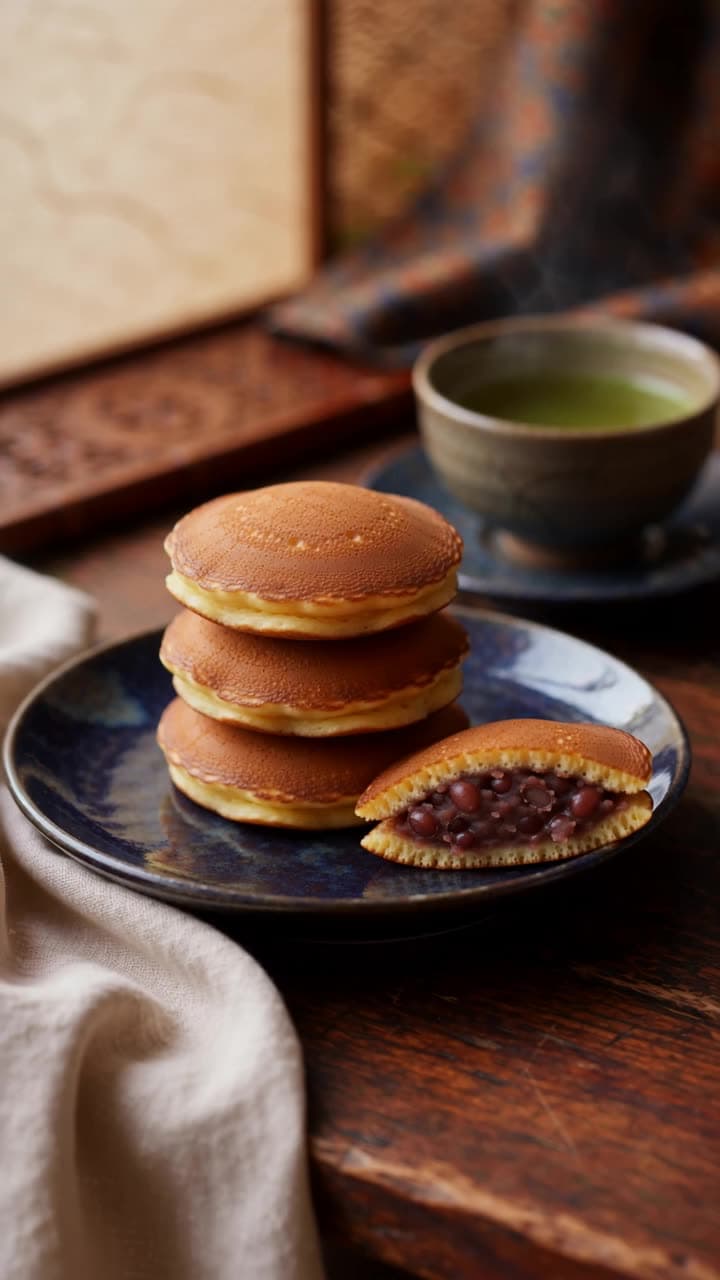
Two soft, golden-brown pancakes with sweet bean paste in between, named after the gong it resembles.
 AI-generated imagery
Kuri Manju
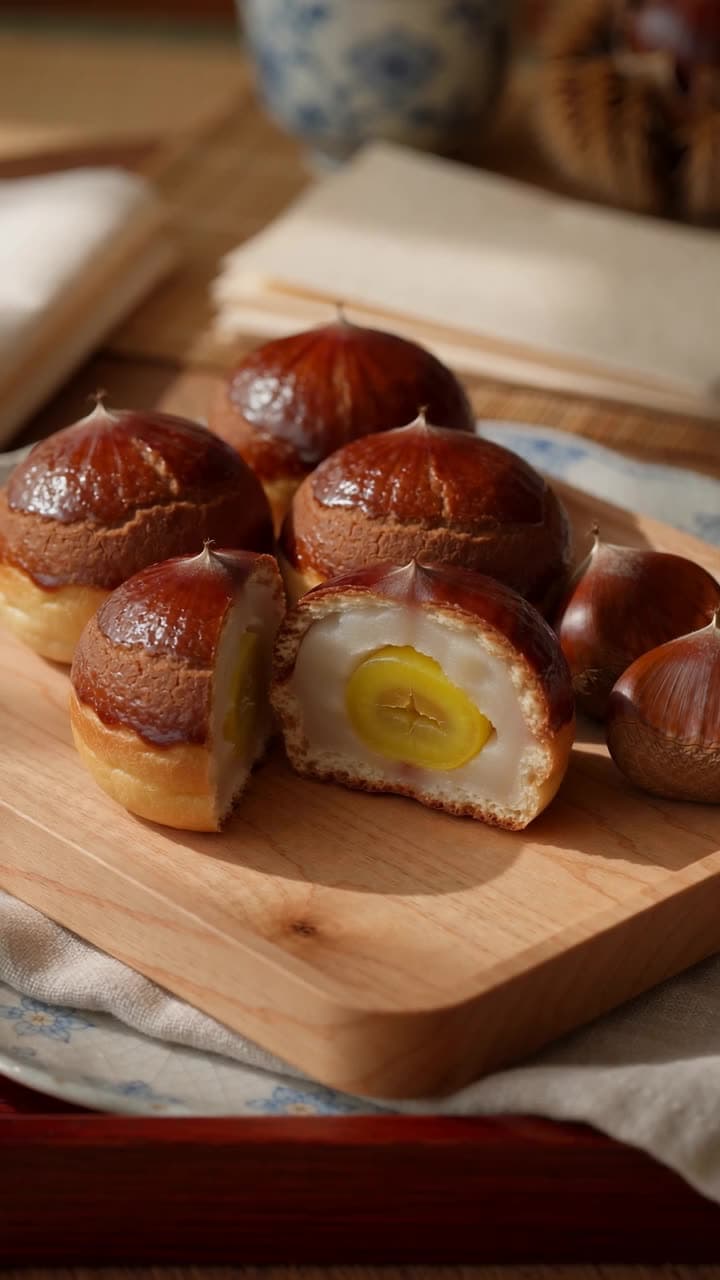
A baked bun of white bean paste and chestnut, brushed with egg yolk so it shines like a chestnut.
 AI-generated imagery
Monaka
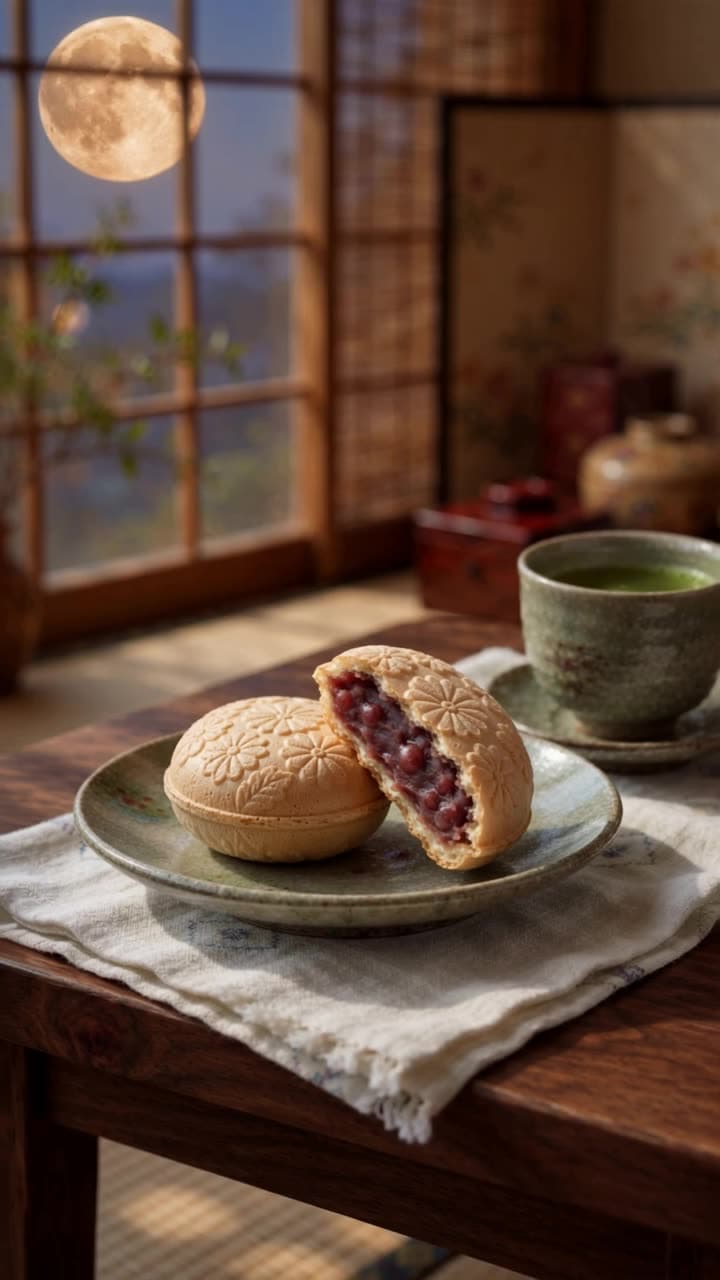
Sweet bean paste between two crisp wafers of mochi rice, named after the full moon of mid-autumn.
Yatsuhashi
Kyoto's signature sweet of rice flour, sugar and cinnamon: a crisp, curved baked cracker, or the soft, unbaked nama yatsuhashi, often folded around bean paste.