Dorayaki
どら焼き
Also called red bean pancake
Two soft, golden-brown pancakes with sweet bean paste in between, named after the gong it resembles.
Dorayaki at a glance
- Taste
- Mildly sweet; the egg pancakes taste gently sweet (some shops add honey) and the red bean paste is rich
- Texture
- Soft, springy pancakes around a thick bean paste with whole beans
- Main ingredients
- Wheat flour, egg and sugar (often honey) for the pancakes; red bean paste, usually chunky
- When to eat it
- An everyday snack, sold all year round
- Goes well with
- Green tea such as sencha or hojicha; coffee and black tea also suit red bean sweets
- Where to buy
- Wagashi shops, some famous for their dorayaki, and supermarkets, which sell individually wrapped ones from confectionery makers
- How long it keeps
- Varies widely: freshly made ones are best soon; one shop's boxed dorayaki keep at least 10 days after delivery, and a packaged supermarket brand lists 90 days unopened. Follow the label; dorayaki freeze well
- Egg, wheat and vegan
- Contains egg and wheat, so it is not vegan; usually no dairy, and some shops also add honey. Check the shop or label
- How to say it
- doh-rah-YAH-kee
Fun facts about Dorayaki
April 4 is Dorayaki Day in Japan, registered in 2008 by a confectionery maker in Yonago, Tottori. It falls between the Doll Festival (March 3) and Children's Day (May 5), and it is a pun: four can be read "shi", so "4-awase" ("putting fours together") sounds like shiawase, the Japanese word for happiness.[9]
According to legend, the warrior monk Benkei once baked dough on a heated gong and wrapped it around bean paste, as thanks to a family who had treated his wounds. People point out that the dates do not fit, so it is not regarded as historical fact.[6]
Usagiya, the Ueno shop known for its dorayaki, takes its name from the rabbit (usagi). The founder was born in the Year of the Rabbit.[10]
How to enjoy Dorayaki
Shop-made or supermarket
Wagashi shops bake their own pancakes and sell them fresh, so this is where to taste the difference between makers. Supermarkets sell individually wrapped dorayaki from confectionery makers, which are handy for a snack on the go and keep far longer: one maker gives a best-before of 90 days unopened.[3]
Not just red bean
Red bean paste is the classic, but many shops and makers also sell dorayaki with white bean paste, or with chestnut in the filling. If you buy a mixed box, you can compare them side by side.[11],[12]
Taking it home
Boxed dorayaki from wagashi shops travel fairly well; one long-established shop guarantees at least 10 days from delivery, but always check the date on the box. If you will not finish them in time, the Japan Wagashi Association says dorayaki can be frozen: wrap them one by one, thaw at room temperature for two to three hours, and do not refreeze.[13],[5]
With tea, or with coffee
A cup of green tea is the classic match. The Japan Wagashi Association also points out that coffee and black tea go well with almost any sweet made with red bean paste, so dorayaki makes an easy breakfast or afternoon snack.[4]
About this wagashi
Dorayaki is made of two round, fluffy pancakes of wheat flour, egg and sugar, with sweet red bean paste in between. The filling is usually the chunky kind, with whole beans you can still see. Some shops add honey to the batter for a gentle sweetness and a deep golden color. It is sold all year round, and many people outside Japan first hear of it as the favorite snack of the cartoon robot cat Doraemon.
How it is made
The batter is poured onto a hot, flat griddle and baked into round pancakes. Bean paste is spread on one pancake and a second one is pressed on top.
Dorayaki: history and origins
The name comes from the dora, a bronze gong. In a book with a preface dated 1830, the Edo-period scholar Kitamura Nobuyo wrote that the sweet was called "dora" because its shape looked like a gong. Another theory says the copper pan used to bake it resembled a gong.[14],[6]
The dorayaki of the Edo period looked quite different from today's. The same scholar described it as bean paste wrapped in a single sheet of flour dough and baked into a round shape, like the guard of a sword. According to the Toraya archive, the version with egg batter sandwiching the paste probably spread from the Meiji era (1868–1912) onward.[14]
Two Tokyo shops are linked to the modern dorayaki. Baikatei in Nihonbashi, founded in 1850, says it created a single-sheet dorayaki in the early Meiji era, inspired by the gong on a ship. Usagiya in Ueno, founded in 1913, is known as a pioneer: its second-generation owner baked the pancakes separately and sandwiched the paste between them, the form that became standard.[10],[15]
Questions about Dorayaki
Does dorayaki contain egg? Is it vegan?
Yes, dorayaki contains egg, so it is not vegan. The pancakes are made from wheat flour, egg and sugar, and some shops also add honey. Dairy is usually not used, but recipes differ, so check the shop or the allergen label.[1],[2]
How long does dorayaki last? Can you freeze it?
It depends on how it is made and packed, so go by the date on the label. Boxed dorayaki from one long-established shop keep at least 10 days after delivery, while a packaged supermarket brand lists 90 days unopened. And yes, it freezes well: the Japan Wagashi Association recommends freezing it soon, thawing it at room temperature and not refreezing it.[13],[3],[5]
What is the difference between dorayaki and imagawayaki?
Dorayaki is two thin pancakes baked on a flat griddle and then sandwiched around bean paste, while imagawayaki is a thick, drum-shaped cake baked in a round mold with the paste already inside. Both use a batter of wheat flour, egg and sugar. Imagawayaki goes by many local names, such as obanyaki, and taiyaki belongs to the same family.[1]
Sources
Most of the sources are written in Japanese.
More wagashi
 AI-generated imagery
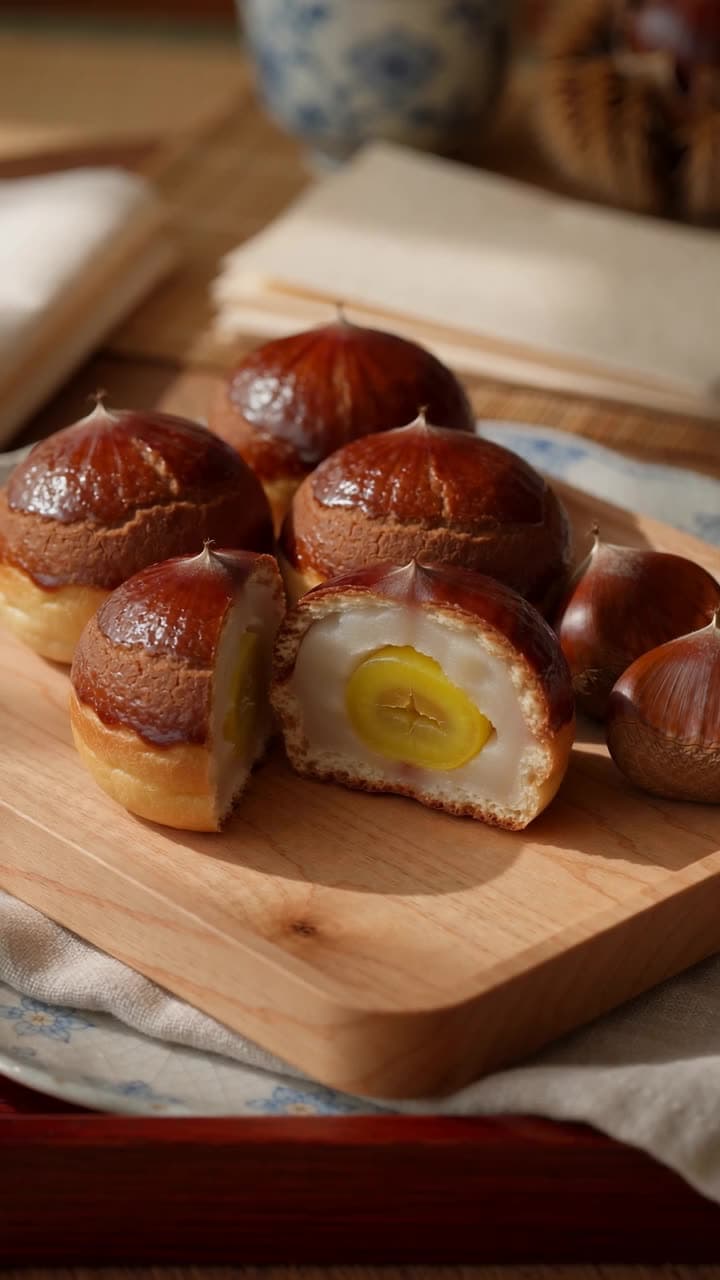
Kuri Manju
A baked bun of white bean paste and chestnut, brushed with egg yolk so it shines like a chestnut.
 AI-generated imagery
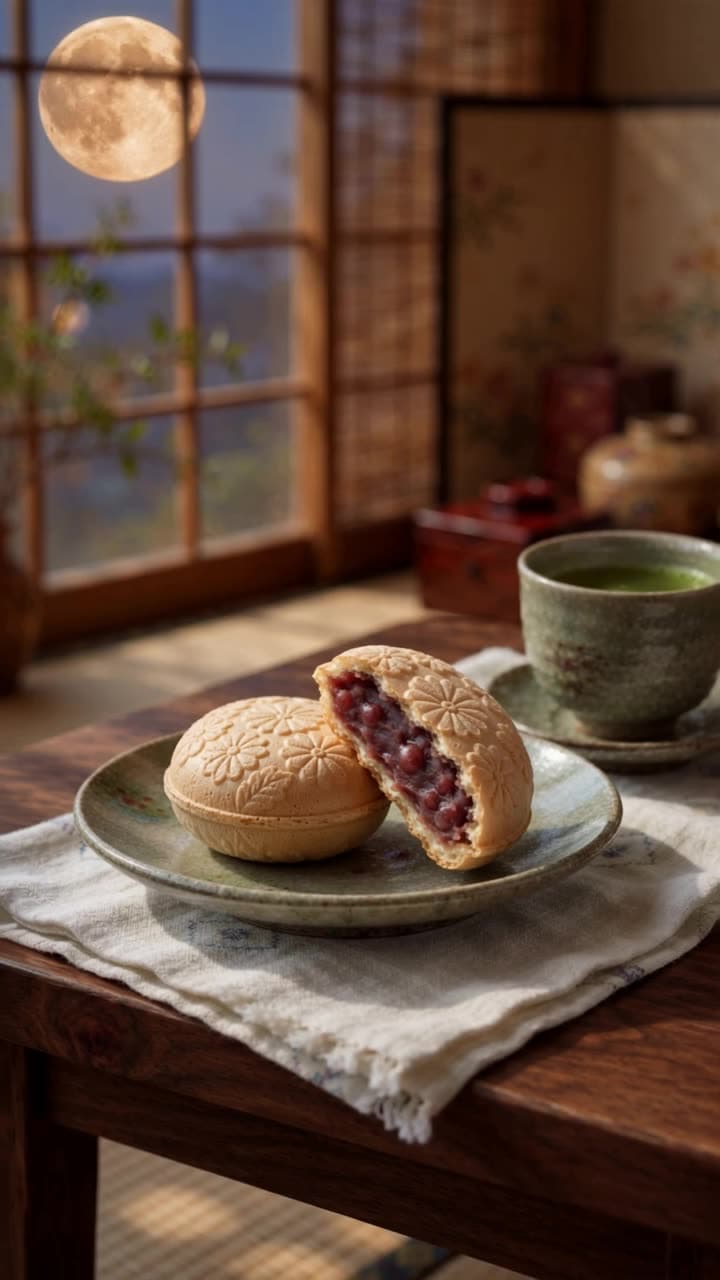
Monaka
Sweet bean paste between two crisp wafers of mochi rice, named after the full moon of mid-autumn.
 AI-generated imagery
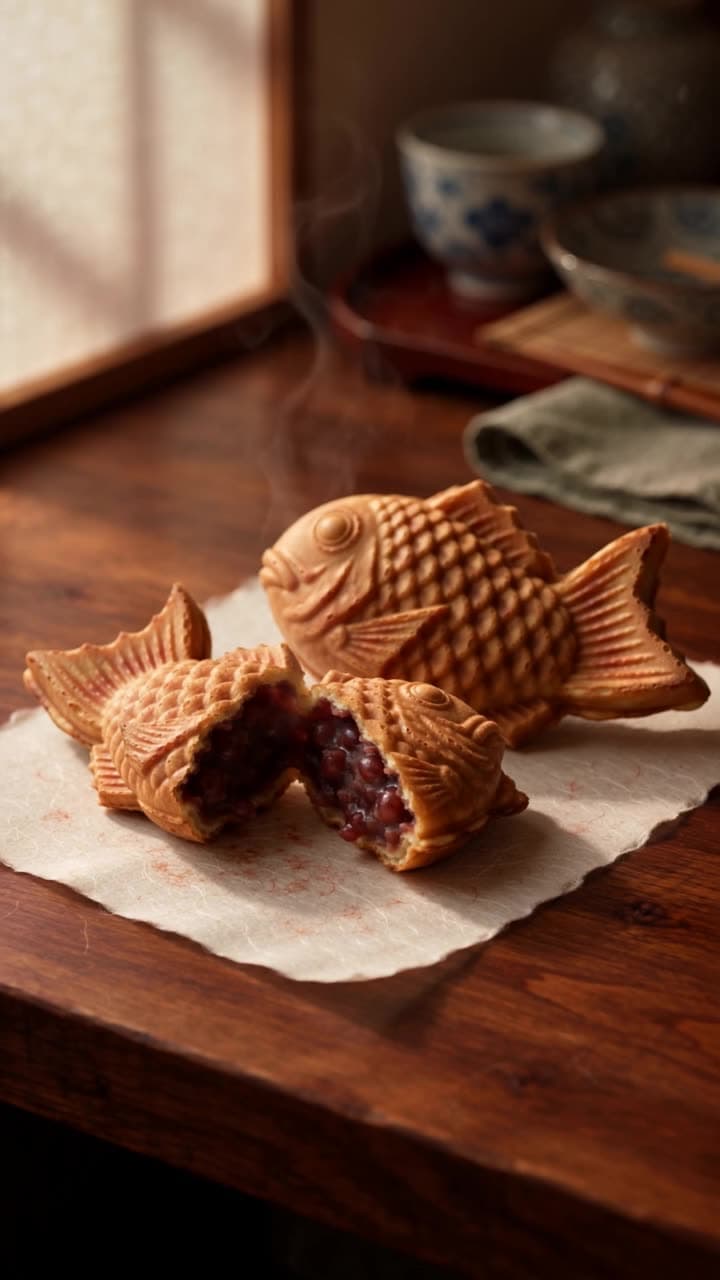
Taiyaki
A crisp cake filled with sweet bean paste, baked in the shape of a sea bream (tai), a fish of good fortune in Japan.
Yatsuhashi
Kyoto's signature sweet of rice flour, sugar and cinnamon: a crisp, curved baked cracker, or the soft, unbaked nama yatsuhashi, often folded around bean paste.