Yatsuhashi
八ッ橋
Also called nama yatsuhashi, yatsuhashi kyoto
Kyoto's signature sweet of rice flour, sugar and cinnamon: a crisp, curved baked cracker, or the soft, unbaked nama yatsuhashi, often folded around bean paste.
Yatsuhashi at a glance
- Taste
- Lightly sweet with a strong cinnamon (nikki) aroma; filled nama yatsuhashi adds sweet red bean paste, and matcha and seasonal flavors are common
- Texture
- Baked: thin, hard and crisp, like a cracker. Nama: soft, smooth and chewy, a little like mochi
- Main ingredients
- Rice flour, sugar and cinnamon; filled nama yatsuhashi adds red bean paste, and some baked ones are topped with poppy seeds
- When to eat it
- All year, as a snack or with tea; above all, the classic souvenir to bring home from Kyoto
- Goes well with
- Green tea or matcha; the cinnamon also goes well with coffee or black tea
- Where to buy
- The main shops of Kyoto's yatsuhashi makers, souvenir shops around the city, and department stores
- How long it keeps
- Nama yatsuhashi keeps only days (about 7–12 days from making for the products we checked); baked yatsuhashi keeps much longer (about 90 days for one boxed product). Check the date on the box
- Egg, wheat and vegan
- Made mainly from rice flour rather than wheat, but recipes differ by maker and flavor, and the products we checked list soy. Check the label or ask the shop
- How to say it
- yah-tsoo-HAH-shee
Fun facts about Yatsuhashi
Yatsuhashi is Kyoto's top sweet souvenir. In Kyoto City's 2022 survey of Japanese visitors, 31.6% said they had bought nama yatsuhashi and 10.7% baked yatsuhashi, more than any other sweet on the list.[6]
How to enjoy Yatsuhashi
Pick the right kind to take home
If you are flying home or traveling on for a while, baked yatsuhashi is the safer choice: it is dry and crisp and keeps for weeks or months. Nama yatsuhashi is best eaten soon, since it keeps only about a week or two, so buy it near the end of your trip or enjoy it in Kyoto. Either way, check the date printed on the box.[3],[4],[2]
Try both, side by side
Many visitors only know the soft, bean-filled nama yatsuhashi, but the crisp baked cracker is the original. Buying a small pack of each lets you taste how the same cinnamon dough changes when it is baked. Shops in Kyoto also sell several flavors of nama yatsuhashi, such as cinnamon, matcha and seasonal ones.[1],[5],[7]
About this wagashi
Yatsuhashi comes in two forms. The original is a thin, crisp cracker of rice flour and sugar flavored with nikki (cinnamon), baked into a gently curved shape said to resemble a koto, the Japanese harp. Nama yatsuhashi ("raw" yatsuhashi), generally said to date from around 1960, is the same kind of dough steamed but not baked, so it stays soft and chewy. It is sold as flat squares or, most often, folded into a triangle around sweet bean paste, in cinnamon, matcha and seasonal flavors. Today nama yatsuhashi outsells the baked kind, and in a 2022 Kyoto City survey of Japanese visitors it was the most-bought sweet souvenir.
How it is made
Rice flour and sugar are mixed, flavored with cinnamon and steamed, then the dough is rolled out thin. For baked yatsuhashi, it is cut into strips, curved and baked until crisp. For nama yatsuhashi, the steamed dough is cut into squares without baking, and often folded around a ball of bean paste.
Yatsuhashi: history and origins
There are two competing stories behind the name. One links it to Yatsuhashi Kengyō (died 1685), a master of the koto and a founder of modern koto music: after his death, a cracker shaped like a koto was named after him and sold at teahouses near his grave at Kurodani in eastern Kyoto. The other points to the Tale of Ise, a Heian-period classic, whose ninth episode takes place at Yatsuhashi ("Eight Bridges") in Mikawa Province; in this account the sweet copies the shape of the bridge's planks. Kyoto's makers are split between the two stories.[8],[1],[9],[5]
Makers also disagree about when yatsuhashi began. Two long-established makers give 1689 as their founding year: one says it first sold the koto-shaped sweet that year at a teahouse on the approach to Kurodani, and the other says its founder learned the recipe that year from a monk at a temple in Yatsuhashi village in Mikawa. Another maker was founded in 1805 in Gion. Written records for the earliest dates are unclear, and a court case between two makers over the "founded 1689" claim ended in 2021 without the courts settling the history itself: they only found that the claim was not misleading under the law.[1],[9],[5],[10],[7]
Yatsuhashi became famous across Japan as a Kyoto souvenir in the Meiji era, when it was sold to travelers at Kyoto's railway station. The soft nama yatsuhashi came much later, generally said to be around 1960, and versions filled with bean paste followed. Today nama yatsuhashi sells more than the baked original, which is why the original is now often called yaki yatsuhashi ("baked yatsuhashi") to tell the two apart.[9],[8],[7]
Questions about Yatsuhashi
What is the difference between baked yatsuhashi and nama yatsuhashi?
Both start from a dough of rice flour, sugar and cinnamon. Baked yatsuhashi, the original, is rolled thin and baked into a crisp, curved cracker. Nama yatsuhashi is steamed but not baked, so it stays soft and chewy; it is often folded around sweet bean paste. Nama yatsuhashi is generally said to have appeared around 1960.[1],[7]
What flavors of yatsuhashi are there?
The classic flavor is cinnamon (nikki), which gives yatsuhashi its typical aroma. Nama yatsuhashi also comes in matcha and seasonal flavors, and the filling is usually sweet red bean paste. What is on offer changes by shop and season.[1],[5],[2]
How long does yatsuhashi keep?
It depends on the kind. Nama yatsuhashi is soft and moist, so it keeps only a short time: the products we checked had best-before dates of 7 and 12 days from making. Baked yatsuhashi is dry and keeps much longer; one boxed product we checked keeps 90 days at room temperature. Always check the date on the box.[4],[2],[3]
Where can I buy yatsuhashi in Kyoto?
Yatsuhashi is easy to find in Kyoto. Several long-established makers have their own shops in the city, including in areas such as Gion and near the Shogoin and Kurodani area where the sweet's story begins, and boxes are sold widely in souvenir shops. Each maker's recipe is a little different, so it is worth trying more than one.[5],[1],[9],[6]
Sources
Most of the sources are written in Japanese.
More wagashi
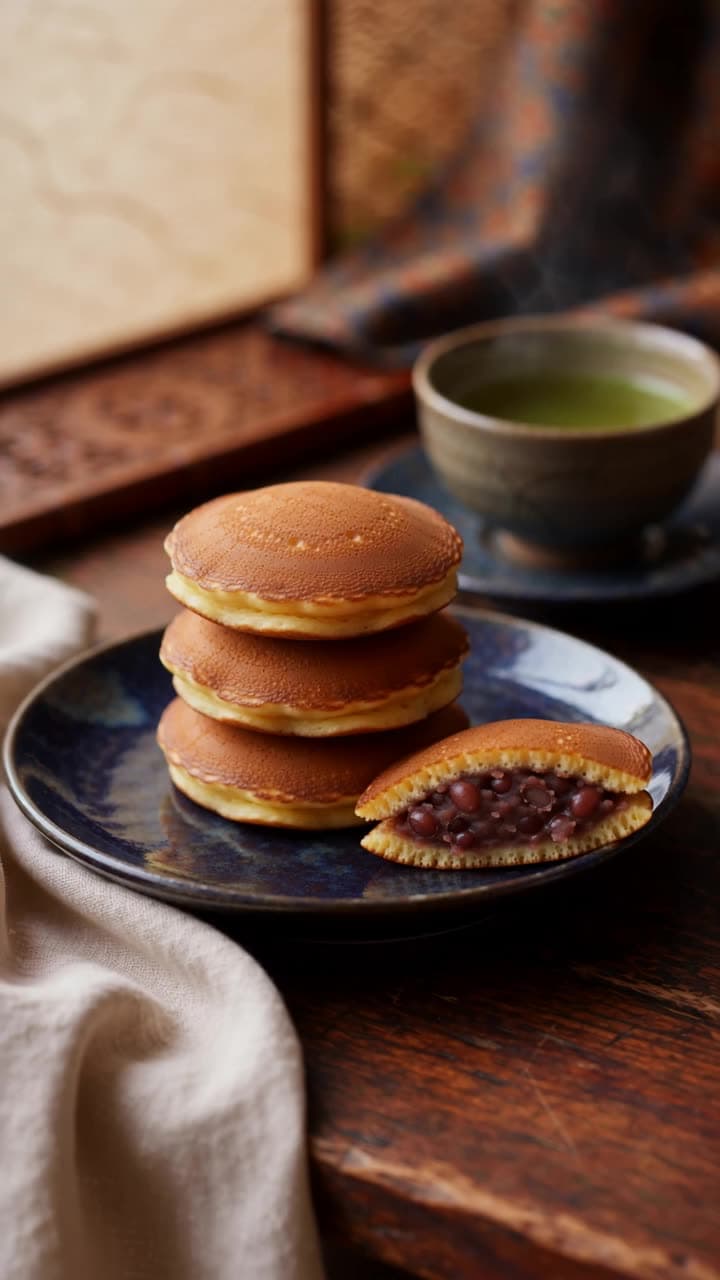 AI-generated imagery
Dorayaki
Two soft, golden-brown pancakes with sweet bean paste in between, named after the gong it resembles.
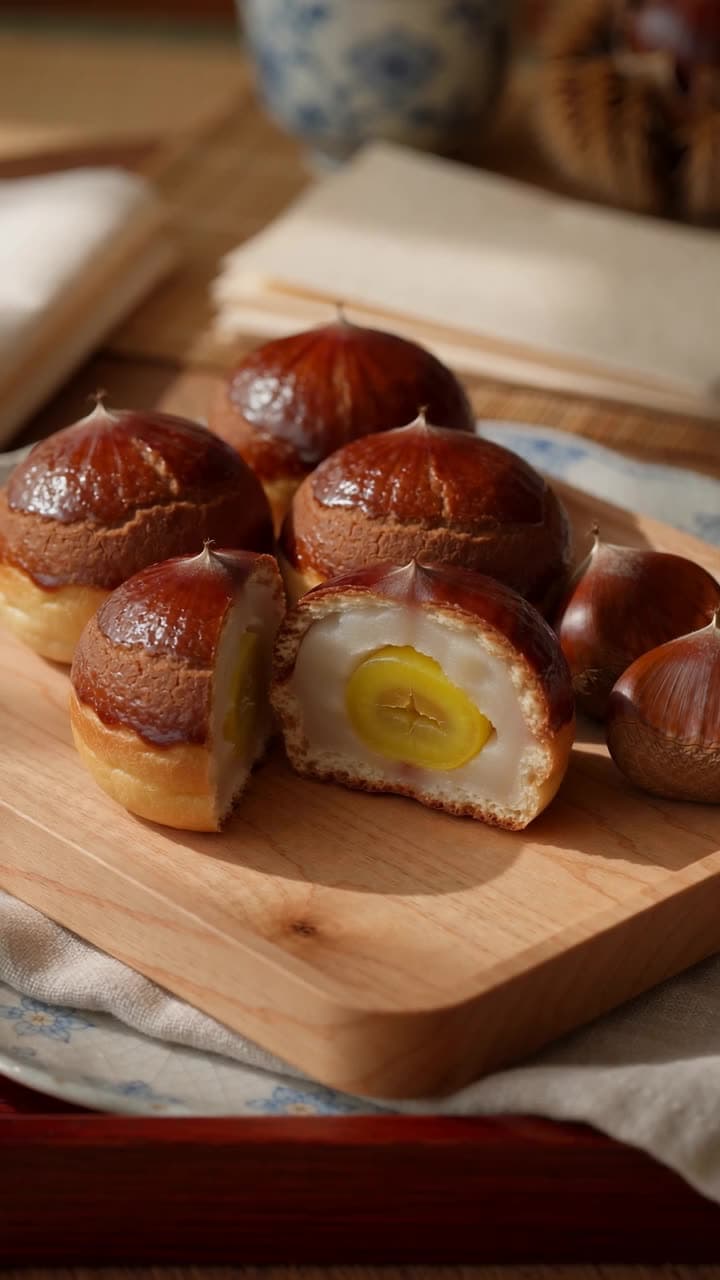 AI-generated imagery
Kuri Manju
A baked bun of white bean paste and chestnut, brushed with egg yolk so it shines like a chestnut.
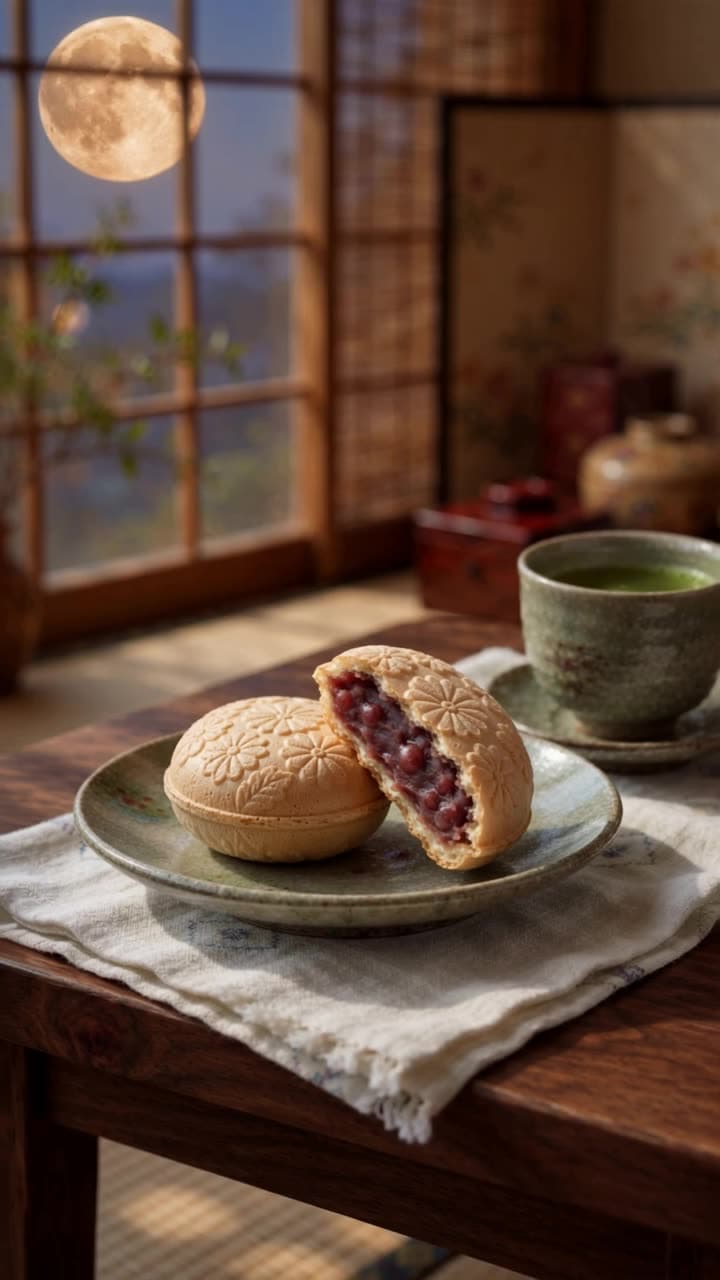 AI-generated imagery
Monaka
Sweet bean paste between two crisp wafers of mochi rice, named after the full moon of mid-autumn.
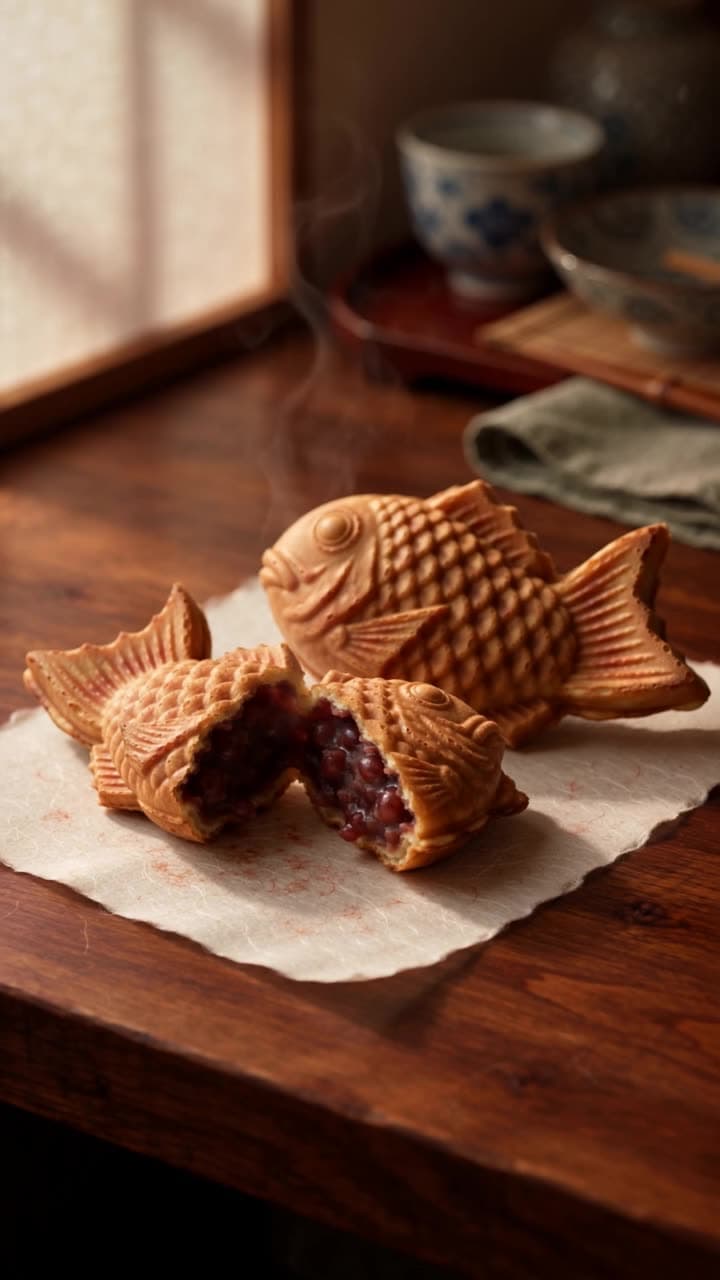 AI-generated imagery
Taiyaki
A crisp cake filled with sweet bean paste, baked in the shape of a sea bream (tai), a fish of good fortune in Japan.