Castella
カステラ
Also called kasutera, castella cake, Nagasaki castella
A soft, moist cake of eggs, sugar, wheat flour and starch syrup, descended from sweets the Portuguese brought in the 16th century and made famous in Nagasaki.
Castella at a glance
- Taste
- Sweet and rich with egg, with little bursts of crunchy sugar at the bottom
- Texture
- Soft, springy and moist, then a slight crunch of sugar at the bottom
- Main ingredients
- Eggs, sugar (often including zarame), wheat flour and mizuame (starch syrup); some recipes also add honey
- When to eat it
- All year
- Goes well with
- Green tea, or coffee and black tea, which the Japan Wagashi Association says also go well with wagashi
- Where to buy
- Castella makers and wagashi shops, above all in Nagasaki, where several long-established makers are based; boxed castella from Nagasaki makers is also sold in other parts of Japan
- How long it keeps
- About 10–14 days unopened at one Nagasaki maker (about 7 for an extra-yolk kind); another says it varies by season. Eat soon after opening and follow the label
- Egg, wheat and vegan
- Contains egg and wheat, so it is not vegan. Some makers use no milk or honey, but recipes vary. Check the label or ask the shop
- How to say it
- kah-soo-TEH-rah
Fun facts about Castella
The crunchy sugar at the bottom of Nagasaki castella is made in different ways. Bunmeido scatters zarame evenly in the frame before pouring in the batter. Fukusaya says its craftsmen wear down the sugar crystals while mixing and let some of them sink, listening for a faint crunching sound as they stir. Either way, the grains slowly melt into the cake over time and in warm weather.[5],[2]
Fukusaya says that freshly baked castella is "never delicious": it rests its cakes for a day and a night in a room with controlled temperature and humidity so that the sweetness comes through. Its castella is made only from eggs, wheat flour, white sugar, zarame and rice-based starch syrup, with no honey, water or milk.[2]
How to enjoy Castella
Mind the paper on the bottom
Castella is baked in a paper-lined frame, and slices often come with the washi paper still stuck to the bottom. Watch out for this paper when eating; peel it off gently so the crunchy sugar layer stays on the cake.[3],[2]
Keep it cool to keep the crunch
The zarame at the bottom melts little by little as time passes, faster in hot weather. One long-established Nagasaki maker recommends keeping castella somewhere cool, such as the refrigerator, in the heat of summer, and eating it soon after opening.[3]
Freeze slices for later
The Japan Wagashi Association names castella among the wagashi that keep their flavor in the freezer for a while. Freeze leftover slices, thaw them at room temperature for 2–3 hours, and eat them soon after.[8]
About this wagashi
Castella (kasutera in Japanese) is a rectangular cake of eggs, sugar, wheat flour and mizuame (starch syrup), baked in a large paper-lined wooden frame and sold in slices. It is soft and moist, and classic Nagasaki castella has crunchy grains of zarame (coarse sugar) at the bottom. It came from the nanban sweets that Portuguese traders and missionaries brought in the 16th century and became Nagasaki's best-known sweet. Though it looks like a Western cake, Japan counts it as a wagashi: the agriculture ministry and the Japan Wagashi Association list it among oven-baked sweets, and the Nagasaki maker Fukusaya calls it a wagashi too.
How it is made
Eggs are whipped into a foam that does all the rising, since no baking powder is used; then sugar, starch syrup and flour are mixed in. Some makers whip the egg whites on their own first and add the yolks and zarame afterward. The batter is poured into a paper-lined wooden frame and baked. Afterward the cake is rested, for example overnight, so that its sweetness and moistness settle before it is cut.
Castella: history and origins
Castella came to Japan with the Portuguese in the 16th century, but sources disagree on when. One Japanese encyclopedia says Portuguese missionaries brought it to Hirado in 1556; a Japanese culinary school calls 1550, in Hirado, the leading theory; Fukusaya, a Nagasaki maker, cites a record from 1557 of missionaries handing out castella; and a major Japanese dictionary says the Portuguese taught the method in Nagasaki in the Tenshō era (1573–1592). It was one of the nanban sweets, along with boro and konpeito, that the Japan Wagashi Association calls the prototypes of wagashi still eaten today.[1],[9],[4],[10]
The name is usually traced to Portuguese. Japanese dictionaries explain it as coming from pão de Castela, "bread of Castile" (the old Spanish kingdom), shortened by the Japanese to kasutera, and Fukusaya also links the name to Castile. Other theories exist, such as a Dutch word or a Portuguese phrase meaning "a cake like a castle"; the culinary school that lists them says it could not tell which is best supported. The same school names Portugal's pão de ló, a light sponge cake, as the sweet castella came from, while Japan's agriculture ministry describes castella as originally a Spanish sweet.[1],[4],[9],[11]
Nagasaki became castella's home because, as Fukusaya explains, it was Japan's international trading port and had plenty of the sugar castella needs. Fukusaya was founded there in 1624, and makers such as Shooken and Bunmeido followed in Nagasaki; from there castella spread to Kyoto and Osaka and on to Edo (Tokyo). Fukusaya says its shop name probably comes from Fuzhou in China, from where it handled imported sugar, and from sa, the second character of the word for sugar.[4],[12],[1]
Questions about Castella
Is castella Japanese or Portuguese?
Both, in a way. It came from sweets the Portuguese brought to Japan in the 16th century, and its name is traced to Castile in Spain. Over the following centuries it was adapted in Nagasaki into a cake of its own, and in Japan it is classed as a wagashi baked in an oven.[1],[11],[2]
What is the difference between castella and sponge cake?
They are close relatives: both rise on whipped eggs alone, and a modern Spanish dictionary, Fukusaya notes, defines the word as a sponge cake. But castella uses starch syrup (mizuame), which keeps it moist, and traditional recipes have no butter; it is baked as one large block in a paper-lined wooden frame, rested before cutting, and in Nagasaki style has zarame at the bottom. Fukusaya also contrasts its hand method, whipping the whites first, with Western sponge cakes mixed all at once in a machine.[4],[2],[1]
What is the crunchy sugar at the bottom of castella?
It is zarame, a coarse-grained sugar, and it is one of the classic features of Nagasaki castella. Some makers scatter it in the frame before the batter goes in; Fukusaya works it into the batter by hand so that some sinks to the bottom. It slowly dissolves over time, so a castella that has been kept a while, or kept warm, may have less crunch. It is not a sign that something is wrong.[2],[5]
Does castella contain honey or milk?
It depends on the maker. Recipes described in Japanese encyclopedias add starch syrup and sometimes honey. Fukusaya uses no honey, water or milk, only rice-based starch syrup. It always contains egg and wheat. If you need to avoid honey or dairy, check the label or ask the shop.[1],[3],[2]
Sources
Most of the sources are written in Japanese.
More wagashi
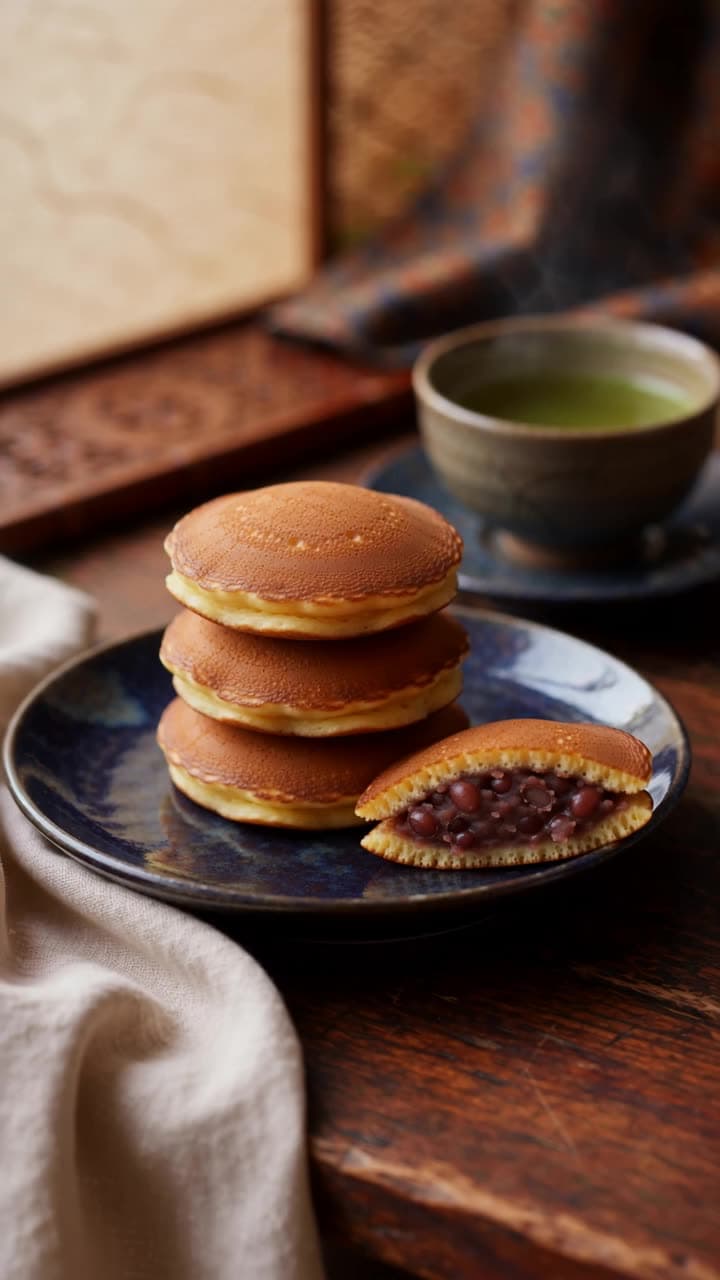 AI-generated imagery
Dorayaki
Two soft, golden-brown pancakes with sweet bean paste in between, named after the gong it resembles.
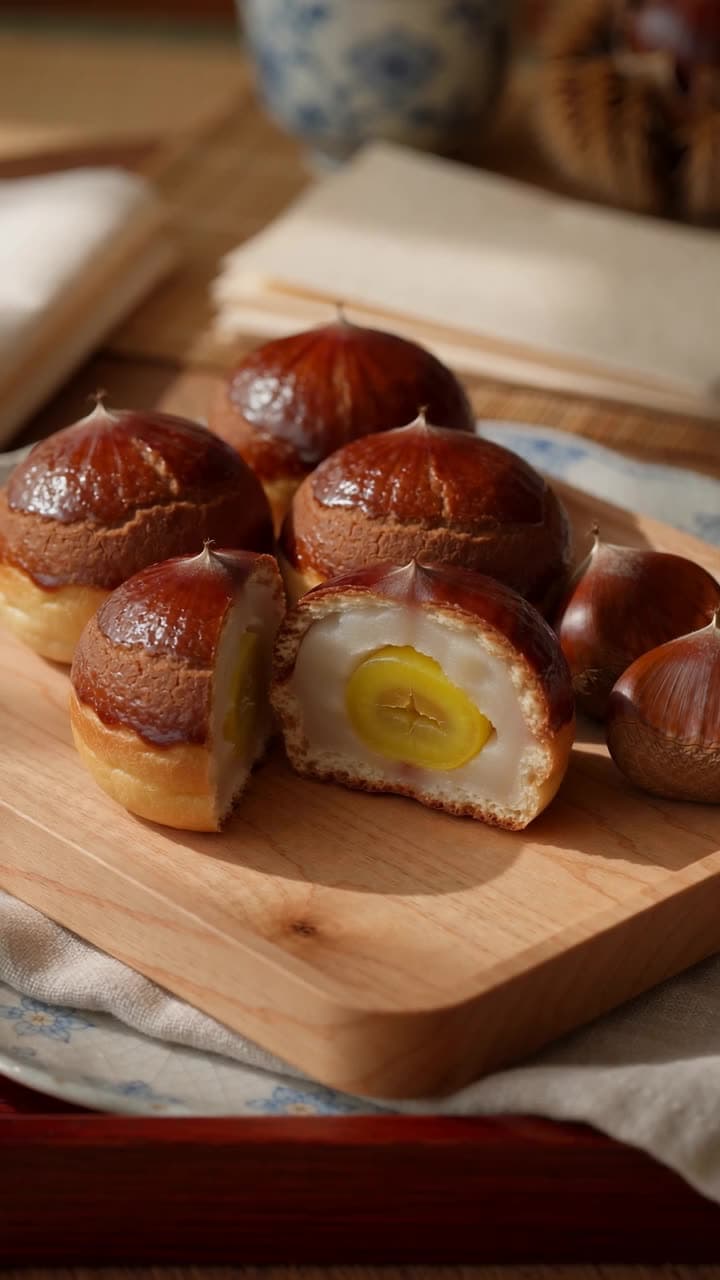 AI-generated imagery
Kuri Manju
A baked bun of white bean paste and chestnut, brushed with egg yolk so it shines like a chestnut.
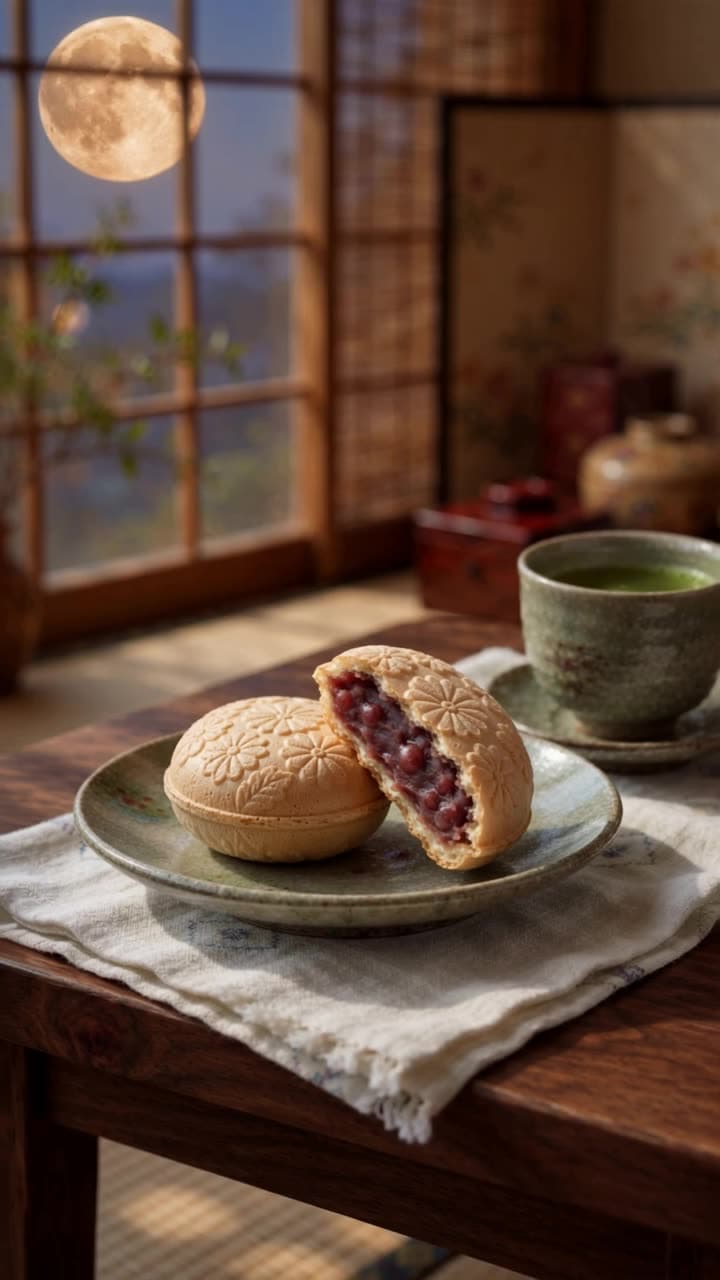 AI-generated imagery
Monaka
Sweet bean paste between two crisp wafers of mochi rice, named after the full moon of mid-autumn.
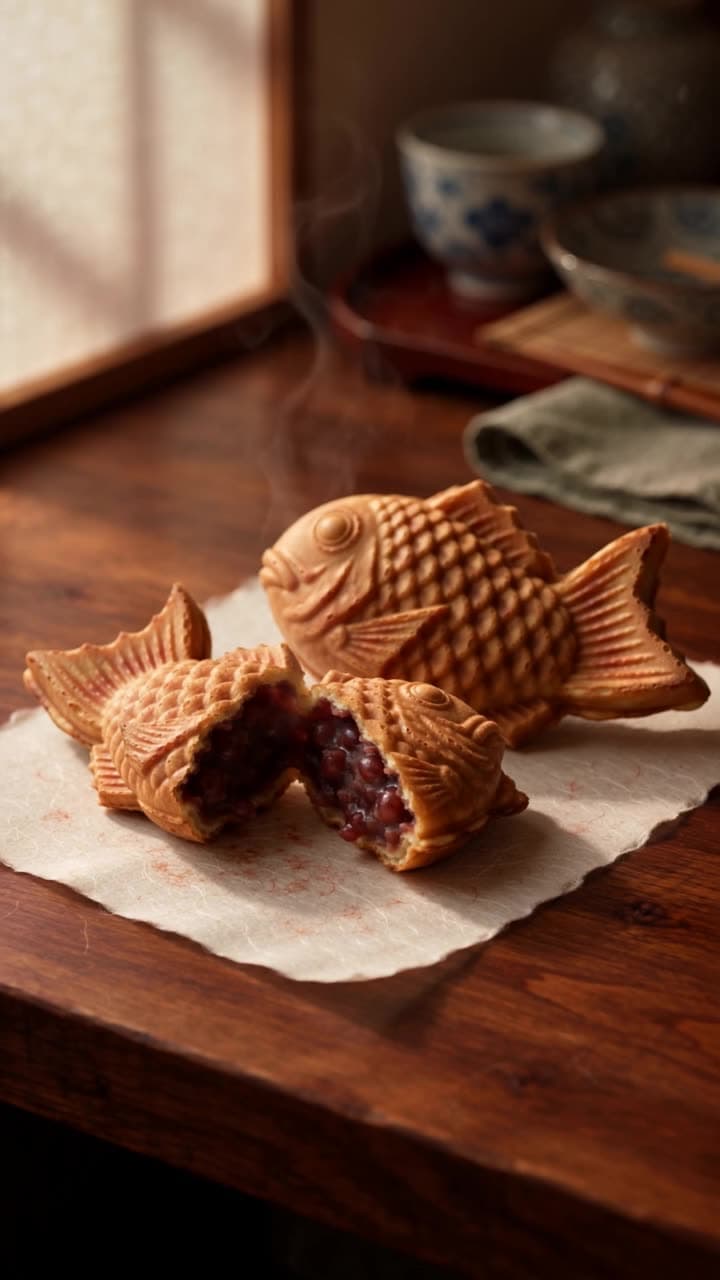 AI-generated imagery
Taiyaki
A crisp cake filled with sweet bean paste, baked in the shape of a sea bream (tai), a fish of good fortune in Japan.