Imagawayaki
今川焼き
Also called obanyaki, kaitenyaki
A thick, round cake of wheat-flour batter baked in a mold with sweet bean paste inside, named after the Imagawa Bridge in old Edo and known by many regional names, such as obanyaki and kaitenyaki.
Imagawayaki at a glance
- Taste
- Sweet azuki bean paste inside a lightly sweet, soft batter cake; some have custard cream or other fillings instead
- Texture
- Thick and soft, with plenty of filling; best while still warm
- Main ingredients
- A batter of wheat flour, sugar, egg and raising agent; azuki bean paste (smooth or chunky) or fillings such as custard cream
- When to eat it
- An everyday snack all year; best eaten hot, right after baking
- Goes well with
- Usually eaten on the spot; at home, green tea
- Where to buy
- Street stalls and shop fronts that bake it on the spot; frozen ones to heat at home are also made
- How long it keeps
- Best the day it is baked. Frozen products are another matter: the one we checked keeps 12 months frozen. Check the label
- Egg, wheat and vegan
- The batter is usually made with wheat flour and egg, and the frozen product we checked also lists milk and soy. Fillings vary, so check the label or ask the shop
- How to say it
- ee-mah-gah-wah-YAH-kee
Fun facts about Imagawayaki
In parts of Hyogo, people call it gozasoro. It began as the name of a shop in Himeji: customers started asking for "gozasoro, please", and the shop's name became the everyday word for the cake.[4]
How to enjoy Imagawayaki
Eat it hot off the griddle
Part of imagawayaki's appeal since the Edo period has been that it is baked right at the stall or shop front and eaten while still hot. If you see one being made, buy it fresh, while the bean paste inside is still warm.[2]
Pick your filling
The classic filling is azuki bean paste, either smooth (koshian) or chunky (tsubushian), and custard cream is a common alternative. Many places sell two or more kinds side by side, so it is easy to try both.[1]
Heating frozen ones
Frozen imagawayaki are made for heating at home. For one product we checked, you put it on a plate straight from the freezer and microwave it without wrap, for about 40 seconds at 600 W per piece. Follow the instructions on your package.[3]
About this wagashi
Imagawayaki is a casual griddle sweet: batter is poured into round molds, sweet bean paste goes in the middle, and two halves are baked together into a thick, drum-shaped cake. The classic filling is azuki bean paste, smooth or chunky, and some are filled with custard cream instead. Its name is said to come from shops near the Imagawa Bridge in Kanda, Edo (today's Tokyo), where it was sold from around the 1770s. Across Japan it goes by many names: imagawayaki mainly in the Kanto region, kaitenyaki in Kansai and Kyushu, and also obanyaki, taikoyaki, nijuyaki and more. Japan's food composition tables treat taiyaki as the same kind of product, just in the shape of a fish.
How it is made
Egg and sugar are mixed, then a raising agent dissolved in water and wheat flour are added to make a batter. The batter is poured into a heated round mold and bean paste is placed on it; a second batch of batter, started a little later in a matching mold, is then put together with the first so that the paste is sandwiched, and the cake is baked through.
Imagawayaki: history and origins
Imagawayaki is said to take its name from the Imagawa Bridge in Kanda, Edo (today's Tokyo), where it was sold from around the An'ei era (1772–1780). Who first made it is not recorded. An early record cited by reference librarians is a 1777 book, Fukiji Zai, which lists "Imagawayaki, Nasuya Yahei" in Honjo, a shop that also seems to have had outlets in Kanda Mikawa-cho and in front of Ekoin temple in Ryogoku.[7],[2]
One encyclopedia says imagawayaki was devised with kintsuba as a hint, and that it caught on because it could be made easily at street stalls and shop fronts and eaten hot. Depending on the shape and pattern of the mold, the same kind of cake came to be called by other names, such as tomoeyaki, taiyaki and obanyaki, which is why imagawayaki is regarded as the forerunner of taiyaki.[2]
Today the name depends on where you are. One dictionary says it is called imagawayaki mainly in the Kanto region and kaitenyaki in Kansai and Kyushu, and also taikoyaki, kobanyaki, nijuyaki or taiko manju. Japan's food composition tables add obanyaki, tomoeyaki and even kintsuba to the list. A library reference answer notes that obanyaki is used across the country, and lists local names such as kogane manju in Shizuoka and horoku manju in Kagoshima.[8],[1],[4]
Questions about Imagawayaki
What is the difference between imagawayaki and taiyaki?
Mainly the shape. Both are batter baked in a mold around sweet bean paste, and Japan's food composition tables treat taiyaki as the same kind of product as imagawayaki. Imagawayaki is round and thick like a drum; taiyaki is baked in a mold shaped like a sea bream. Imagawayaki is the older of the two and is regarded as taiyaki's forerunner.[1],[2]
Are imagawayaki, obanyaki and kaitenyaki the same thing?
Yes, they are regional names for the same round, bean-filled cake. One dictionary says imagawayaki is used mainly in Kanto and kaitenyaki in Kansai and Kyushu, while obanyaki is used across the country. Other names include taikoyaki, nijuyaki and, in parts of Hyogo, gozasoro, which began as a shop name. Recipes differ from shop to shop, but the sweet is the same kind.[8],[4],[1]
Why is it called imagawayaki?
The name is said to come from the Imagawa Bridge in Kanda, Edo (today's Tokyo), near which it was sold from around the 1770s. "Yaki" means baked or grilled. Who invented it is not known.[7],[2]
What is the difference between imagawayaki and dorayaki?
Dorayaki is two thin pancakes baked on a flat griddle and then sandwiched around bean paste. Imagawayaki is baked in a round mold with the paste already inside, so it comes out as one thick, drum-shaped cake. Both use a batter of wheat flour, egg and sugar.[1]
Sources
Most of the sources are written in Japanese.
More wagashi
 AI-generated imagery
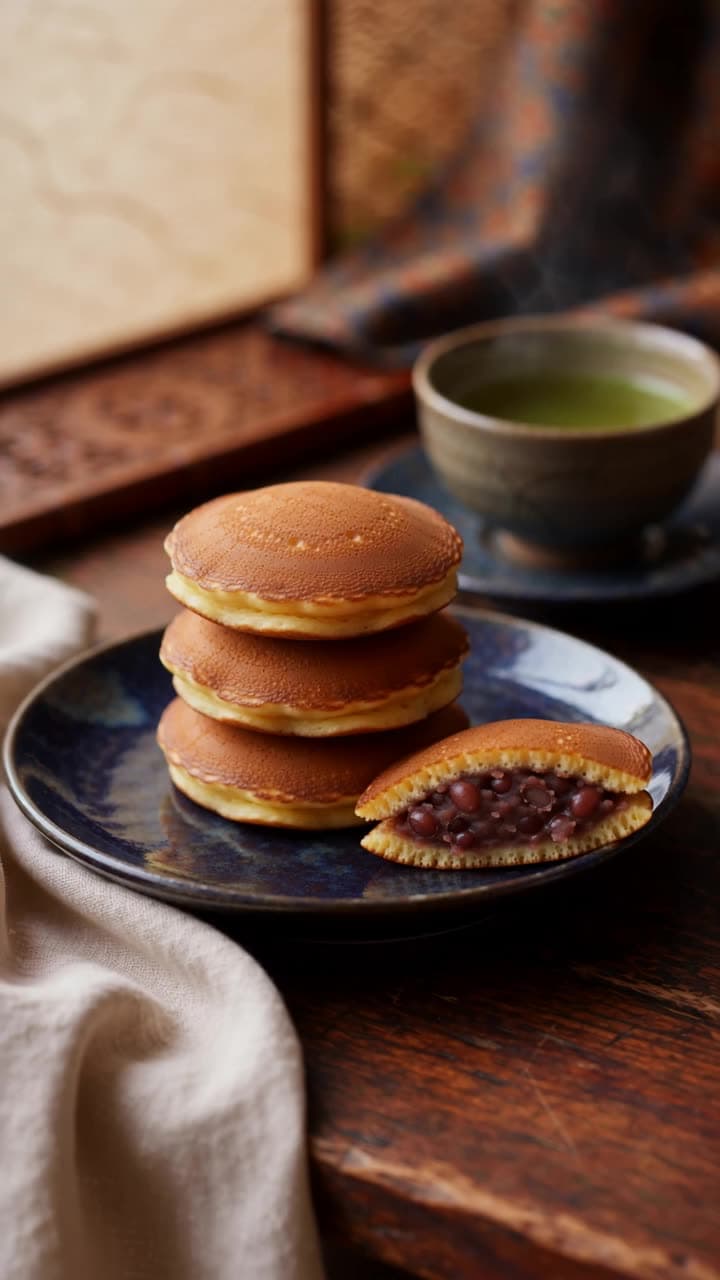
Dorayaki
Two soft, golden-brown pancakes with sweet bean paste in between, named after the gong it resembles.
 AI-generated imagery
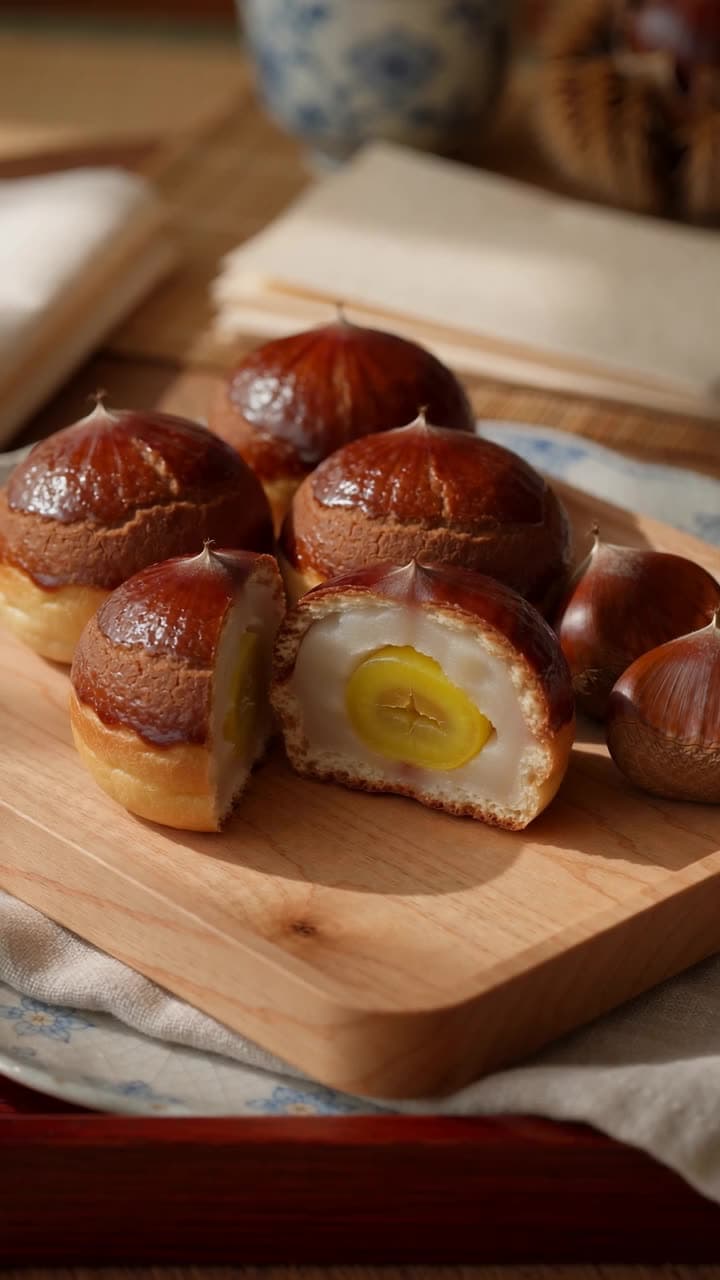
Kuri Manju
A baked bun of white bean paste and chestnut, brushed with egg yolk so it shines like a chestnut.
 AI-generated imagery
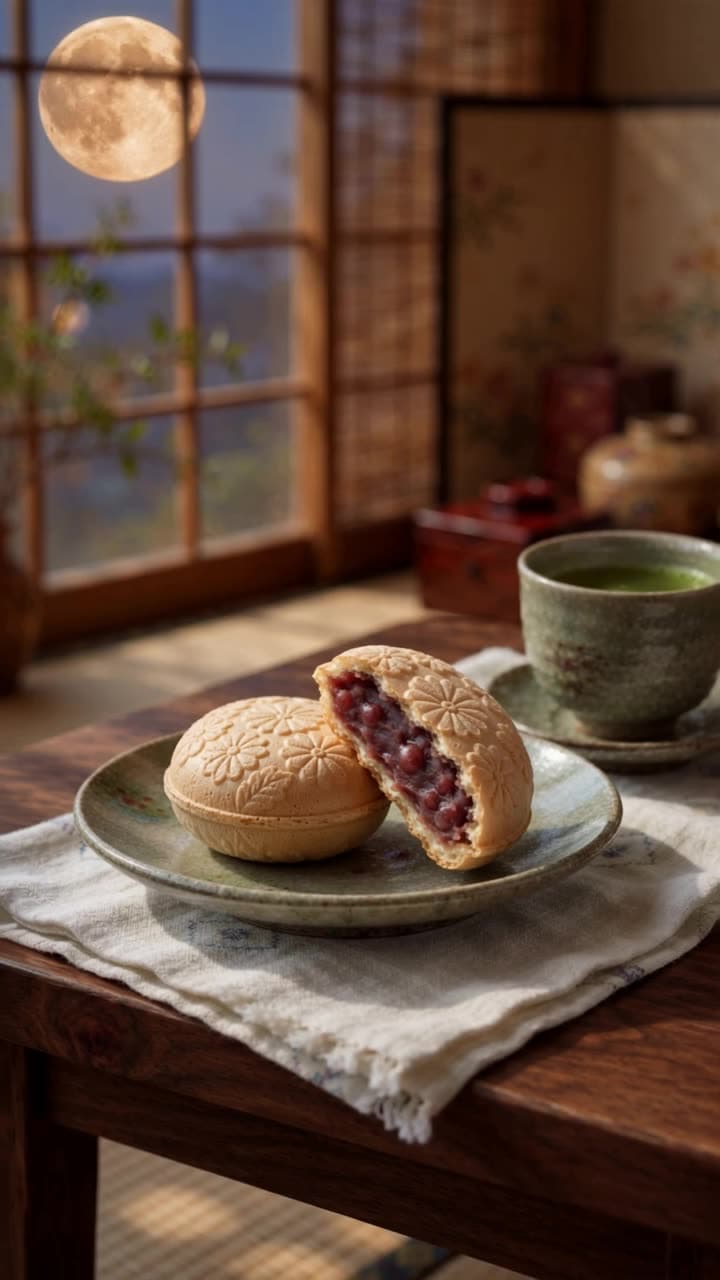
Monaka
Sweet bean paste between two crisp wafers of mochi rice, named after the full moon of mid-autumn.
 AI-generated imagery
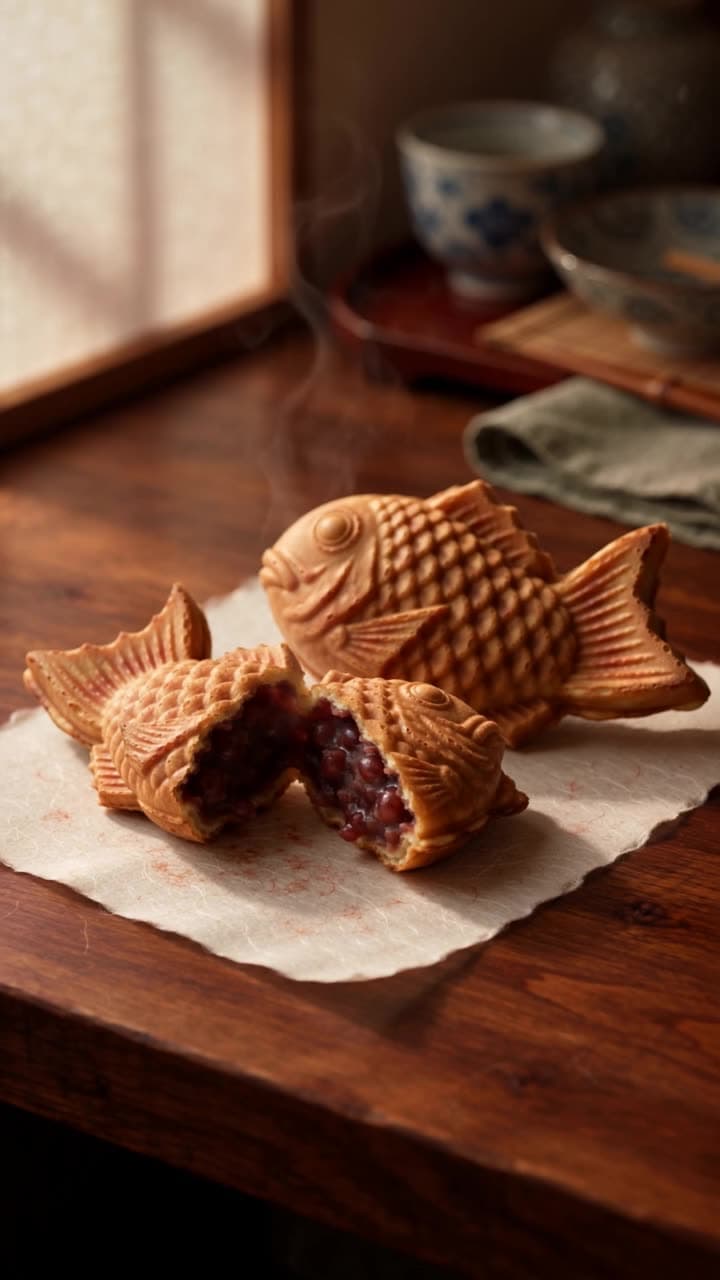
Taiyaki
A crisp cake filled with sweet bean paste, baked in the shape of a sea bream (tai), a fish of good fortune in Japan.