Kintsuba
きんつば
Also called kintsuba sweet
A block of dense azuki bean paste in a paper-thin coat of wheat-flour batter, griddled on each face. Its name, "gold sword guard", comes from the round shape of the original, which was likened to a Japanese sword guard (tsuba).
Kintsuba at a glance
- Taste
- Rich, straightforward azuki sweetness; the thin coat adds only a light toasted note
- Texture
- Dense and moist, usually with whole beans, in a paper-thin coat
- Main ingredients
- Azuki beans, sugar, agar, wheat flour and a little salt; some use white bean, sweet potato or pumpkin paste instead
- When to eat it
- All year, as a snack with tea or as a gift
- Goes well with
- Green tea
- Where to buy
- Wagashi shops, sold singly or in boxes
- How long it keeps
- Longer than fresh wagashi: the products we checked keep about 10 to 30 days from making at room temperature, and should be eaten within 2–3 days once opened. Check the label
- Egg, wheat and vegan
- The coat is made with wheat flour, so it is not wheat-free; the products we checked list no egg or dairy, but recipes differ. Check the label or ask the shop
- How to say it
- keen-TSOO-bah
Fun facts about Kintsuba
Kintsuba has always been mostly bean paste. One encyclopedia records that when ginsuba was sold in Kyoto, some people grumbled that it was "a yakimochi in name only, almost nothing but bean paste". Japan's food composition tables give the proportion for one kind as 1 part skin to 9 parts paste. In Edo, a kintsuba shop in Asakusa with a plain-faced okame mask as its sign called its sweet "mimeyori", from the saying that the heart matters more than looks.[2],[1]
Because all six faces of a square kintsuba are griddled, it is also called rokuhoyaki, "six-sided baking". And there is a twist in the name: Japan's food composition tables list "kintsuba" as one of the regional names for imagawayaki, the round batter cake, which one encyclopedia says was itself devised with kintsuba as a hint.[5],[1],[6]
How to enjoy Kintsuba
Warm it, or chill it
Kintsuba is fine at room temperature, but wagashi shops suggest two other ways. Warmed in a toaster oven for about 3 minutes (one shop warms it briefly in the microwave first, in its film), the coat turns fragrant, like freshly baked. Or chill it in the fridge for 30 minutes or more and eat it as is. Follow the instructions that come with yours.[7],[8]
About this wagashi
Kintsuba is almost all filling: azuki bean paste, usually with whole beans and often set with agar like yokan, wrapped in a coat of wheat-flour batter as thin as foil. The square kind most common today is griddled on all six faces. The sweet began in the 17th century as ginsuba ("silver sword guard"), a round, flat sweet that encyclopedias place in Kyoto, while Japan's confectioners' association says it was born in Osaka. When it reached Edo (today's Tokyo) in the 18th century, makers switched to wheat flour, which browns to a golden color, and it became kintsuba, "gold sword guard". Square ones appeared in the early 1800s, and some long-established shops still make the round shape. Besides azuki, fillings include white bean, sweet potato and pumpkin.
How it is made
For the square kind, bean paste is mixed with agar, poured into a mold to set and cut into blocks. Each face is dipped in a batter of wheat flour (or shiratamako rice flour) and water and cooked on a griddle, one face at a time. For the round kind, a thin wheat-flour dough is wrapped around the bean paste and the cake is griddled on both faces and the sides.
Kintsuba: history and origins
Kintsuba's forerunner was ginsuba, "silver sword guard". Encyclopedias say it was sold around Kiyomizu-zaka in Kyoto from about the Tenna era (1681–1684), and a 1680s gazetteer of Kyoto, Yoshu Fushi, describes it as a "yakimochi": rice flour dough rolled flat and round, wrapped around azuki bean paste and baked on a flat pan. It was named for its shape, which looked like the guard (tsuba) of a sword. Japan's confectioners' association gives a different birthplace: it says the sweet was born in Osaka and sold there as ginsuba.[2],[5]
The method reached Edo (today's Tokyo) after the Kyoho era (1716–1736), and there ginsuba changed its name to kintsuba, "gold sword guard". The usual explanation is that Edo makers used wheat flour instead of rice flour, so the coat browned to a golden color, and that gold was felt to rank above silver; the confectioners' association and a Tokyo maker founded in the 1800s both tell it this way. In Edo, kintsuba was a simple sweet often sold from street stalls, and the name later took hold even in Osaka.[2],[5],[9]
One encyclopedia calls the Bunka and Bunsei eras (1804–1830) kintsuba's golden age, when courtesans of the Yoshiwara pleasure quarter sang that what they longed to eat was "the kintsuba of the embankment" and sweet potatoes. According to a food dictionary, square kintsuba appeared in the Bunka era (1804–1818) and are now the norm, though round ones are still made. Eitaro, which grew from a kintsuba stall at Nihonbashi's old fish market and opened its shop there in 1857, still makes the round kind.[2],[5],[9]
Questions about Kintsuba
Why is it called kintsuba?
Tsuba is the guard of a Japanese sword, and the original sweet was round and flat like one. It was first called ginsuba, "silver sword guard". In Edo it was made with wheat flour, which browns to a golden color, and since gold was felt to rank above silver, it became kintsuba, "gold sword guard".[5],[2],[9]
What is kintsuba made of? Is it gluten-free?
Mostly azuki bean paste (azuki beans and sugar), often set with agar, inside a very thin coat of wheat flour batter. Because of the wheat flour, it is not gluten-free; the products we checked list wheat. Some recipes use shiratamako rice flour for the coat, but check the label or ask the shop.[1],[5],[3]
How long does kintsuba keep?
Longer than fresh wagashi, but not for months. Of the products we checked, one keeps 14 days from making in the cooler months and 10 days in summer, and another 30 days, both at room temperature away from heat and humidity. Once opened, eat it within 2–3 days. Always check the date on the package.[3],[4]
Is kintsuba the same as imagawayaki?
Usually not. Kintsuba is a block of dense bean paste with a paper-thin coat, while imagawayaki is a thick, round batter cake with bean paste inside. The two are related, though: one encyclopedia says imagawayaki was devised with kintsuba as a hint, and Japan's food composition tables note that in some regions imagawayaki is itself called kintsuba.[6],[1]
Sources
Most of the sources are written in Japanese.
More wagashi
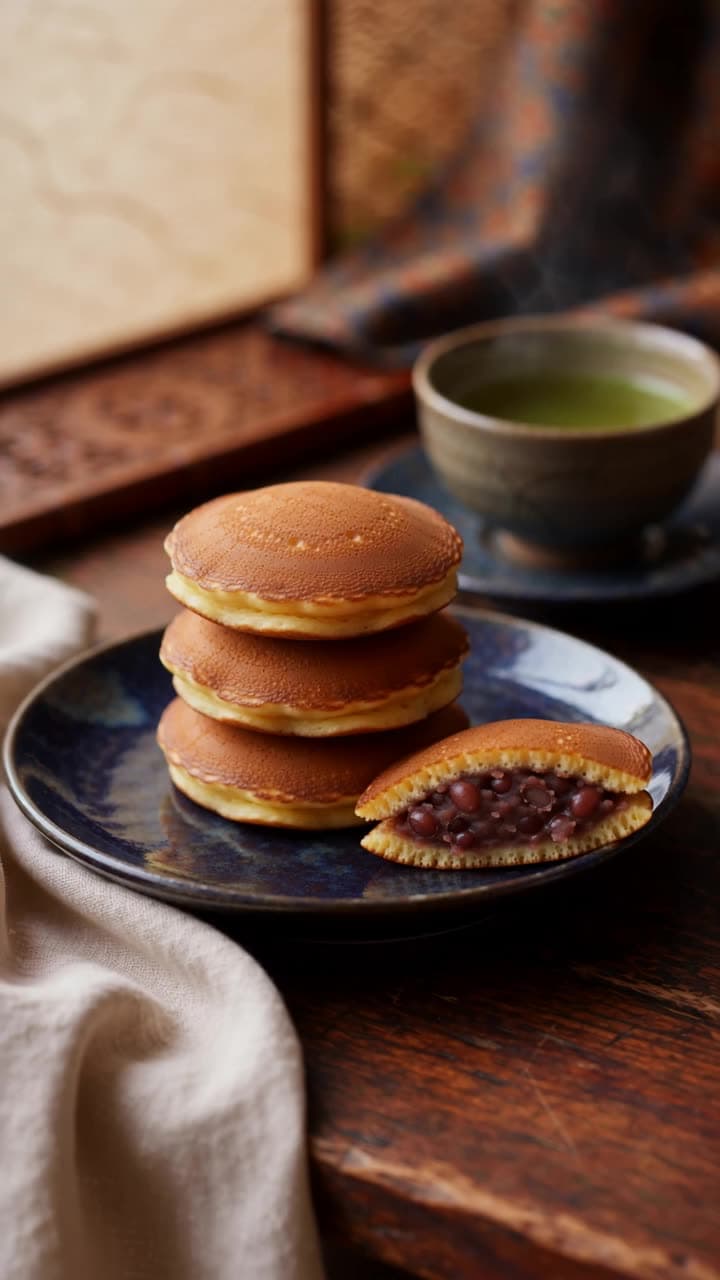 AI-generated imagery
Dorayaki
Two soft, golden-brown pancakes with sweet bean paste in between, named after the gong it resembles.
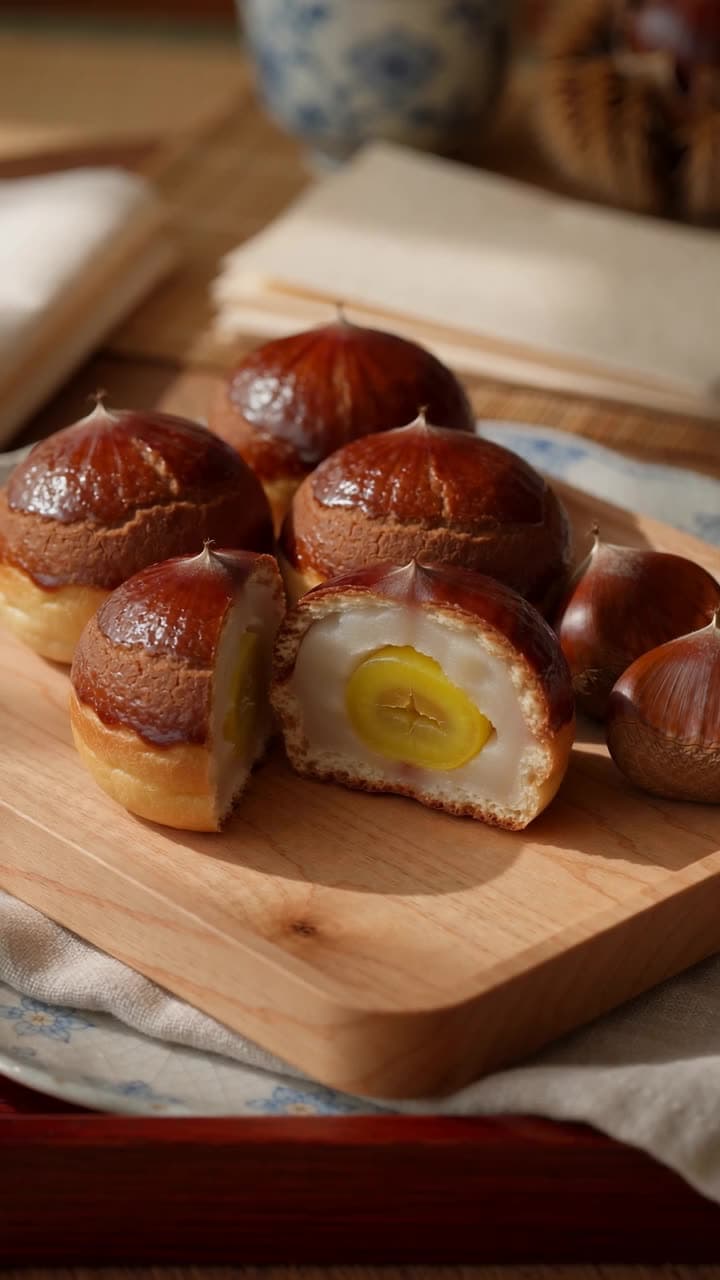 AI-generated imagery
Kuri Manju
A baked bun of white bean paste and chestnut, brushed with egg yolk so it shines like a chestnut.
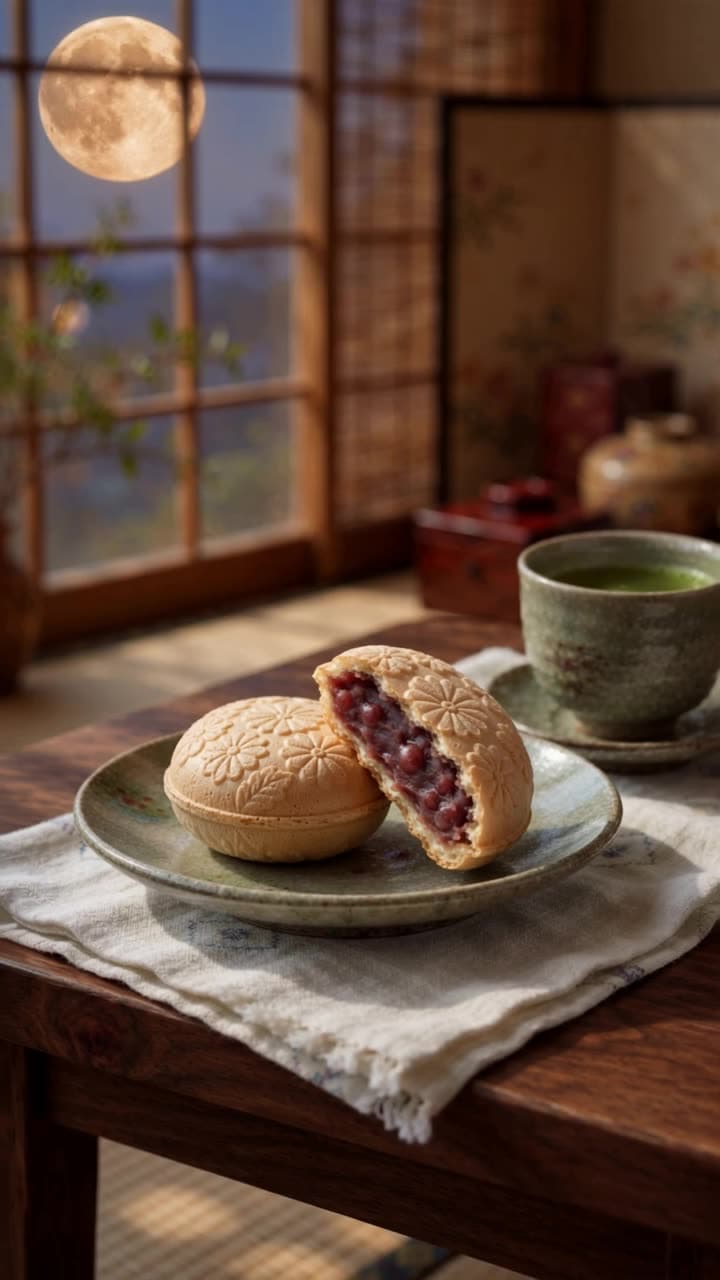 AI-generated imagery
Monaka
Sweet bean paste between two crisp wafers of mochi rice, named after the full moon of mid-autumn.
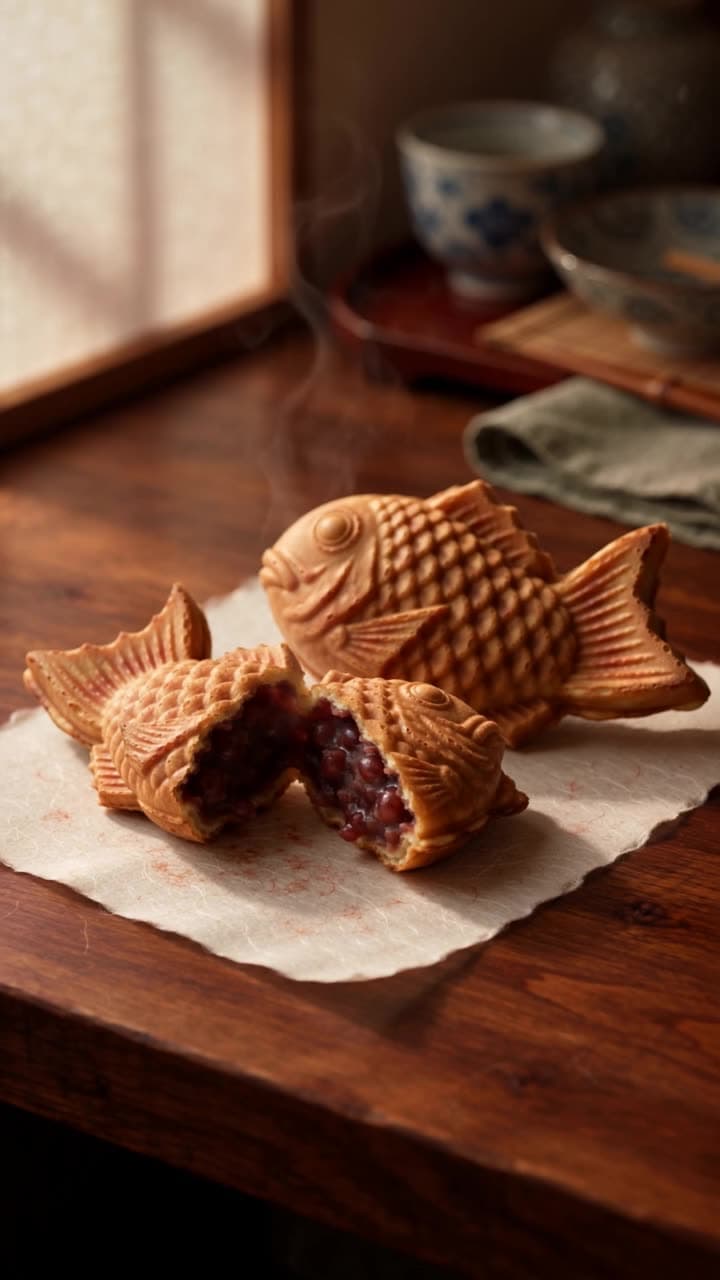 AI-generated imagery
Taiyaki
A crisp cake filled with sweet bean paste, baked in the shape of a sea bream (tai), a fish of good fortune in Japan.