Manju
饅頭
Also called manjū, manjuu, Japanese manju
A bun of sweet bean paste wrapped in a soft skin of wheat flour, or rice flour and yam, most often steamed and sometimes baked. It came to Japan from China in the 13th–14th centuries.
Manju at a glance
- Taste
- Gently sweet bean paste in a plain, lightly sweet skin; sake manju has a soft sake aroma, joyo manju a light yam flavor
- Texture
- Steamed manju: a soft, moist, slightly springy skin; baked manju: a thin, firmer crust
- Main ingredients
- Bean paste (usually azuki) in a skin of wheat flour, or of rice flour and grated yam (joyo manju); other kinds use buckwheat flour or kuzu; sake manju uses koji; baked manju often contain egg
- When to eat it
- All year; red-and-white manju for celebrations, and joyo manju is a classic sweet at tea gatherings
- Goes well with
- Green tea; the Japan Wagashi Association notes that baked manju also go well with coffee and black tea
- Where to buy
- Wagashi shops all over Japan; onsen manju are sold as souvenirs in hot-spring towns
- How long it keeps
- Short for steamed manju: one Ikaho onsen manju maker gives 2 days from production (no preservatives), and sake manju hardens quickly. Baked manju keep longer. Follow the label
- Egg, wheat and vegan
- Most have a wheat-flour skin, some contain egg (especially baked ones), and ingredients vary by kind and shop. Check the label or ask the shop
- How to say it
- MAHN-joo
Fun facts about Manju
Red-and-white (kōhaku) manju are a classic gift for happy occasions in Japan, such as a birth, starting or finishing school, or a new house, while manju such as joyo manju are also handed out at funerals. Shiose tells that the red-and-white custom began when Lin Jōin gave red-and-white manju as gifts at his own wedding, and that he buried one pair under a large round stone, now the Manju-zuka (manju mound) at Hayashi Shrine in Nara. The shop presents this as a story that is told, not a record.[6],[11]
In Nara, Lin Jōin is worshipped as a god of confectionery at Hayashi Shrine, in the grounds of Kangō Shrine. Every April 19 a Manju Festival is held there to honor him and to pray for the prosperity of the confectionery trade.[12]
How to enjoy Manju
Re-steam a sake manju
Sake manju, made with a koji-fermented dough, firms up quickly. Steaming it again before eating brings back the soft texture and the sake aroma.[4]
Eat steamed manju soon, or freeze them
Starchy wagashi harden as time passes, and they do not like the fridge. The Japan Wagashi Association says most wagashi can be frozen for a while instead: thaw them at room temperature for 2–3 hours and eat them soon after.[2],[13]
Try a steamed one and a baked one
A steamed manju and a baked one such as kuri manju feel like different sweets. Baked manju are one case where waiting helps: the Japan Wagashi Association says kuri manju and castella manju taste even better the day after they are made, once the skin and the bean paste have settled together.[2]
About this wagashi
Manju is one of the most familiar wagashi in Japan: sweet bean paste wrapped in a skin made from flour, then steamed or baked. Most manju are steamed, and there are dozens of kinds. Sake manju has a dough fermented with rice koji and a gentle sake aroma; joyo manju is a pure white bun made with grated yam; onsen manju are sold as souvenirs in hot-spring towns. Baked manju, such as kuri manju (which has its own page) and castella manju, are made in an oven. This site files manju under baked sweets (yakigashi), but as that page explains, manju can be steamed or baked, and most are steamed. Japanese manju is a sweet and is different from Chinese mantou, which usually has no filling.
How it is made
A dough is made, wrapped around a ball of bean paste and steamed. The dough depends on the kind. For joyo manju, grated tsukune-imo (a kind of yam) is kneaded with fine rice flour (joyoko) and sugar, which gives a soft skin without baking powder. For sake manju, the dough is fermented: Toraya, for example, makes its starter from glutinous rice and koji over a long time. Baked manju are wrapped in the same way and baked in an oven.
Manju: history and origins
The best-known story says manju came to Japan with Lin Jōin (Rin Jōin in Japanese), who came from China. The confectioner Shiose, which counts him as its founder, says he arrived in 1349 with the Zen monk Ryūzan Tokken and settled in Nara. Because Zen monks could not eat meat, he made a filling of azuki beans boiled down with amazura (an old sweetener) and salt, wrapped it in dough and steamed it, which the shop calls Japan's first manju with bean paste; it adds that the emperor Go-Murakami praised it. Encyclopedias give different years for his arrival, so the date is uncertain.[14],[15],[1]
Another tradition credits the Zen monk Enni (Shōichi Kokushi). Toraya says that in 1241, back from Song China, he taught the method of sake manju, leavened with rice koji, to Kurinami Kichiemon, who ran a tea house in Hakata (Fukuoka), and that the bun was also called Toraya manju after the tea house's name. Toraya owns a manju-shop signboard said to have been written by Enni, but notes that the link between that tea house and today's Toraya is unknown. Japan's agriculture ministry lists both the Lin Jōin and the Enni accounts.[16],[4],[17]
Over the centuries many steamed manju developed, and baked manju came later: after ovens arrived in the Meiji era (1868–1912), kuri manju, castella manju and many other baked sweets were born. The brown onsen (hot-spring) manju is a 20th-century souvenir. Shogetsudo in Ikaho Onsen, Gunma, says its founder created its Yunohana manju in 1910 as a new souvenir for the town, giving the brown-sugar skin the color of Ikaho's hot-spring deposits, and that it became known nationwide after Gunma Prefecture presented it to Emperor Shōwa in 1934. The shop says its manju is said to be where onsen manju began.[18],[19],[9]
Questions about Manju
Is manju steamed or baked?
Both. Manju is defined as bean paste wrapped in a dough skin and then steamed or baked. Most are steamed, such as sake manju and joyo manju, while kuri manju and castella manju are baked in an oven.[1],[2]
What is the difference between manju and mochi?
They are made differently. Mochi is glutinous rice that is steamed and pounded, so it is stretchy and chewy. Manju has a skin of kneaded flour, usually wheat (or rice flour and yam), wrapped around bean paste and then steamed or baked, so it is soft and bread-like rather than stretchy. A daifuku, by contrast, is bean paste wrapped in mochi.[20],[1]
Is Japanese manju the same as Chinese mantou?
They share a root but are different foods today. Manju came to Japan from China, and the same characters (饅頭) are used, but in China mantou usually has no filling. Japanese manju is a sweet, filled with sweet bean paste. Shiose's account says Lin Jōin created a bean-paste filling for Zen monks who could not eat meat.[1],[14]
How is manju different from kuri manju?
Kuri manju is one kind of manju. Manju is the whole family of bean-paste buns, most of them steamed with a soft, pale skin. Kuri manju is a baked one: a wheat-and-egg dough around bean paste with chestnut, glazed and baked in an oven until shiny and brown. It has its own page on this site.[5],[2]
Sources
Most of the sources are written in Japanese.
- [1]コトバンク 饅頭
- [2]全国和菓子協会 和菓子の種類
- [3]虎屋 とらやの菓子づくり
- [4]虎屋 虎屋饅頭
- [5]文部科学省 食品成分表 菓子類
- [6]全国和菓子協会 人の一生と和菓子
- [7]裏千家 お菓子について
- [8]全国和菓子協会 味わい方いろいろ
- [9]勝月堂 公式
- [10]湖月堂オンラインショップ 栗饅頭
- [11]塩瀬総本家 紅白饅頭
- [12]奈良市観光協会 漢國神社(林神社)
- [13]全国和菓子協会 和菓子の保存
- [14]塩瀬総本家 しおせミュージアム 饅頭伝来 二人の男の物語
- [15]塩瀬総本家 沿革
- [16]虎屋文庫 聖一国師と酒饅頭
- [17]農林水産省 にっぽん伝統食図鑑 菓子類
- [18]全国和菓子協会 和菓子の歴史
- [19]勝月堂の歴史
- [20]コトバンク 餅
More wagashi
 AI-generated imagery
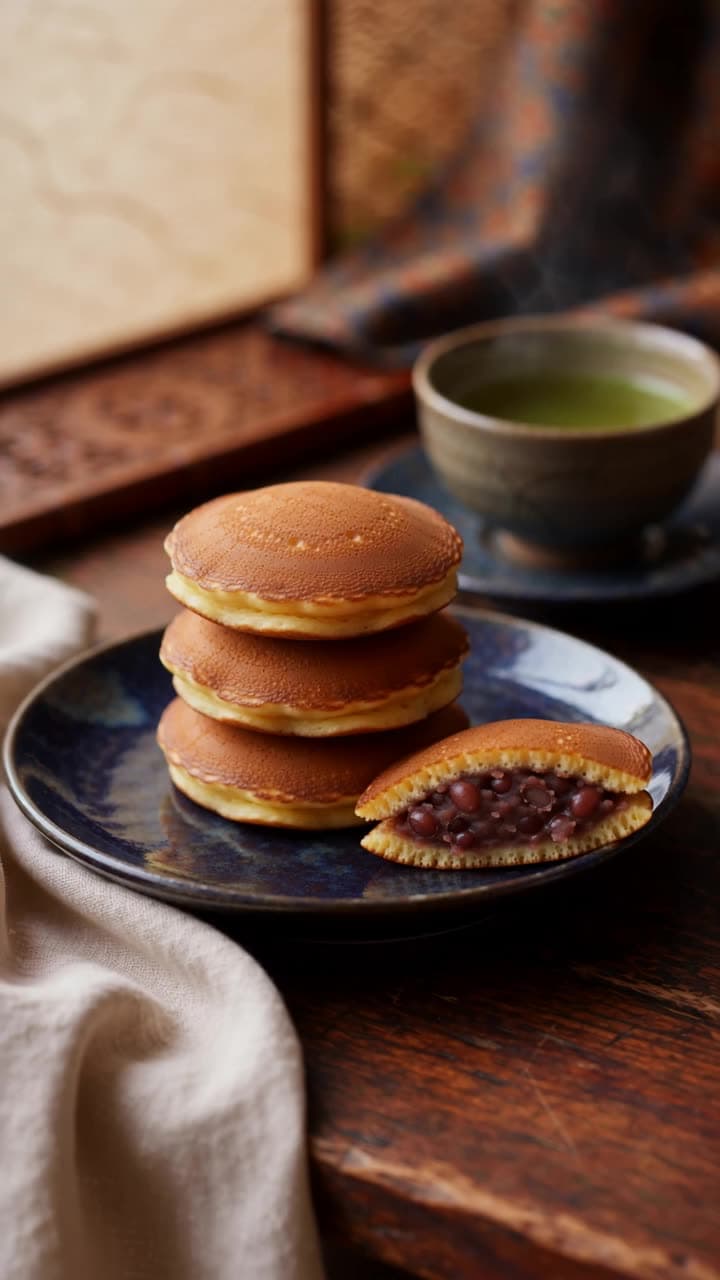
Dorayaki
Two soft, golden-brown pancakes with sweet bean paste in between, named after the gong it resembles.
 AI-generated imagery
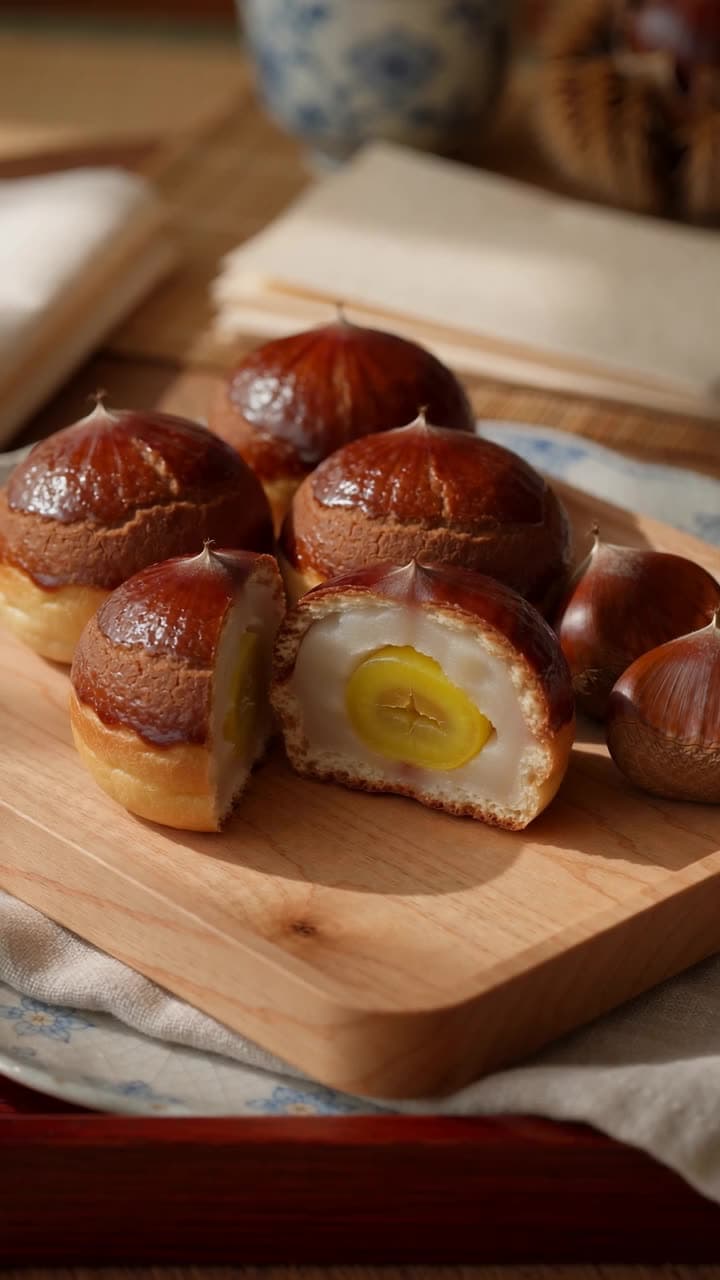
Kuri Manju
A baked bun of white bean paste and chestnut, brushed with egg yolk so it shines like a chestnut.
 AI-generated imagery
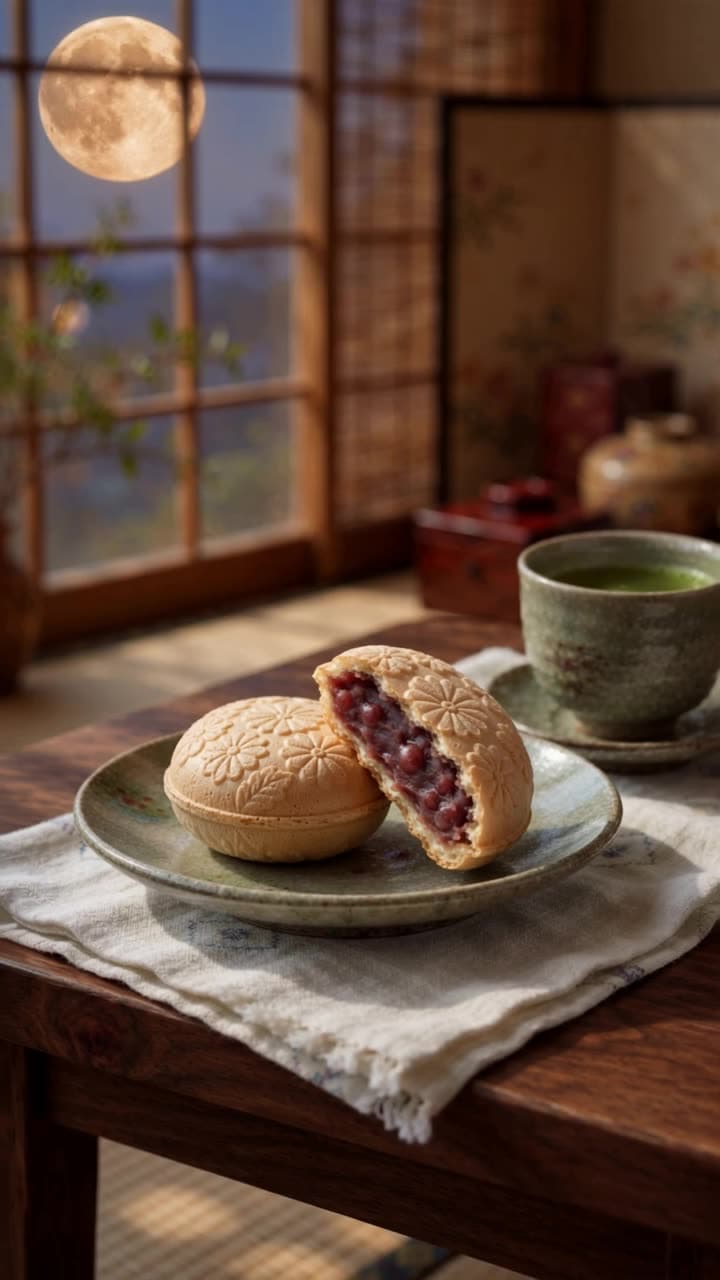
Monaka
Sweet bean paste between two crisp wafers of mochi rice, named after the full moon of mid-autumn.
 AI-generated imagery
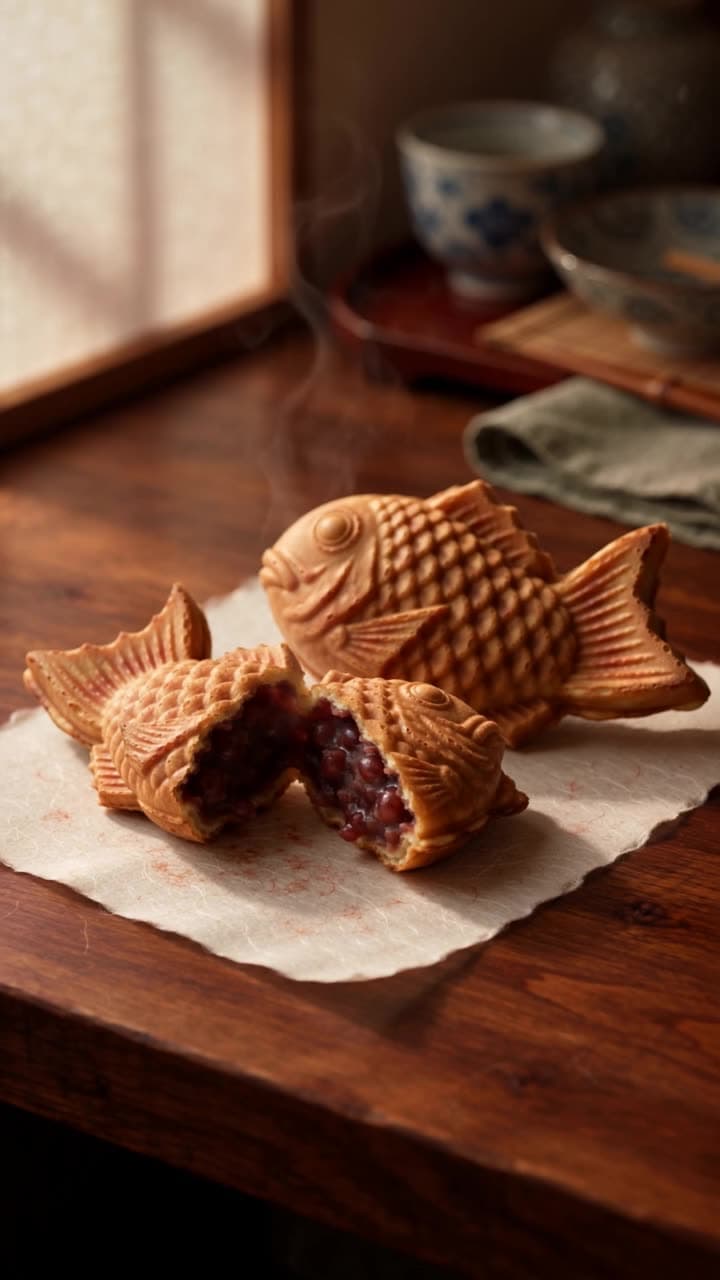
Taiyaki
A crisp cake filled with sweet bean paste, baked in the shape of a sea bream (tai), a fish of good fortune in Japan.