Uiro
ういろう
Also called uiro mochi, uirō, uirou
A soft, chewy sweet made by steaming rice flour and sugar in a frame and cutting it into bars. It is best known as a Nagoya specialty, and Yamaguchi, Odawara and other places have their own versions.
Uiro at a glance
- Taste
- Gently sweet, with the plain flavor of rice; common flavors include white, brown sugar, matcha, sakura, kinako and bean paste
- Texture
- Smooth, soft and chewy, with a clean bite; Yamaguchi's bracken-starch uiro is springier and more jiggly
- Main ingredients
- Rice flour (joshinko) and/or starch, sugar and water; some versions use wheat flour, and Yamaguchi's uses bracken starch and azuki bean paste
- When to eat it
- All year, as a snack with tea or as a souvenir; in June, look for minazuki, a white uiro topped with azuki
- Goes well with
- Japanese green tea
- Where to buy
- Wagashi and souvenir shops in the places known for it, such as Nagoya, Yamaguchi and Odawara
- How long it keeps
- Varies widely: one Nagoya maker's packaged uiro keeps 10–30 days at room temperature depending on the product, while some made without preservatives keep only a short time. Avoid long refrigeration, which makes it hard. Check the date on the package
- Egg, wheat and vegan
- Often made from rice flour or starch rather than wheat, but some uiro uses wheat flour (one maker uses wheat flour only), and Yamaguchi's contains azuki bean paste. Ingredients differ by maker, so check the label or ask the shop
- How to say it
- oo-ee-ROH
Fun facts about Uiro
The kabuki play Uirō Uri ("The Uirō Seller") grew out of the medicine, not the sweet. According to the Uirō family, the second Ichikawa Danjūrō cured a long-standing throat problem with their Tōchinkō pills, and the play was created from that. In the play, a medicine seller praises uirō in a long, fast speech.[9],[2]
Uiro dough also hides inside other sweets. Minazuki, eaten in June around the Nagoshi no Harae purification rite, is white uiro topped with azuki beans and cut into triangles. In the Kinki region (around Kyoto and Osaka), one long-established maker makes its kashiwa mochi for Children's Day with uiro dough instead of mochi, and uiro is also used for chimaki.[8],[10],[11]
How to enjoy Uiro
Keep it out of the fridge
Rice-flour uiro hardens if it stays in the fridge for a long time, so keep it at room temperature. One Nagoya maker suggests chilling it for only about an hour on a hot day if you want it cool. If it has gone hard, the same maker suggests boiling it in its film wrapper and then cooling it in cold water.[4]
Taste the regional differences
Uiro is not one fixed recipe. Nagoya's is made mainly from rice flour and comes in many colors; Yamaguchi's uses bracken starch and bean paste for a springier, jiggly bite; and some uiro, such as one maker's in Ise (Mie), is made from wheat flour. If your trip takes you to more than one of these places, comparing them is part of the fun.[3],[6],[7],[2]
Look for minazuki in June
In June, around the Nagoshi no Harae rite, when many shrines pray for health for the rest of the year, wagashi shops sell minazuki: a triangle of white uiro topped with azuki beans, which are believed to ward off evil. It is an easy way to taste uiro as part of a seasonal custom.[8]
About this wagashi
Uiro (sometimes called uiro mochi in English) is a steamed sweet: rice flour or starch is mixed with sugar and water, steamed in a frame and cut into pieces. Its texture is smooth, soft and chewy, close to mochi, but it is made from a batter rather than pounded rice. Japanese dictionaries describe it as a bar-shaped sweet (saomono), like yokan, and the confectioners' association lists it among steamed sweets. Nagoya's uiro is made mainly from rice flour, in colors and flavors such as white, brown sugar, matcha and sakura. Yamaguchi's version uses bracken (warabi) starch and bean paste, and some makers elsewhere use wheat flour. The name is shared with an old medicine handed down by the Uirō family of Odawara.
How it is made
Rice flour (joshinko) or starch is mixed with sugar, then water is stirred in to make a smooth batter. It is heated until half-set, poured into a frame and steamed, then cut into bars or pieces. In Yamaguchi, bracken starch and sugar are mixed with water and bean paste before steaming.
Uiro: history and origins
The name comes from a family, not a recipe. According to the Uirō family of Odawara, their line began in 1368, when Chen Yanyou, an official of China's Yuan dynasty, fled to Hakata as the Ming dynasty rose; he had held the post of "wailang", read "uirō" in Japanese, and the family took it as its name (one dictionary gives the founder's name as Chen Zongjing). The family's household medicine, Tōchinkō, became known simply as "uirō". The family says the sweet was created in Kyoto by the second head, who steamed rice flour with brown sugar to entertain foreign envoys; another explanation, given by a Nagoya maker and an encyclopedia, is that the sweet took the medicine's name because its dark color and square shape looked like it.[9],[2],[4]
Uiro then took root in different regions. The Uirō family moved from Kyoto to Odawara in 1504 at the invitation of Hōjō Sōun, and the house there still makes both the medicine and the sweet. Yamaguchi's uiro is said to have been enjoyed since the Muromachi period (1336–1573); it is made with bracken starch, and the prefecture's tourism site says this is because good bracken starch was produced locally when rice was precious. In Nagoya, the city's tourism site says the recipe was passed on in the Edo period by Chen Yuanyun, who served the lord of Owari, to a merchant who presented it to the lord. In Tokushima, Awa uiro is said to have been made to celebrate the completion of the local wasanbon sugar, and Tokushima calls it one of Japan's three great uiro.[9],[5],[6],[3],[12]
Nagoya's uiro became a famous souvenir partly through the railway. According to one Nagoya maker, it began selling uiro on the platforms of Nagoya Station in 1931, and when the Tokaido Shinkansen opened in 1964 it was the only shop chosen to sell its uiro on board every train, which helped fix uiro in people's minds as the taste of Nagoya.[4]
Questions about Uiro
What is the difference between uiro and mochi?
Mochi is glutinous rice that is steamed and pounded. Uiro is not pounded: rice flour (usually joshinko, from ordinary rice) or starch is mixed with sugar and water into a batter, steamed in a frame and cut. Both are soft and chewy, which is why Japanese encyclopedias include uiro among mochi sweets, but uiro is made from a batter with the sugar mixed into the dough itself.[1],[13]
Is uiro the same as yokan?
No, though they are relatives. Both are made in long bars (saomono) and cut into slices, and the confectioners' association lists uiro next to steamed yokan among steamed sweets. The difference is the base: yokan is made from sweet bean paste, while uiro is mainly rice flour or starch with sugar. Yamaguchi's uiro, made with bean paste and bracken starch, sits closest to yokan.[2],[14],[5]
Is uiro gluten-free?
Not always. Many uiro, including Nagoya's, are made mainly from rice flour or starch, but some recipes include wheat flour, and at least one maker in Ise uses wheat flour only. Ingredients and factory conditions differ by maker, so check the label or ask the shop, especially if you have celiac disease or a wheat allergy.[1],[4],[7],[2]
Why is uiro also the name of a medicine?
Because both come from the Uirō family. The family, which traces itself to a Chinese official who came to Japan in 1368, made a household medicine called Tōchinkō, which came to be called "uirō" too. It was welcomed as a remedy said to relieve headaches and freshen the mouth, and the family's house in Odawara still makes it alongside the sweet.[9],[2],[4]
Sources
Most of the sources are written in Japanese.
- [1]文部科学省 日本食品標準成分表2015年版(七訂)第3章 菓子類 解説
- [2]コトバンク 外郎
- [3]名古屋観光情報 名古屋コレクション 名古屋の和菓子特集
- [4]青柳総本家 青柳Q&A
- [5]農林水産省 うちの郷土料理 外郎 山口県
- [6]おいでませ山口へ(山口県観光サイト) 山口県民が選んだ!おすすめの外郎
- [7]伊勢志摩観光ナビ 虎屋ういろ
- [8]農林水産省 aff 名前で感じる和菓子の風情
- [9]株式会社ういろう ういろうの歴史
- [10]虎屋 柏餅
- [11]虎屋 粽(名古屋・近畿地方)
- [12]農林水産省 うちの郷土料理 阿波ういろ 徳島県
- [13]コトバンク 餅菓子
- [14]全国和菓子協会 和菓子の分類一覧表
More wagashi
 AI-generated imagery
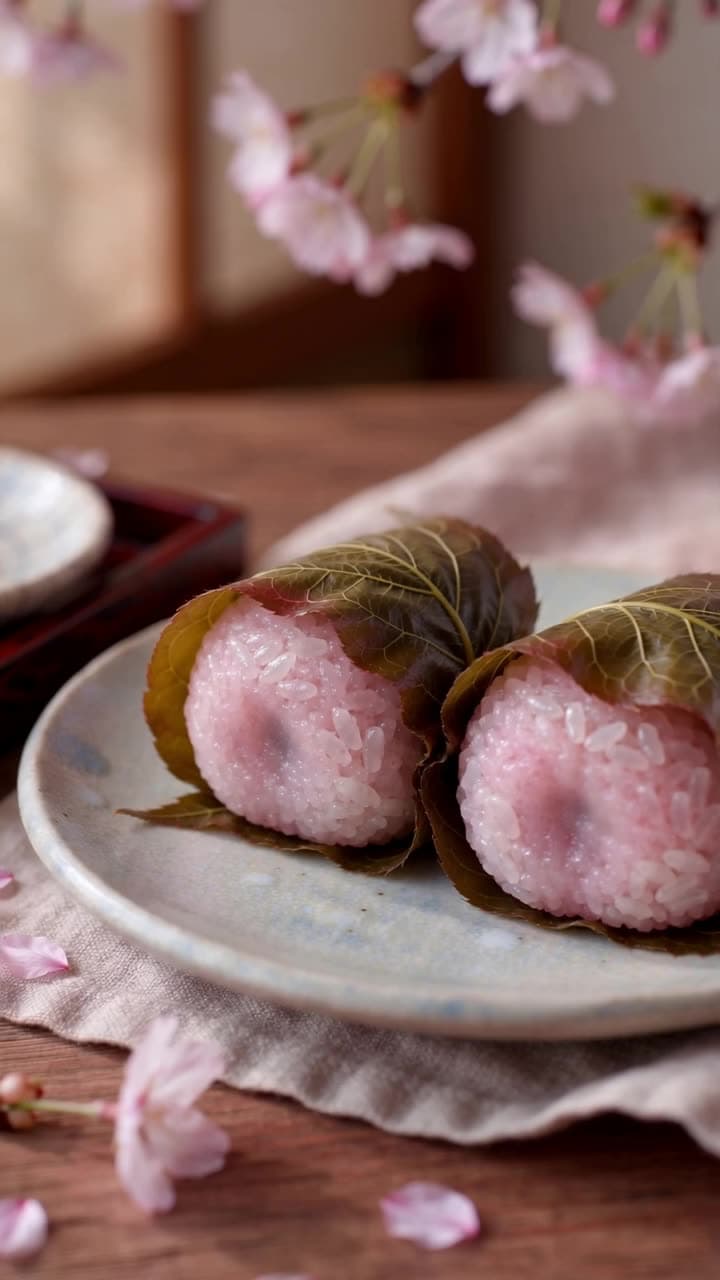
Sakura Mochi
The classic sweet of cherry-blossom season: mochi with sweet bean paste, wrapped in a salted cherry leaf.
 AI-generated imagery
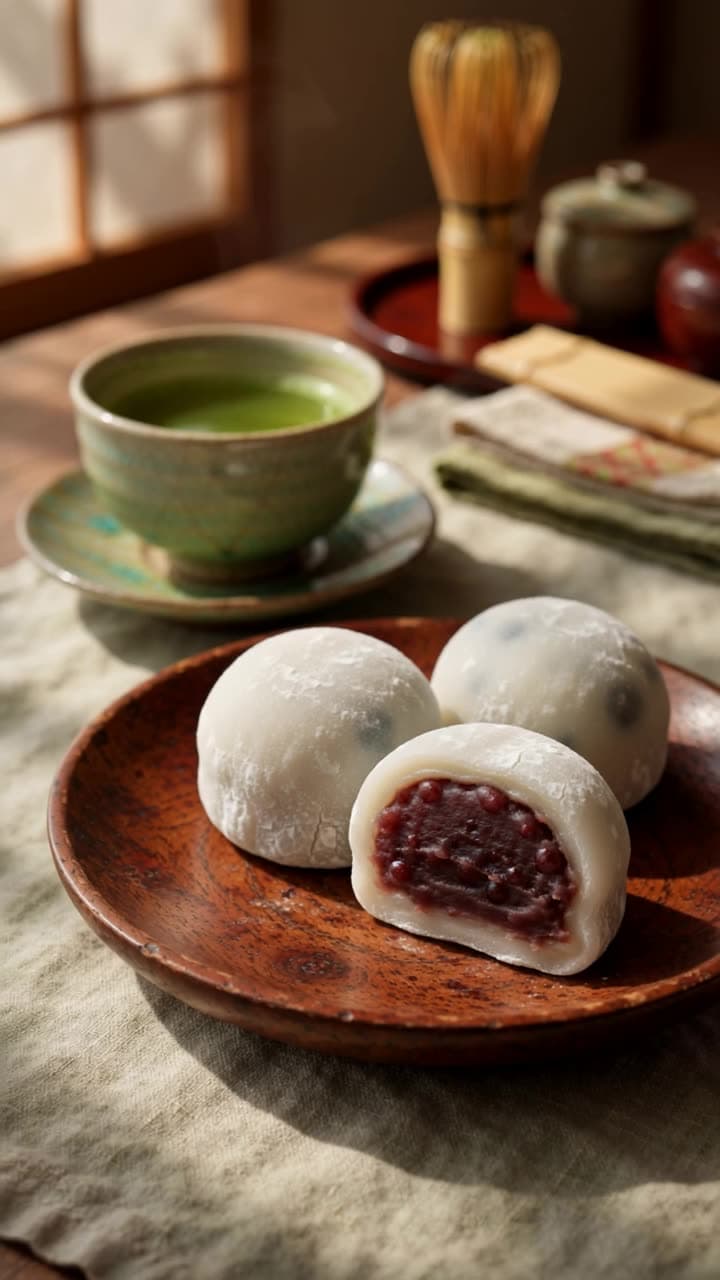
Daifuku
Soft, round mochi filled with sweet red bean paste. Its name means "great luck", and it is enjoyed all year.
 AI-generated imagery
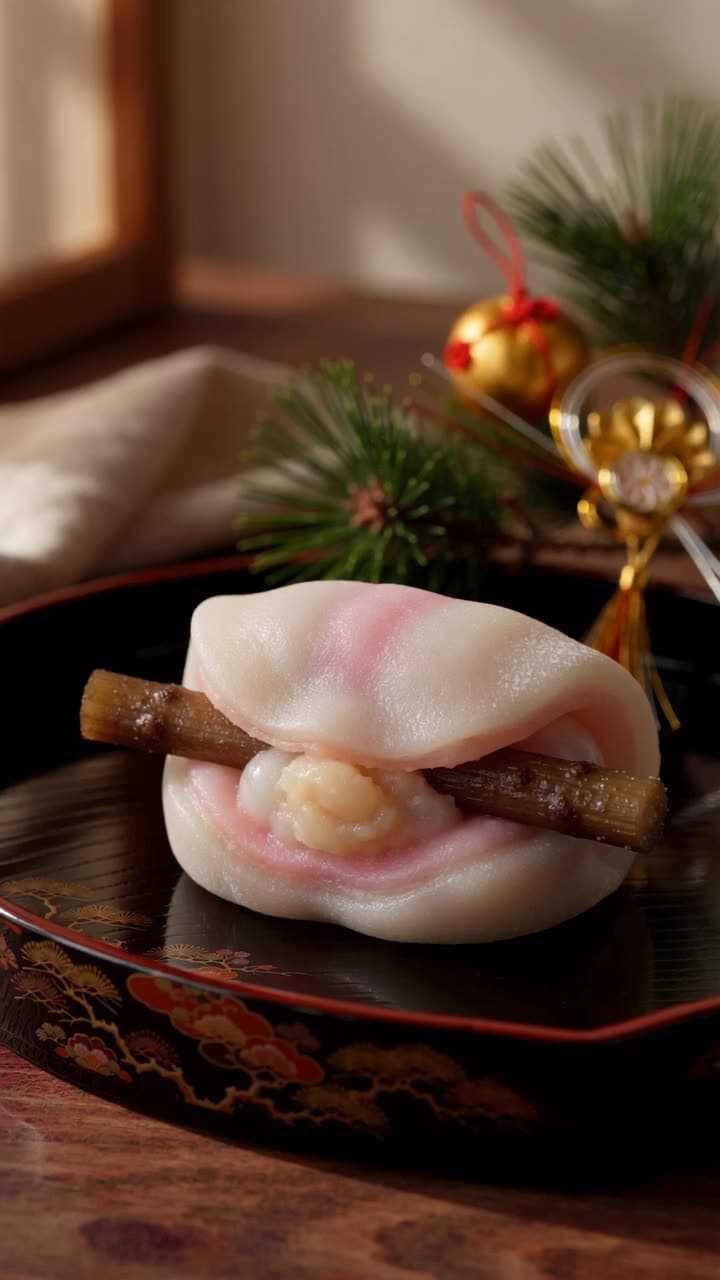
Hanabira Mochi
A New Year sweet of white mochi layered with a red diamond of mochi, folded over sweet miso bean paste and a stick of burdock.
 AI-generated imagery
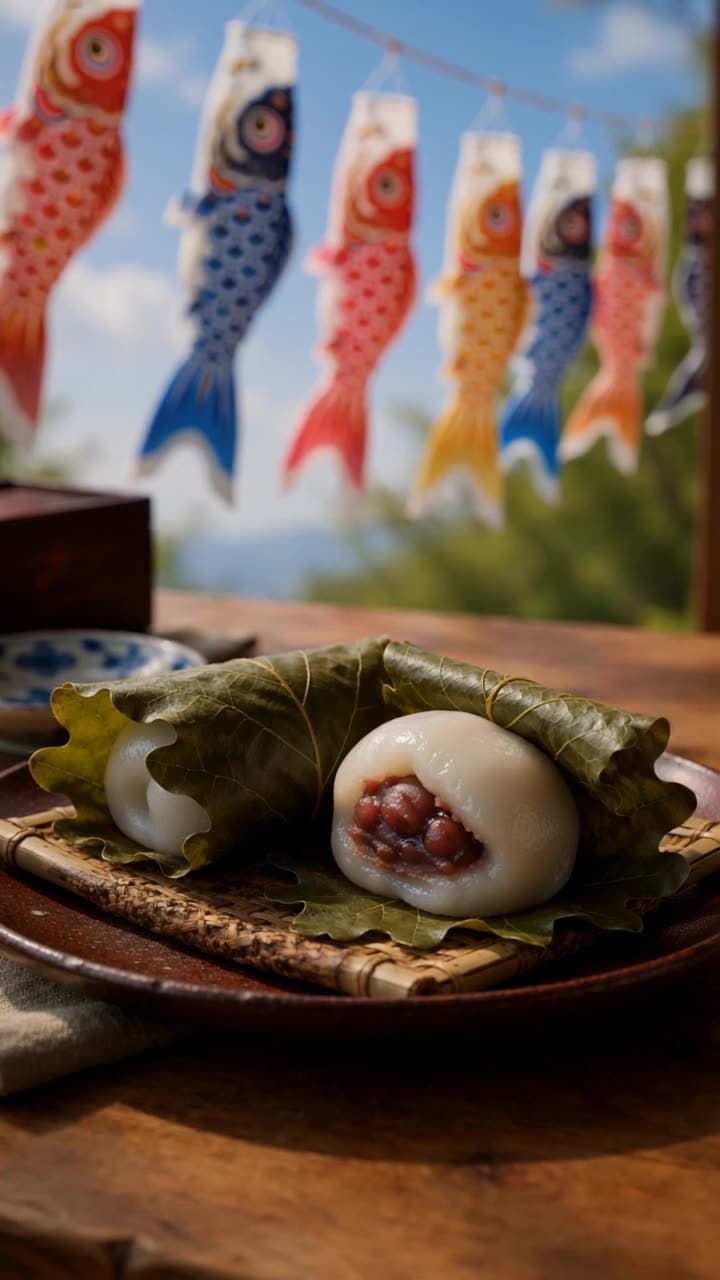
Kashiwa Mochi
Soft rice-flour mochi folded around sweet bean paste and wrapped in an oak leaf, made for Children's Day in May.