Warabi Mochi
わらび餅
Also called warabimochi
A soft, wobbly sweet made from bracken-root starch, dusted with roasted soybean flour and topped with brown-sugar syrup.
Warabi Mochi at a glance
- Taste
- Almost no taste of its own; the toasty kinako and deep brown-sugar kuromitsu bring the flavor
- Texture
- Soft, springy and wobbly; stretchier when made with pure bracken starch
- Main ingredients
- Bracken starch (often sweet potato, tapioca or kudzu starch instead), sugar and water; topped with kinako and kuromitsu
- When to eat it
- All year, most of all in summer as a cool treat
- Goes well with
- Japanese green tea
- Where to buy
- Wagashi shops (Nara is known for it), department stores, supermarkets, and in some cities, mobile vendors
- How long it keeps
- Best the same day; it firms up over time and in the fridge
- Egg, wheat and vegan
- Usually no egg, milk or wheat, and plant-based; kinako is soy, and some kinds hide bean paste inside, so check the shop or label
- How to say it
- wah-RAH-bee MOH-chee
Fun facts about Warabi Mochi
In Nara, the grass on Mount Wakakusa is burned in a ritual called yamayaki. After the burning, bracken ferns spread across the hillside, which is how Nara became a source of bracken starch.[8]
A 16th-century traveler on the Tokaido wrote a poem near Nissaka that roughly says: "Grown old, did I ever think I would eat it again? That I can taste warabi mochi once more is thanks to being alive." It celebrates the joy of eating warabi mochi again in old age.[9]
How to enjoy Warabi Mochi
Plain, or with kinako and kuromitsu
Japan's agriculture ministry notes that warabi mochi is eaten as it is to enjoy its own faint aroma, or with kinako sprinkled over and kuromitsu poured on. Some people even warm it again to bring back the texture of a freshly made batch. Try a bite plain first, then add the toppings.[1]
About this wagashi
Warabi mochi is made from warabiko, a starch taken from the roots of the bracken fern (warabi). It has a soft, springy, slightly wobbly texture and very little taste of its own, so it is served with kinako (roasted soybean flour) and kuromitsu (dark brown-sugar syrup). Many versions sold today use sweet potato, tapioca or kudzu starch instead, because real bracken starch is rare. People in Japan eat it all year, but it is especially popular in summer as a cool treat.
How it is made
Bracken starch, water and sugar are heated and kneaded together, then cooled until set. It is finished with kinako and kuromitsu poured over the top. When made with pure bracken starch, the sweet turns a dark, glossy color and becomes strongly elastic.
Warabi Mochi: history and origins
The name is simple: the sweet is made from warabiko, the starch of the bracken fern (warabi). It also has an old nickname, Okadayu. According to legend, Emperor Daigo, who reigned from 897 to 930, loved warabi mochi so much that he gave it the court rank of tayu, a rank for nobles. The story is told in Okadayu, a comic play of kyogen (traditional Japanese comic theater), and there is no record that the rank was actually given.[1],[6],[11]
Nara is closely tied to this sweet. There is a tradition that monks of Todaiji Temple first processed bracken roots from nearby Mount Wakakusa, much as people did with kudzu, and added sugar to make a sweet for tea. In written records, a diary from 1489 already mentions a gift of a bowl of warabi mochi. A record of a visit to Todaiji in 1709 describes many warabi mochi teahouses in front of the Hachiman shrine, showing it had become a Nara specialty.[8],[10]
Warabi mochi was also a famous treat on the Tokaido, the old main road between Edo (now Tokyo) and Kyoto. At Nissaka, a post town in today's Kakegawa, Shizuoka, a 16th-century travel journal includes a poem about it, and an Edo-period writer noted that the houses of Nissaka sold warabi mochi. Bracken starch has long been scarce, and since the Edo period (1603–1868) kudzu starch has sometimes been used in its place.[12],[9],[7]
Questions about Warabi Mochi
What does warabi mochi taste like?
On its own it tastes of very little; the flavor comes from what goes on top. Kinako, roasted soybean flour, adds a toasty, nutty note, and kuromitsu, a dark brown-sugar syrup, adds deep sweetness. What most people remember is the texture: soft, cool and wobbly, and stretchier when it is made with pure bracken starch.[1],[2]
Warabimochi vs mochi: is warabi mochi made from rice?
No. Despite its name, warabi mochi contains no rice: it is made from starch, traditionally from the roots of the bracken fern, and today often from sweet potato, tapioca or kudzu starch. Ordinary mochi is steamed and pounded glutinous rice. In Japanese, the word mochi is also used broadly for soft foods made from starches like these.[2],[13]
Is warabi mochi gluten-free?
Usually there is no wheat in it: warabi mochi is starch, sugar and water, topped with soybean kinako and brown-sugar syrup. But the starch is often a blend and products differ, and some versions have bean paste inside, so people with celiac disease or allergies should check the label or ask the shop. Note that kinako is made from soybeans.[2],[1]
Sources
Most of the sources are written in Japanese.
- [1]農林水産省 にっぽん伝統食図鑑 わらびもち
- [2]Wikipedia わらび餅
- [3]全国和菓子協会 和菓子の保存
- [4]全国和菓子協会 味わい方いろいろ
- [5]コトバンク 岡太夫
- [6]大蔵流狂言 あらすじ
- [7]虎屋文庫 川瀬一馬と蕨餅
- [8]農林水産省 うちの郷土料理(奈良県)
- [9]Wikipedia 日坂宿
- [10]コトバンク 蕨餅
- [11]東京新聞 和菓子の芸心
- [12]掛川市観光サイト 日坂宿
- [13]コトバンク 餅
More wagashi
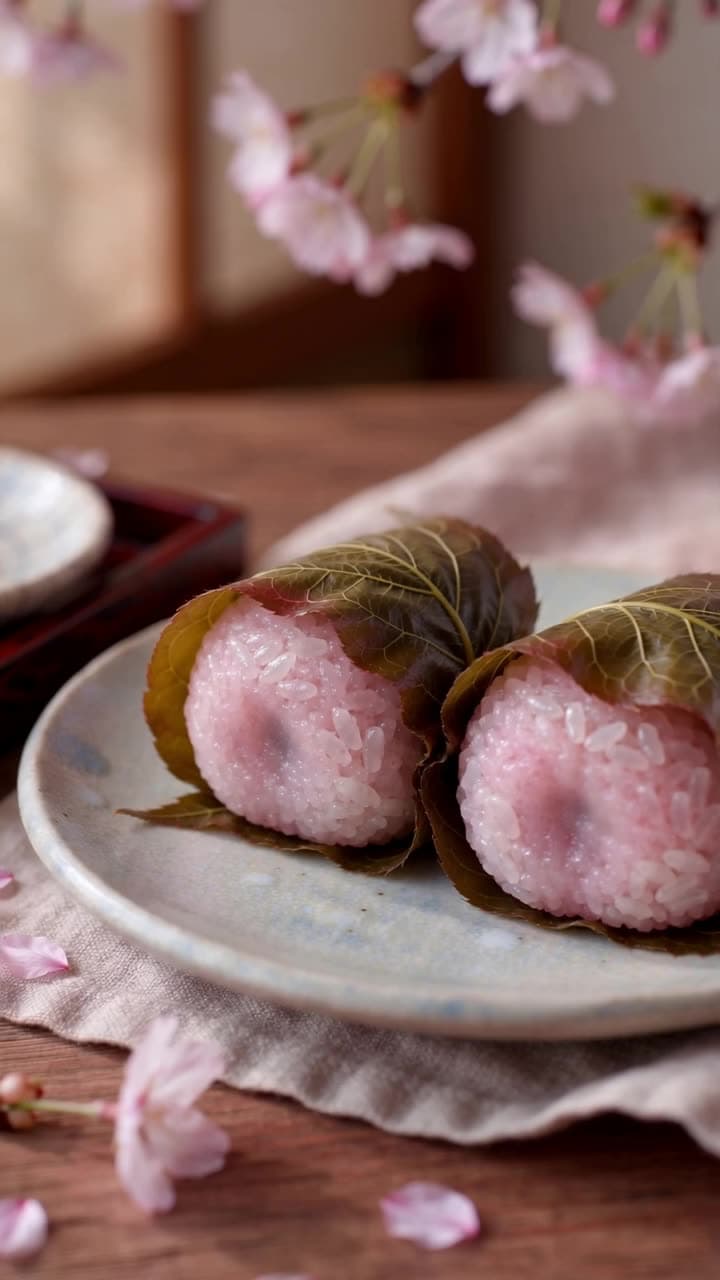 AI-generated imagery
Sakura Mochi
The classic sweet of cherry-blossom season: mochi with sweet bean paste, wrapped in a salted cherry leaf.
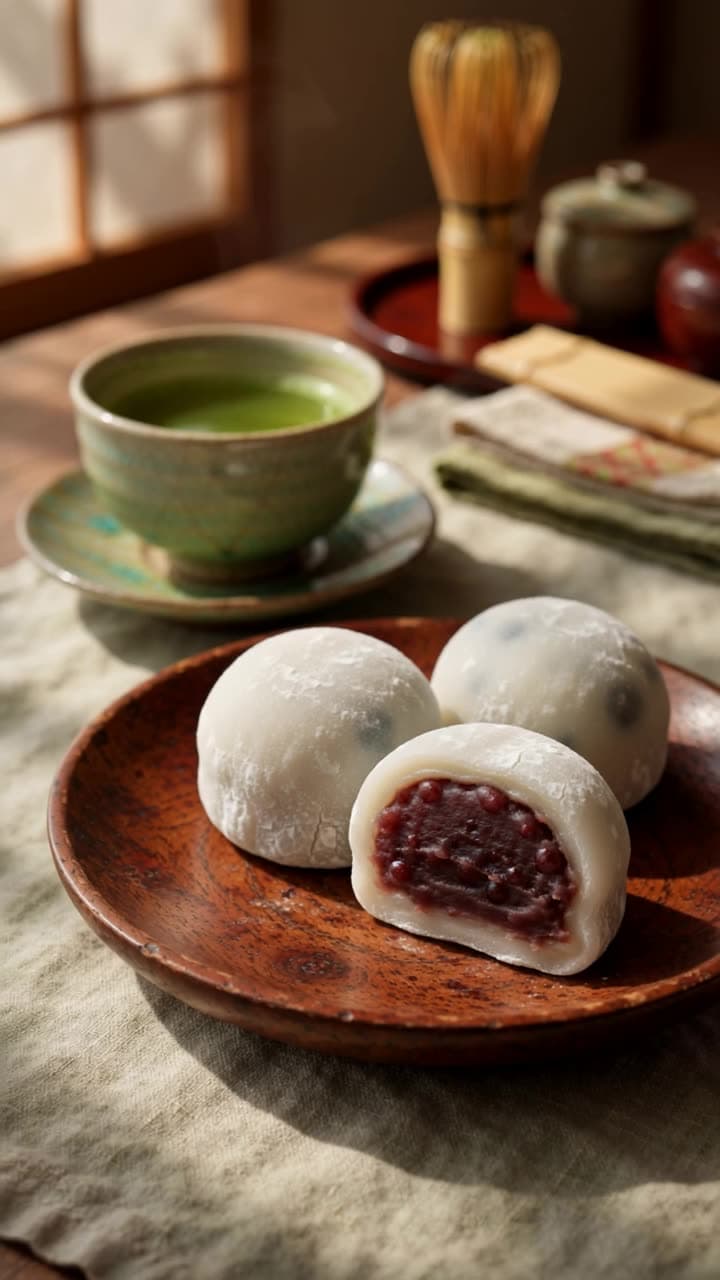 AI-generated imagery
Daifuku
Soft, round mochi filled with sweet red bean paste. Its name means "great luck", and it is enjoyed all year.
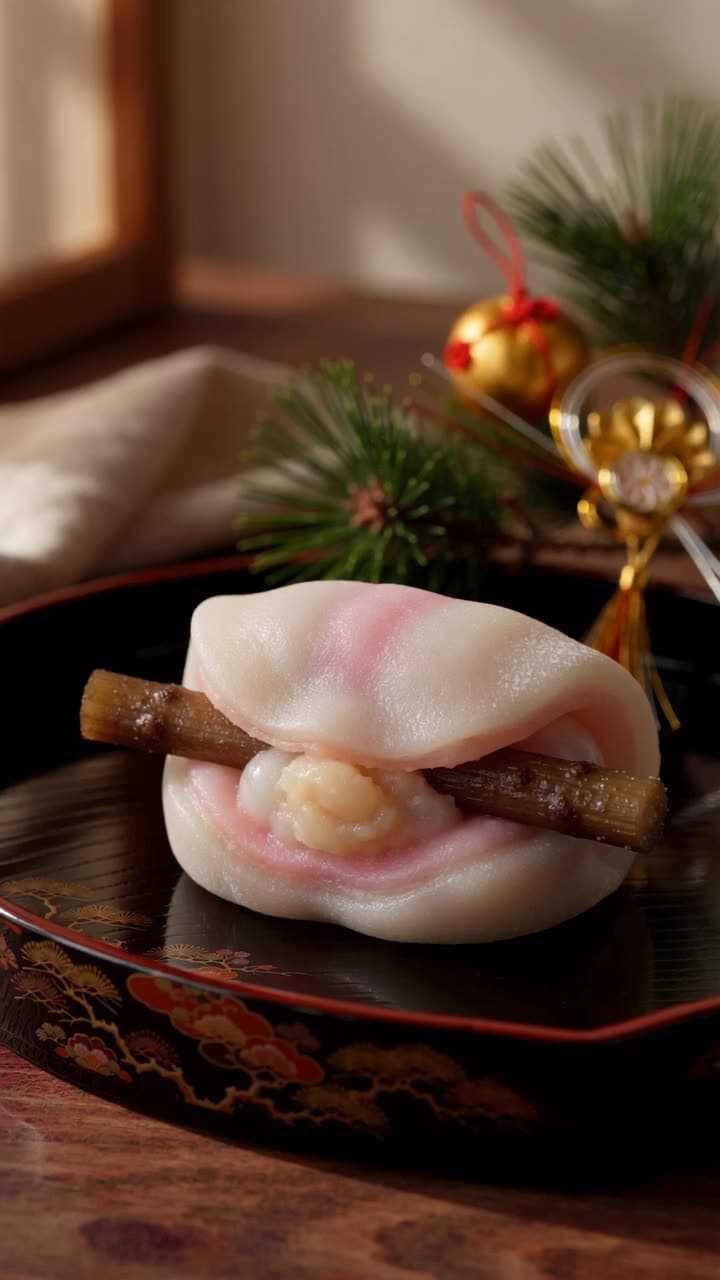 AI-generated imagery
Hanabira Mochi
A New Year sweet of white mochi layered with a red diamond of mochi, folded over sweet miso bean paste and a stick of burdock.
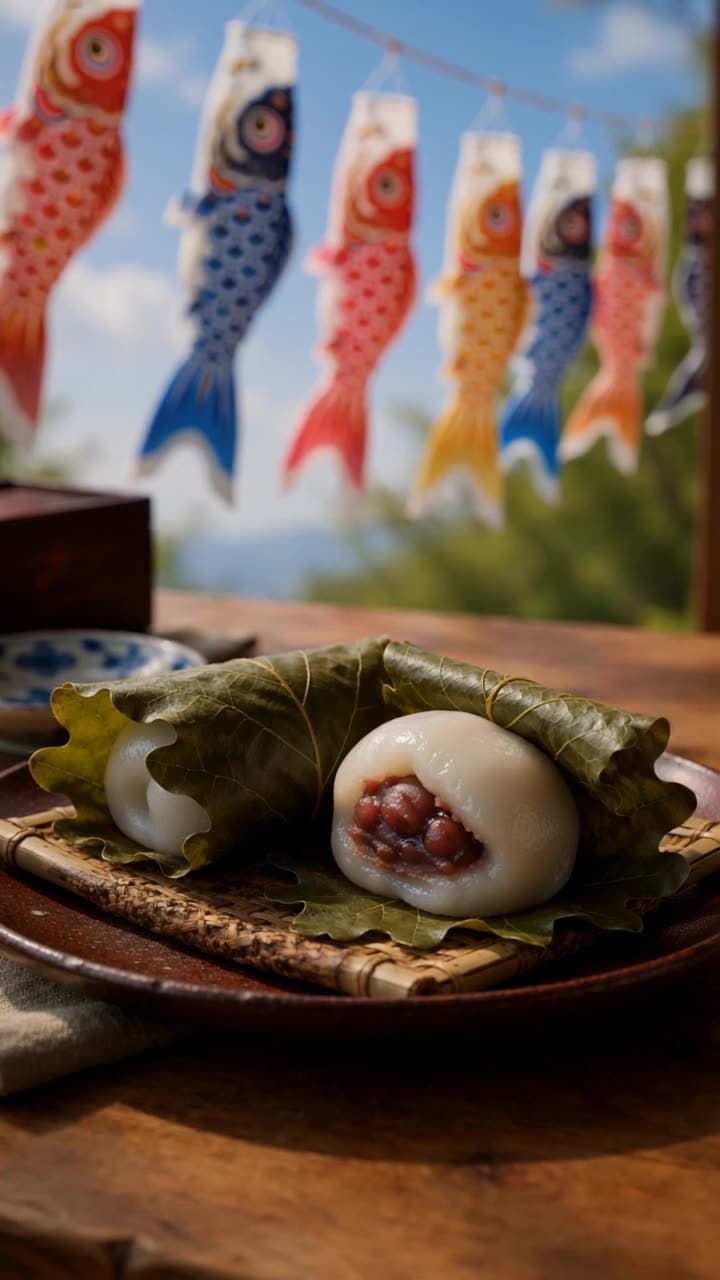 AI-generated imagery
Kashiwa Mochi
Soft rice-flour mochi folded around sweet bean paste and wrapped in an oak leaf, made for Children's Day in May.